



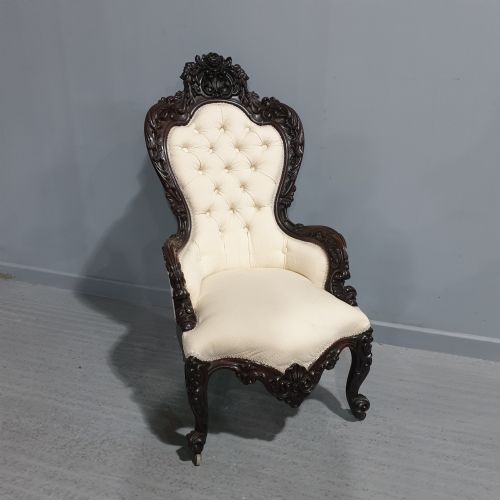


Library Throne Armchairs
Library throne armchairs are substantial seating choices defined by tall backs and heavy timber frames, built to anchor a formal study or reading room.
Library Throne Armchairs
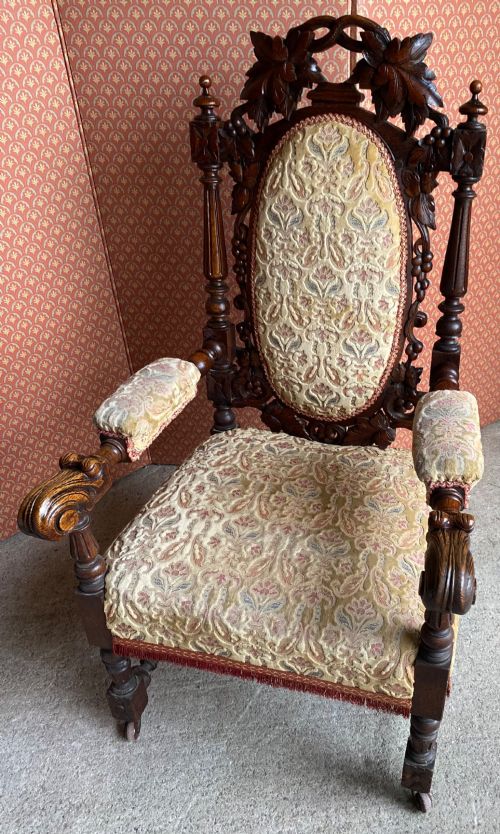
When you search for library throne armchairs, you encounter large seating forms originating predominantly from the nineteenth century and the Victorian era. These pieces frequently appear in oak or walnut, carrying high backs and substantial armrests designed for imposing presence.
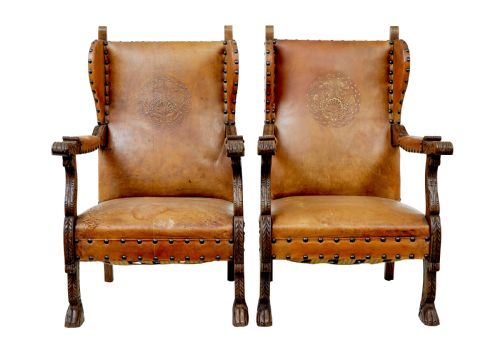
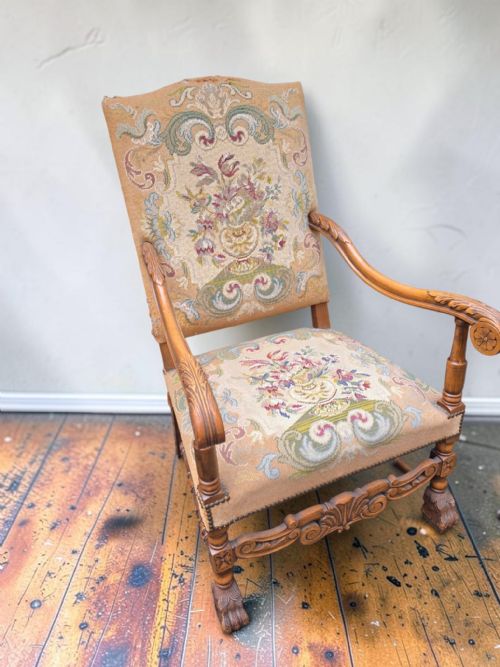
Many examples utilise functional upholstery, ranging from embossed leather and buttoned hide to tapestry and velvet coverings. Their structural scale reflects their original placement in substantial domestic libraries and halls.
Materials and construction
Frames are constructed primarily from sturdy hardwoods like oak and walnut, occasionally utilising mahogany or rosewood for finer grain patterns. Joinery relies on traditional framing methods to support the heavy vertical loads of tall wooden backs.
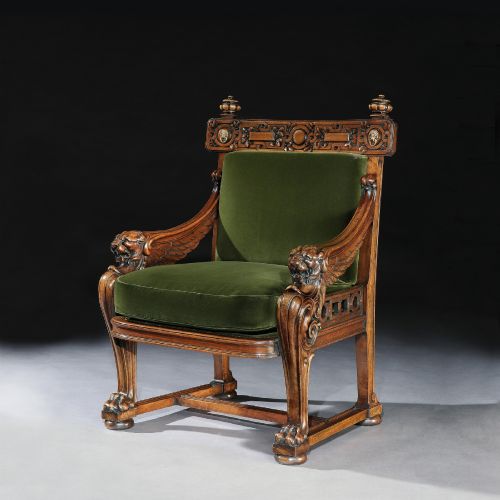
Carving is a central technique, executed directly into the timber to create figures, armorial motifs, and foliate patterns. Brass hardware and studs frequently secure the heavy leather or textile upholstery to the wooden framework.
Library Throne Armchairs Retail Price Guide 2026
Typical asking prices for library throne armchairs among the pieces listed under this phrase on Sellingantiques today, from the lower quarter to the upper quarter. They describe what is for sale here now, not the wider market.
Victorian carvers occasionally hid fierce wooden hounds and roaring green men within the foliage of library chairs to watch over readers.
Markers of quality
The standard of carving distinguishes standard production from exceptional pieces, with deeply undercut figures, green men, or heraldic animals showing superior artisan competence. Timber selection also dictates grade, where dense, well-figured walnut or quarter-sawn oak forms the basis of the best examples.
Proportion and scale drive the hierarchy of these chairs, as taller backs and more commanding silhouettes demand greater structural ambition from the maker. The integrity of the original timber frame and the sophistication of revival detailing elevate a piece above simpler vernacular versions.
A.W.N. Pugin
The Library Throne Armchairs Glossary
- Monopodia
- A furniture support taking the form of a single lion's leg and paw. This classical motif appears on revival armchairs following antique designs.
- Barley twist
- A turning technique resembling a twisted rope, commonly found on the legs and stretchers of nineteenth-century seating. It adds visual movement to heavy timber frames.
- Fauteuil
- An open-armed upholstered armchair with exposed wooden armrests. French versions often utilise walnut frames and high padded backs.
- Wainscot
- A heavy wooden chair type with a solid panel back, frequently constructed from Welsh oak. These pieces reflect seventeenth-century vernacular traditions revived in later periods.
- Green man
- A sculptural architectural ornament depicting a human face surrounded by or disgorging foliage. It recurs frequently as a carved detail on Victorian oak throne chairs.
Library Throne Armchairs: Frequently Asked Questions
What is a library throne armchair?
A library throne armchair is a large, high-backed wooden seat designed for formal reading spaces and studies during the nineteenth century. These chairs use heavy timbers and detailed carving to project authority and presence.
They often incorporate revival styles such as Gothic or Jacobean, making them distinct from standard domestic seating through their imposing scale and prominent armrests.
How were these armchairs used historically?
These chairs served as primary seating for heads of households or scholars in large libraries, studies, and entrance halls. Their tall backs provided protection from drafts in large, high-ceilinged rooms.
They also functioned as ceremonial or reading chairs where posture and dignity were maintained during long periods of study or conversation.
How do I identify a Gothic Revival library chair?
Gothic Revival library chairs are identified by architectural motifs such as pointed arches, tracery, and linenfold panelling carved into the oak frame. They frequently feature heavy leather upholstery secured with brass studs.
Many examples include heraldic carvings, dogs, or ecclesiastical details reflecting nineteenth-century romantic interpretations of medieval design.
Are these chairs comfortable for daily use?
These armchairs are generally deep and supportive, though their upright backs and rigid wooden frames reflect nineteenth-century standards of posture rather than modern lounging. Many feature sprung or padded seats covered in leather, velvet, or tapestry.
Their substantial weight and large dimensions mean they require considerable floor space in a modern room layout.
How do I date a Victorian walnut armchair?
Dating a Victorian walnut armchair involves examining the specific revival style, the depth and execution of the wood carving, and the construction methods used in the frame. Pieces from the mid nineteenth century often favour simpler structural lines.
Later Victorian iterations from the 1880s and 1890s tend towards heavier ornamentation, incorporating turned members like barley twists and elaborate crest rails.