



Library Tabletop Stand
A library tabletop stand brings practical utility and period character to any desk, offering a sturdy perch for books, instruments, or globes.
Library Tabletop Stand
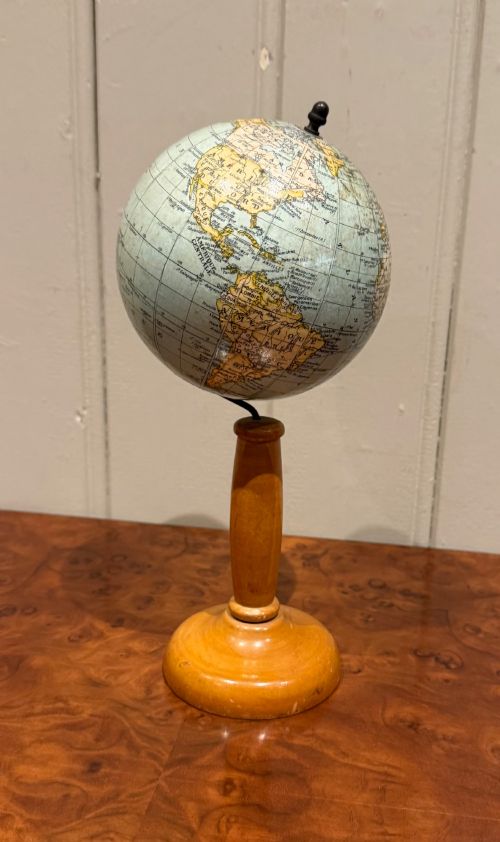
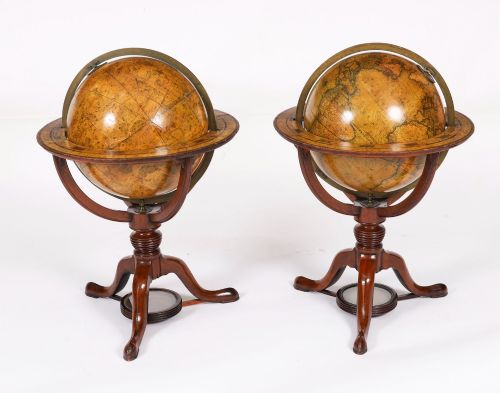
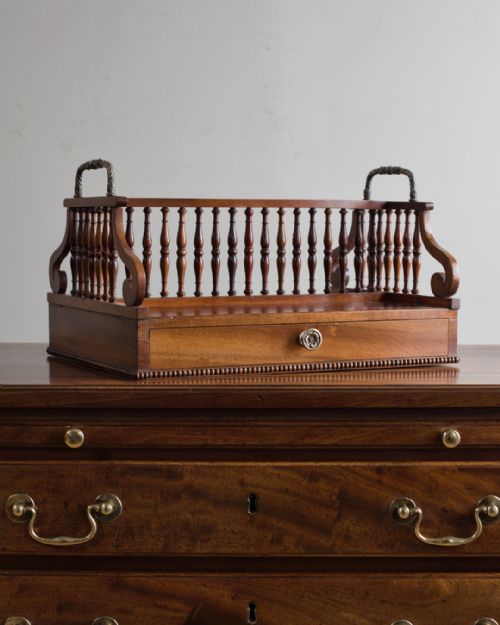
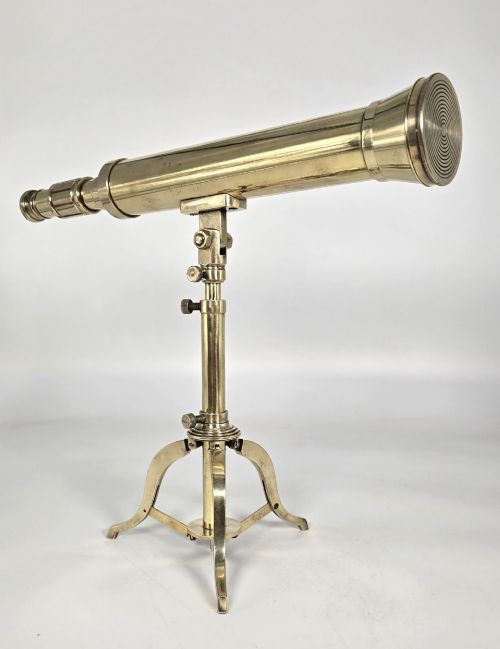
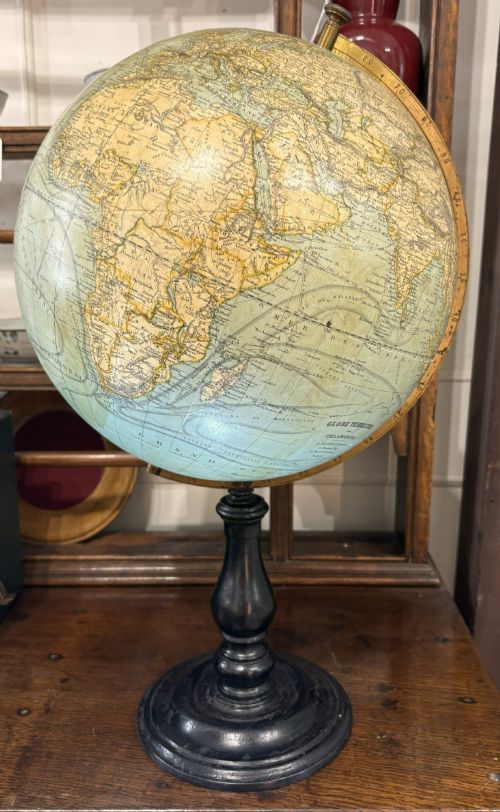
A library tabletop stand encompasses a varied selection of desk accessories designed to hold books, globes, and optical instruments within easy reach. When searching for a library tabletop stand, buyers encounter items ranging from compact revolving bookcases and book troughs to brass telescopes on folding tripods and terrestrial globes.
The pieces appearing on this page span several distinct periods, including Victorian, Edwardian, and Georgian eras. Makers created these items in forms such as rotating bookstands, desktop globes, and reading rests to serve the studious desk.
Materials and Construction
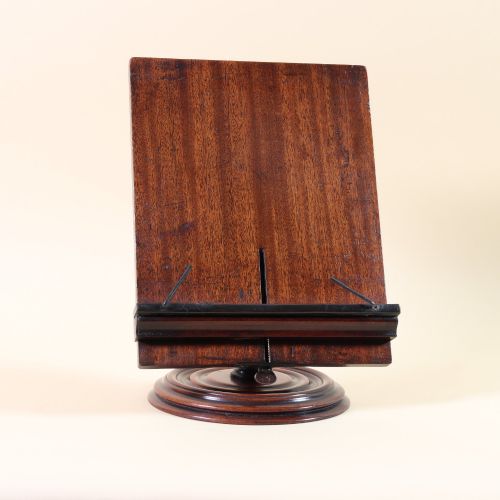
Makers utilised dense timbers such as mahogany, walnut, and oak to build sturdy book stands, troughs, and revolving bookcases. Wood sections were often joined with precision to allow smooth rotation or stable support for heavy volumes.
Metals like brass formed the primary material for scientific instruments, library telescopes, and magnifying glasses. Artisans paired brass tubing and fittings with wooden bases or folding metal tripods to ensure stability on flat surfaces.
Paper and glass completed globes and optical equipment, with printed gores applied carefully to terrestrial spheres. Makers also incorporated horn, silver, and ebonised wood into smaller desk accessories.
Library Tabletop Stand Retail Price Guide 2026
Typical asking prices for library tabletop stand among the pieces listed under this phrase on Sellingantiques today, from the lower quarter to the upper quarter. They describe what is for sale here now, not the wider market.
One enthusiastic Victorian owner clearly prized their reading habits so much they invested in a rotating wooden companion for their desk.
Evaluating Quality and Execution
Quality in these pieces rests upon the precision of the mechanical movement, whether in the smooth rotation of a revolving bookcase or the focused adjustment of a brass telescope. Superior examples demonstrate tight joinery and robust materials that withstand frequent handling.
Finer items display thoughtful selection of timber grain, particularly in mahogany and walnut book stands, alongside well-cast brass mounts. The legibility of printed maps on terrestrial globes and the clarity of glass in magnifying lenses further distinguish higher grades of manufacture.
Chadburn Brothers of Sheffield·Matthew Berge London·J. Forest
The Library Tabletop Stand Glossary
- Revolving bookcase
- A compact bookcase designed to sit on a tabletop and rotate smoothly on a central pivot for easy book selection.
- Terrestrial globe
- A spherical map of the Earth mounted on an axis and stand, often produced in French or English workshops during the nineteenth and early twentieth centuries.
- Library telescope
- A portable optical instrument used for viewing distant objects, typically mounted on a folding brass tripod stand.
- Book trough
- A rigid open container designed to hold a small selection of books upright on a desk.
- Ebonised wood
- Timber treated with a finish to imitate expensive ebony, frequently utilised in nineteenth-century decorative items.
Library Tabletop Stand: Frequently Asked Questions
What is a library tabletop stand used for?
A library tabletop stand serves to organise and display reference materials, scientific instruments, or globes on a desk. These items provide accessible support for heavy books or precision equipment during daily study.
Desk accessories from the Victorian and Edwardian periods bring both historical interest and practical utility to modern workspaces. They offer a tangible connection to nineteenth-century scholarly habits.
How do I identify a Victorian book stand?
Victorian book stands often feature rich timbers like mahogany or oak, sometimes incorporating revolving mechanisms or carved details. Examining the construction methods and wood ageing helps determine the period.
Makers of this era focused on robust joinery to support heavy volumes. Brass hardware and turned wooden spindles frequently appear on examples from this time.
Are these globes accurate to their period?
Terrestrial globes reflect the geographical knowledge and political boundaries of the year they were manufactured. Cartographers updated place names and borders with each new edition.
Examining the printed gores on a globe reveals contemporary territories and shipping routes. This makes each piece a snapshot of the world as makers understood it then.
How should I care for antique wooden stands?
Antique wooden stands require placement away from direct sunlight and sudden temperature changes to protect the timber and finish. Regular dusting with a soft, dry cloth preserves the surface.
Avoid using harsh chemical polishes that can degrade historical finishes. Maintaining stable indoor humidity prevents the wood from warping or cracking over time.