

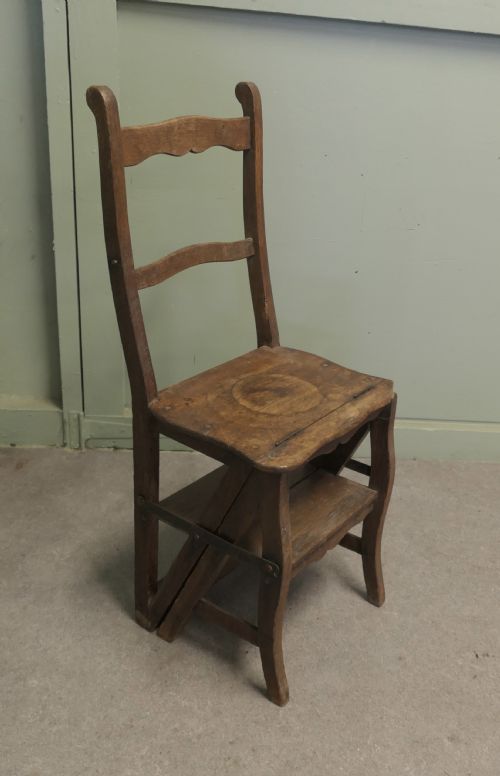


Library Steps Chair
These library steps chair designs transform from comfortable seating into sturdy climbing tiers with a clever turn, offering utility without clutter.
Library Steps Chair
A library steps chair combines a functional seat with a concealed mechanism that unfolds into a set of steps. Most examples on this page date from the nineteenth century, including Georgian, Regency, and Victorian periods.
Makers produced these dual-purpose items in forms ranging from armchairs to rustic ladder steps and metamorphic variants. They served domestic libraries where books reached high shelves and floor space remained at a premium.
The prevailing styles span Arts & Crafts, Gothic Revival, and Regency aesthetics. Pieces frequently utilise traditional joinery to conceal hinges and pivots beneath polished woodwork.
How they were made
Craftsmen built the primary frames from timbers such as mahogany and oak, often incorporating cane or leather inserts into the seat panels. These dense hardwoods provided the structural integrity required to support the weight of a person climbing.
Metal hinges, brass fittings, and iron mechanisms enabled the transformation between chair and step configurations without compromising stability. Joinery had to be exceptionally precise to ensure the moving components aligned correctly over decades of use.
Library Steps Chair Retail Price Guide 2026
Typical asking prices for library steps chair among the pieces listed under this phrase on Sellingantiques today, from the lower quarter to the upper quarter. They describe what is for sale here now, not the wider market.
Listings feature oak and mahogany construction paired with leather, cane, and brass hardware across nineteenth-century styles.
What varies in quality
The refinement of the mechanical transition distinguishes superior examples from simpler ones. Smooth movement without excessive friction indicates precise engineering in the concealed pivot points.
Material selection and surface finish dictate visual success. Finely figured mahogany or quarter-sawn oak combined with well-preserved leather or cane upholstery elevates the piece above utilitarian workshop output.
The Library Steps Chair Glossary
- Metamorphic
- Furniture designed to transform from one functional form into another, such as a chair turning into steps. This ingenuity defined nineteenth-century space-saving design.
- Regency
- A style period spanning the early nineteenth century characterised by classical restraint and refined proportions. Mahogany was frequently utilised during this era.
- Gothic Revival
- An architectural and decorative style drawing inspiration from medieval forms, often featuring pointed arches and heavy oak construction. It appears frequently in Victorian library furniture.
- Arts & Crafts
- A design movement valuing honest construction and visible craftsmanship over mass production. Pieces from this tradition often display simple oak framing.
Library Steps Chair: Frequently Asked Questions
What is a library steps chair?
A library steps chair is a dual-purpose piece of furniture that converts from a standard seat into a set of steps for reaching high shelves. It offers a practical solution for traditional home libraries where vertical space is utilised fully.
Craftsmen engineered these items to maintain the appearance of a comfortable armchair or occasional seat while concealing the pivoting mechanisms within the frame.
How do metamorphic chairs work?
These chairs use hidden hinges, pivots, and sliding sections that allow the backrest or seat to unfold into a flight of steps. The user manipulates the wooden components to lock them securely into either the seating or climbing position.
Precision in the original construction ensures that the transitions happen smoothly without requiring excessive force or tools.
Which woods were used for these chairs?
Mahogany and oak are the primary timbers found in these designs, chosen for their strength and durability. These dense hardwoods could support the physical stresses of supporting a climbing person.
Secondary materials such as brass and iron appeared in the operational hardware, while leather and cane provided comfort for the seating surfaces.
How do I date a library steps chair?
Dating relies on stylistic clues and construction methods associated with periods like the Georgian, Regency, and Victorian eras. Details such as Gothic Revival motifs or Arts & Crafts simplicity help narrow the era.
Examining the type of timber, hardware, and secondary materials like leather also provides clear indicators of age.