
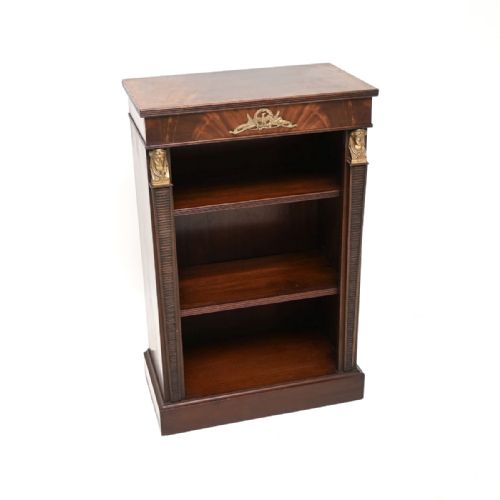
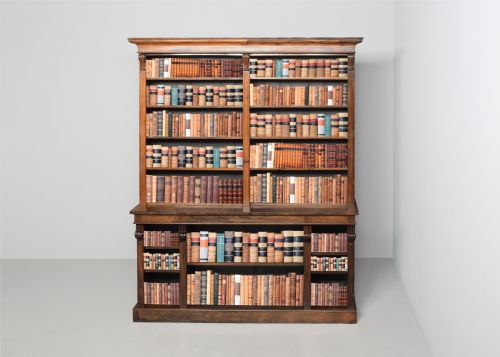
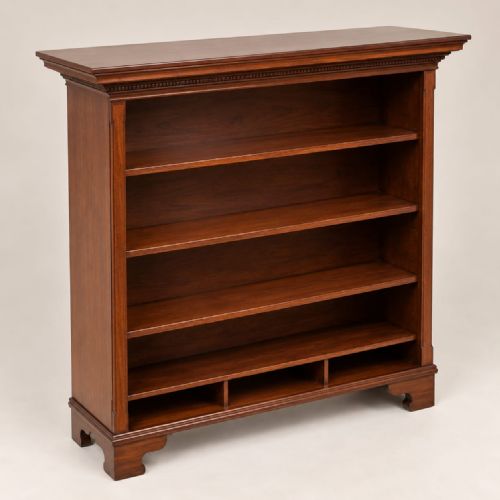
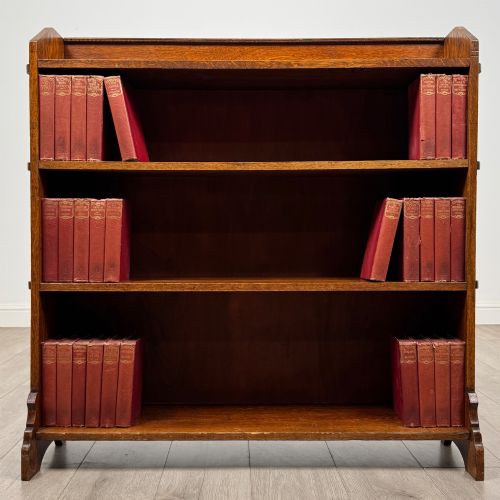
Library Shelving Unit
A library shelving unit provides sturdy timber housing for books, taking forms from the Victorian and Edwardian eras in mahogany, oak and walnut.
Library Shelving Unit
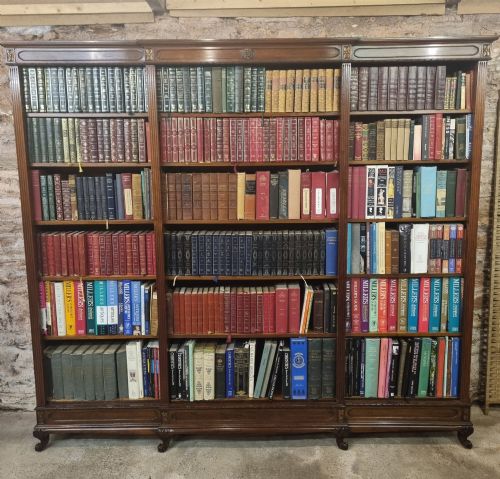
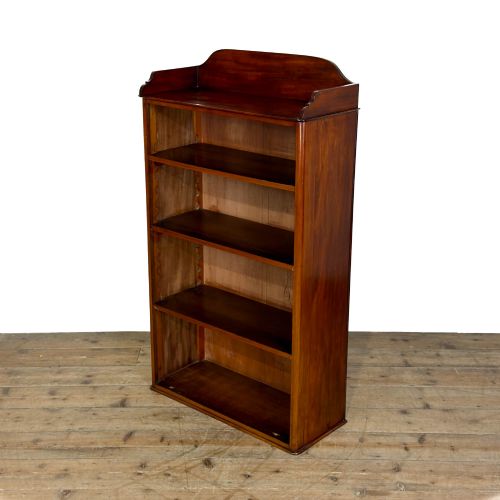
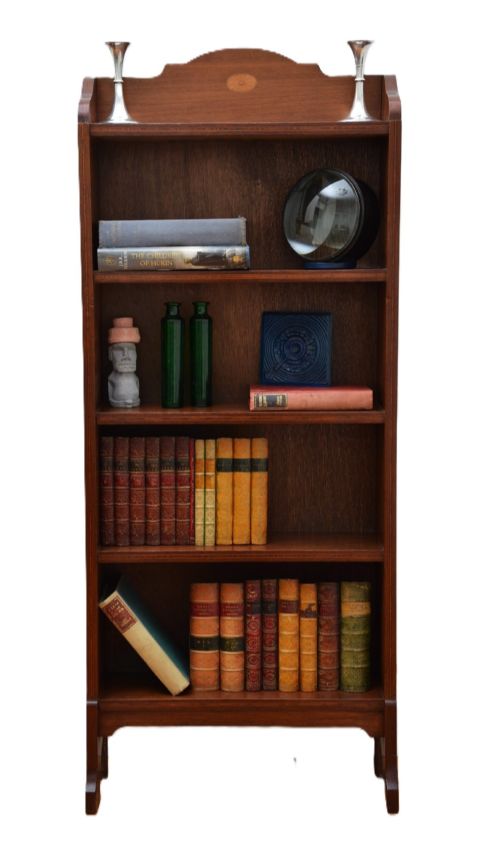
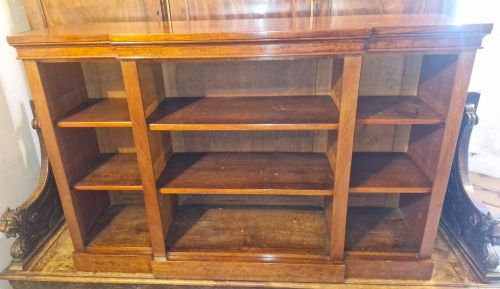
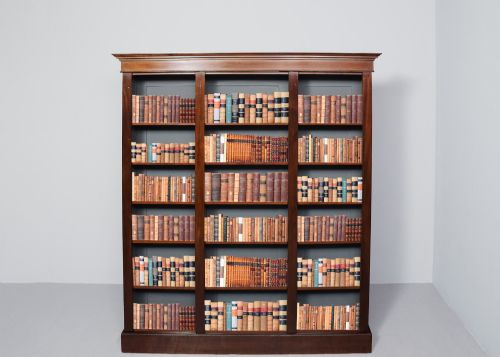
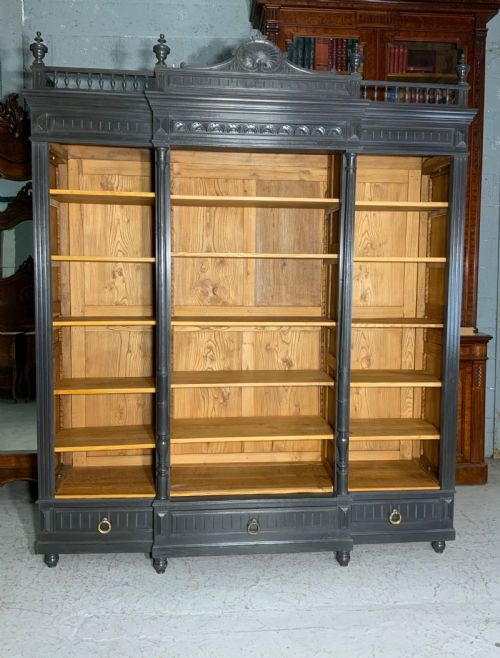
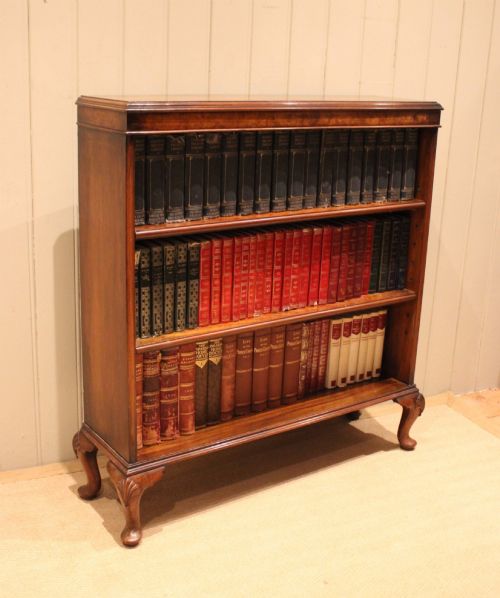
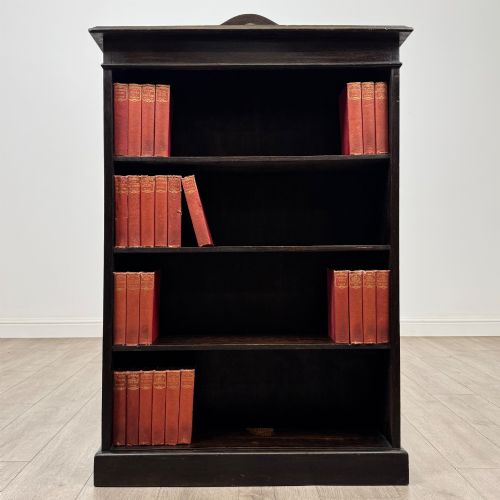
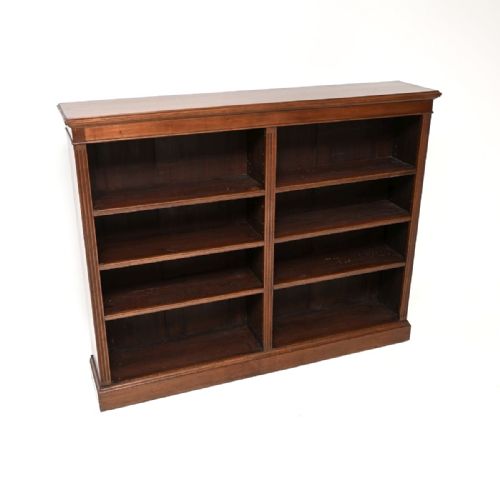
A library shelving unit serves as practical domestic storage for books and papers, appearing most frequently on this page as an open bookcase or open bookshelves from the nineteenth and early twentieth centuries. These pieces range from modest dwarf units to large breakfront arrangements designed to fill a wall.
The materials span mahogany, oak, walnut and rosewood, often constructed with adjustable shelves to accommodate volumes of various heights. Styles extend from Regency and William IV through to Arts and Crafts and Edwardian designs.
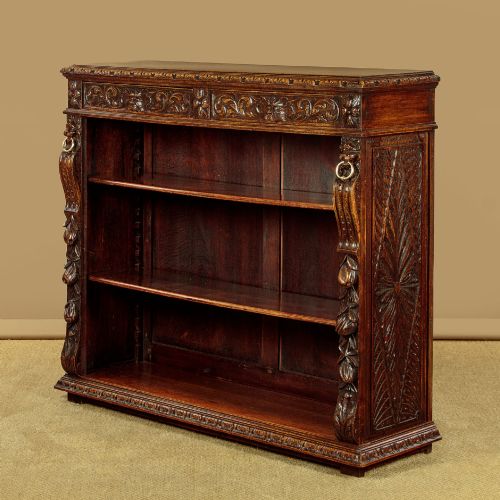
Buyers encounter both simple functional shelving and more decorative examples featuring carved details or tiered tiers. The proportions vary from slim pairs to wide multisection library pieces.
Materials and Construction
Cabinet makers utilised dense hardwoods such as mahogany, oak and walnut, frequently selecting figured veneers like burr walnut and rosewood for prominent surfaces. Secondary timbers appear in carcases and internal framing.
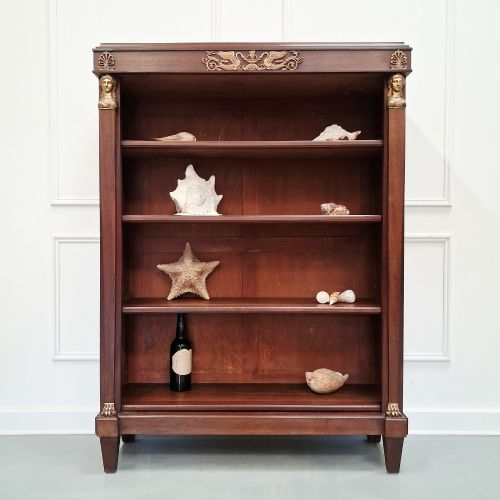
Brass fittings support adjustable shelf mechanisms, while metal brackets and brass mounts occasionally accent Empire and Neoclassical styles. Ebonising and applied carvings provide surface contrast on specific Victorian and Gothic-influenced items.
Listings feature library shelving units spanning the Victorian, Edwardian and Regency periods, constructed from mahogany, oak, walnut and rosewood.
Judgments of Quality
The standard of a library shelving unit rests on the selection of timber grain and the precision of the joinery in the plinth, cornice and uprights. Superior examples display thoughtful proportions and balanced figure across breakfront or stepped façades.
Integration of adjustable shelf hardware that moves smoothly within original housings elevates a piece beyond utilitarian standards. Finer cabinets combine robust structural framing with crisp carving or well-matched veneers.
Gillows
The Library Shelving Unit Glossary
- Breakfront
- A cabinet whose central section projects forward from the flanking wings. This configuration creates visual depth in larger library rooms.
- Waterfall bookcase
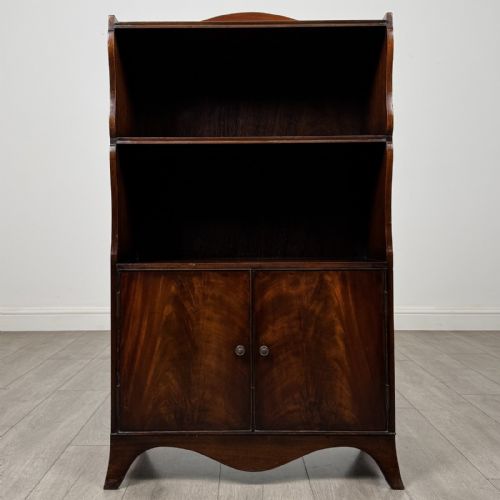
- A tiered shelving unit where each successive shelf is set back from the one below it, often forming a stepped profile. The style gained popularity during the Regency and Victorian periods.
- Dwarf bookcase
- A low shelving unit designed to sit beneath dado height, leaving upper wall space clear for paintings or windows. These pieces often feature adjustable timber shelves.
- Ebonised
- Timber stained or treated to imitate ebony, creating a dark, glossy black surface finish. This technique appears on nineteenth-century carved furniture.
- Golden oak
- A bright, warm shade of oak timber favoured in Edwardian and Arts and Crafts furniture production. It highlights the natural grain pattern of quartersawn boards.
Library Shelving Unit: Frequently Asked Questions
What is a library shelving unit?
A library shelving unit is a timber piece designed for storing books, typically featuring open fronts and adjustable shelves.
These pieces range from small low bookcases to large breakfront furniture designed for institutional or domestic collections.
How do I date a library shelving unit?
Dating relies on observing timber choices, construction techniques and stylistic details such as Regency curves or Edwardian golden oak.
Nineteenth-century examples often employ solid mahogany or walnut, while early twentieth-century pieces frequently utilise oak.
What woods were used for these units?
Cabinet makers utilised hardwoods including mahogany, oak, walnut, rosewood and satinwood.
Figured veneers like burr walnut appear on finer pieces alongside brass hardware and occasional ormolu mounts.
Are the shelves adjustable?
Many of the library shelving units listed feature adjustable shelves supported by traditional wooden or brass tooth-and-rack mechanisms.
This adaptability allows owners to alter shelf heights for different sizes of books.