


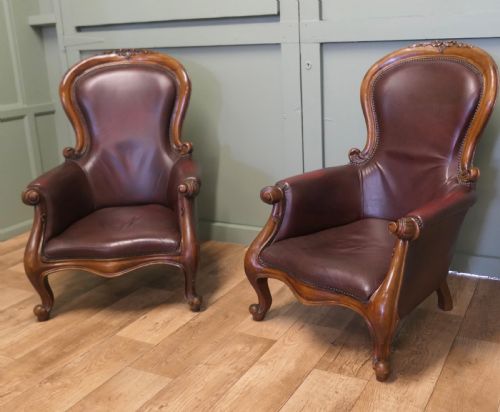
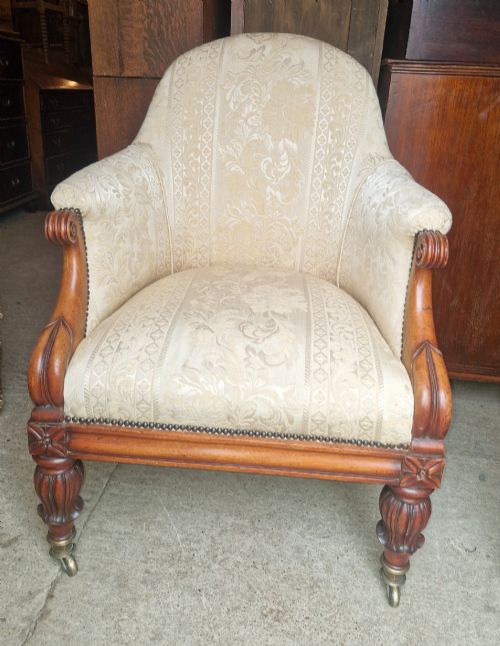
Library Club Chair
These library club chair examples combine deep-seated comfort with robust timber frames, offering a sturdy seat for reading rooms and studies.
Library Club Chair
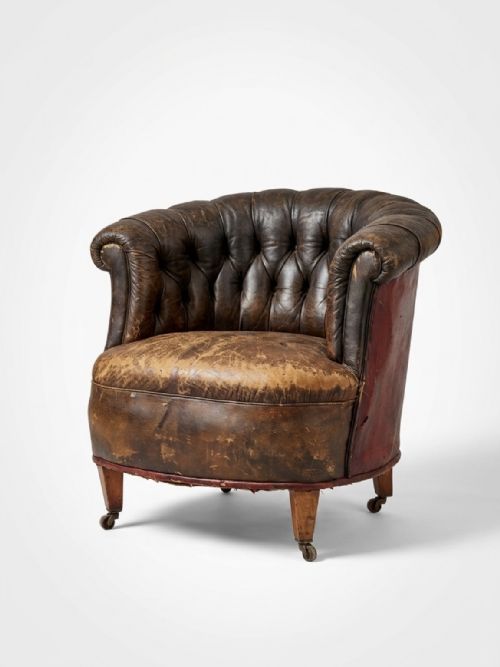
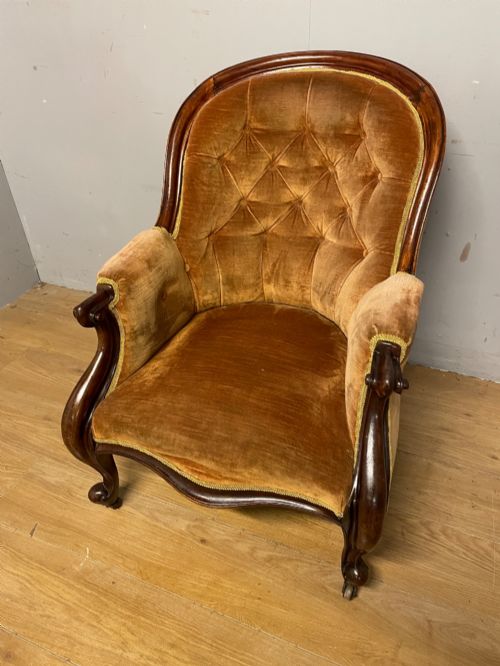
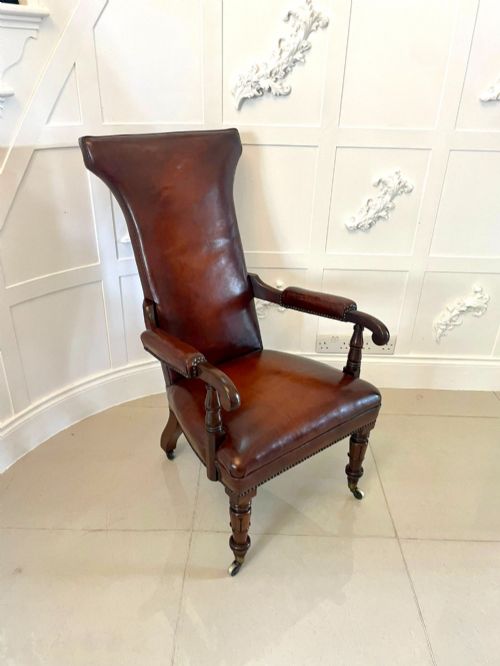
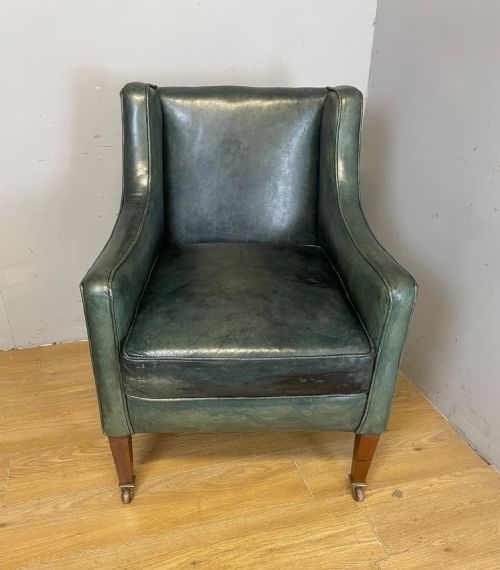
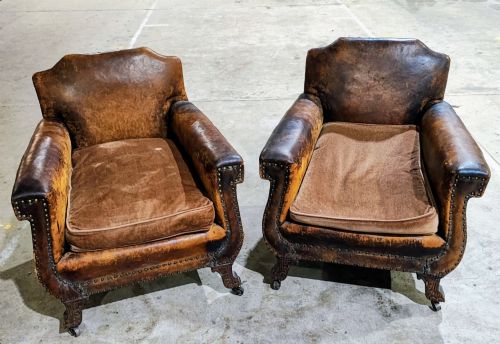
A library club chair provides a substantial, deep seating option designed for extended periods of reading and study. These armchairs appear in various forms across this page, ranging from nineteenth-century mahogany frames to early twentieth-century French and English club models.
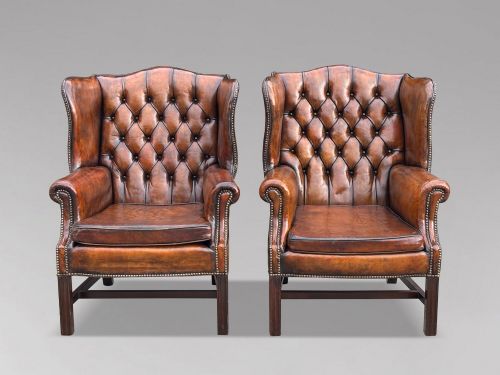
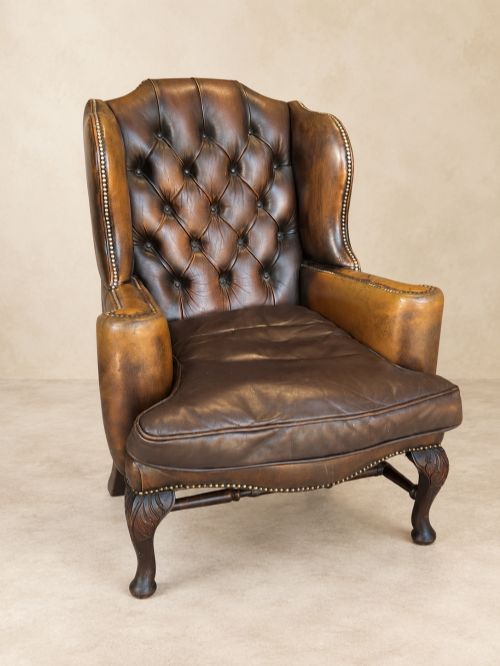
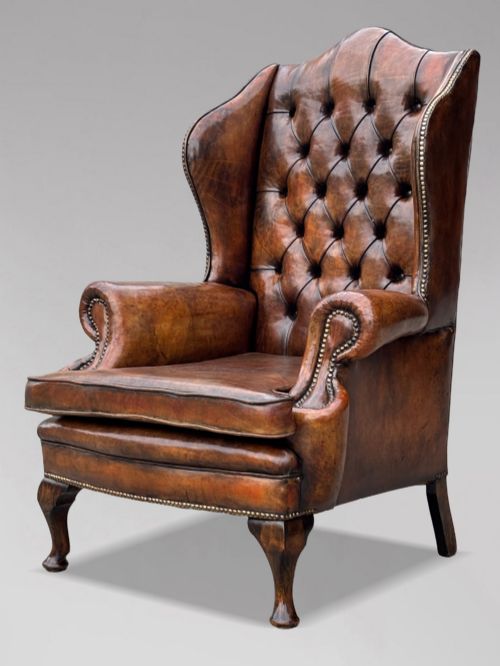
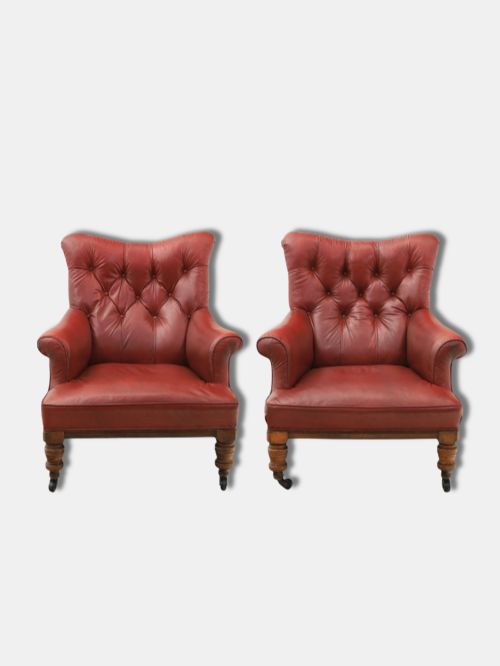
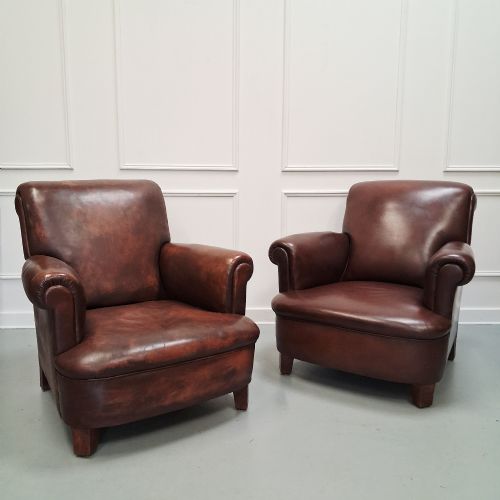
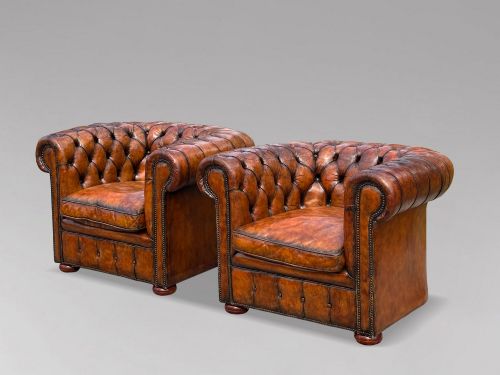
The most frequent examples encountered here date from the nineteenth century into the 1930s, constructed with upholstered leather or velvet. Buyers encounter buttoned wing backs, tub shapes, and Chesterfield styles alongside open armchairs supported on mahogany or oak legs.
Materials and Construction
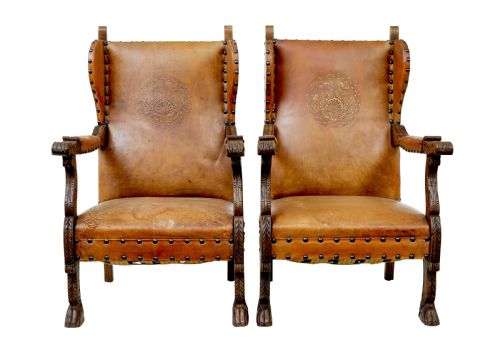
Makers built the structural frames of these armchairs using dense hardwoods, predominantly mahogany and oak, often incorporating tapered or carved wooden legs. Brass details appear on castors or decorative hardware, fastening the upholstery securely to the timber skeleton.
Upholstery relies heavily on leather, finished in brown, tan, or oxblood tones, alongside occasional red velvet or embossed leather panels. Buttoning techniques secure the padding across high backs and deep seats, distributing tension evenly across the hide.
Many a nineteenth-century reader dozed off so soundly in these deep chairs that matching footstools had to be invented.
Assessing Quality and Execution
Quality rests in the proportional balance of the wooden frame and the depth of the timber carving, distinguishing simpler workshop pieces from finer cabinet-maker productions. Heavier hardwoods provide structural stability that sustains the weight of deep padding over generations.
The grade of the leather and the precision of the buttoning determine the finish at the upper end of the scale. Supple hides retain their suppleness and fit closely to the contours of the arms and wings without slackness.
Howard & Sons·Holland & Sons
The Library Club Chair Glossary
- Wing Back
- An armchair style featuring protective side panels attached to the arms to deflect draughts towards the seated person. This traditional form appears frequently on nineteenth-century library seating.
- Chesterfield
- A deep-buttoned upholstered design traditionally executed in leather with rolled arms matching the height of the back. These large armchairs provide robust support for studies and reading rooms.
- Tub Chair
- A curved, semi-circular armchair where the back rail flows continuously into low arms. These compact seats utilise mahogany frames and leather upholstery.
- Bergere
- An upholstered armchair featuring exposed wooden frames and woven cane panels along the back or sides. These pieces integrate lighter woodwork into traditional seating forms.
Library Club Chair: Frequently Asked Questions
What defines a library club chair?
A library club chair is a deep, upholstered armchair designed for reading rooms, typically featuring leather or velvet coverings over a sturdy hardwood frame.
These chairs prioritise comfort through padded backs, generous seats, and supportive armrests suited for long hours of study.
How do I identify Victorian examples?
Victorian pieces often display darker mahogany or oak frames, frequently incorporating carved details, buttoned leather upholstery, and heavy proportions.
Examining the turning of the timber legs and the method of upholstery fastening helps distinguish this period from later Edwardian or 1930s designs.
Where were these armchairs used?
These seating pieces originated in private libraries, country house studies, and gentlemen's clubs where readers required durable and comfortable support.
Their robust timber frames and wipe-clean leather surfaces made them practical for daily use in busy domestic spaces.
How should I care for leather upholstery?
Leather upholstery benefits from regular dusting with a dry cloth and occasional treatment with suitable leather balms to prevent drying out.
Keeping these chairs away from direct heat sources and strong sunlight preserves the natural colour and supple texture of the hide.