

Library Cabinet with Doors
A library cabinet with doors brings order to a room, enclosing volumes behind glass panels while grounding the floor space in timber.
Library Cabinet with Doors
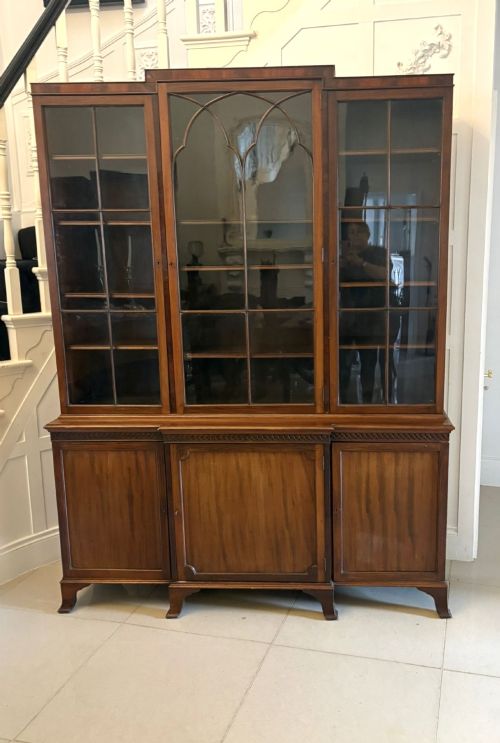
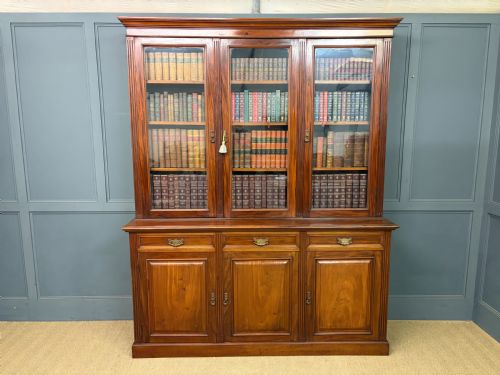
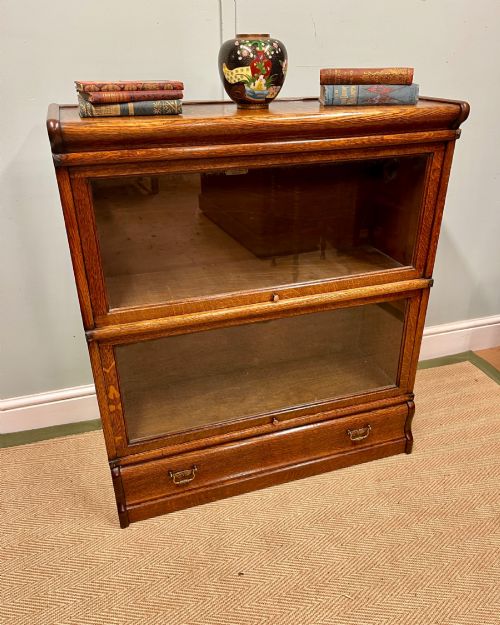
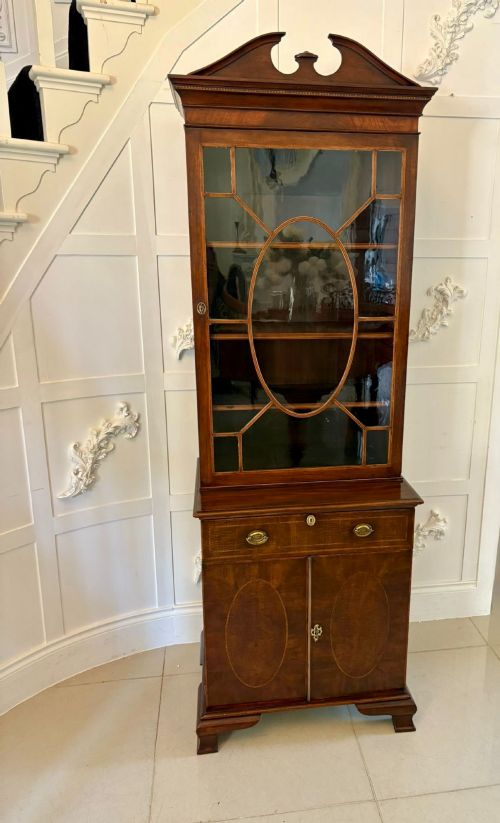
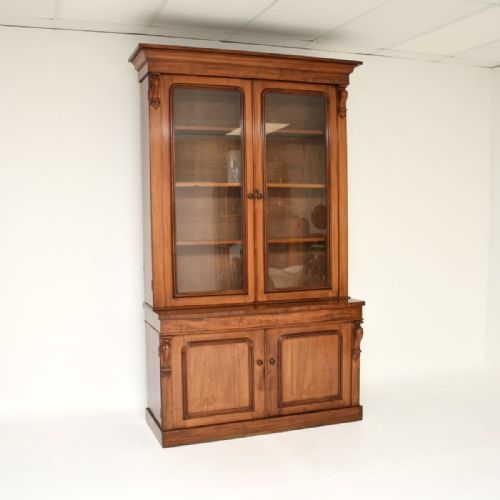
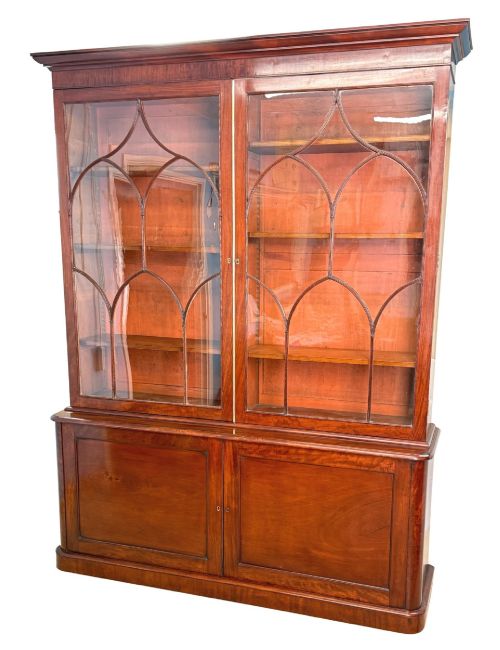
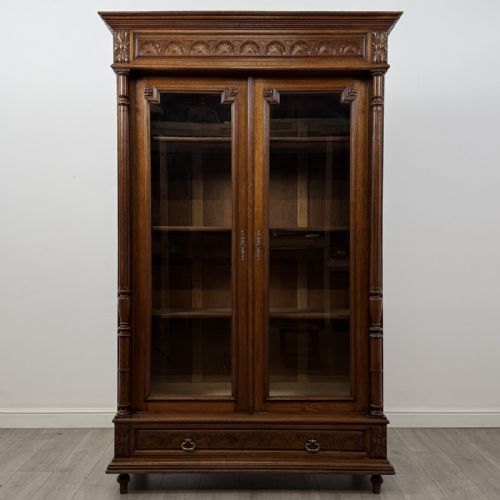
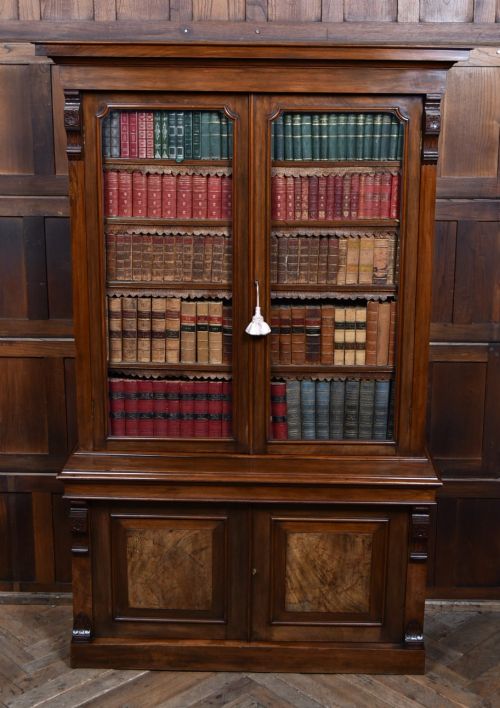
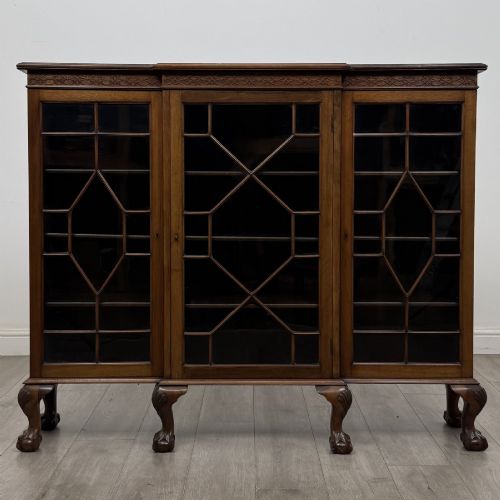
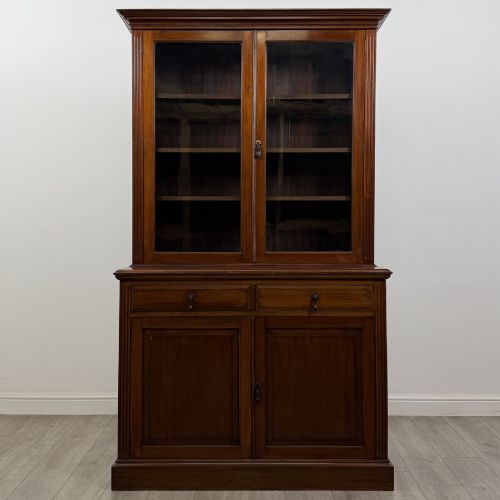
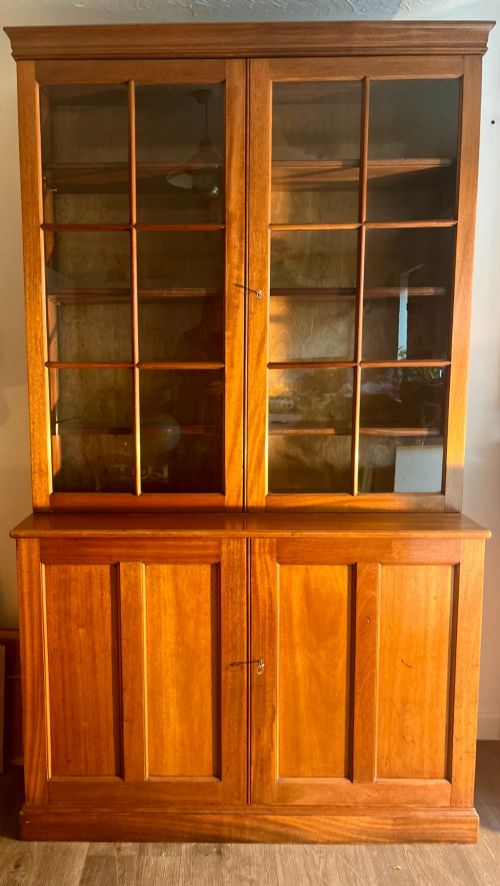
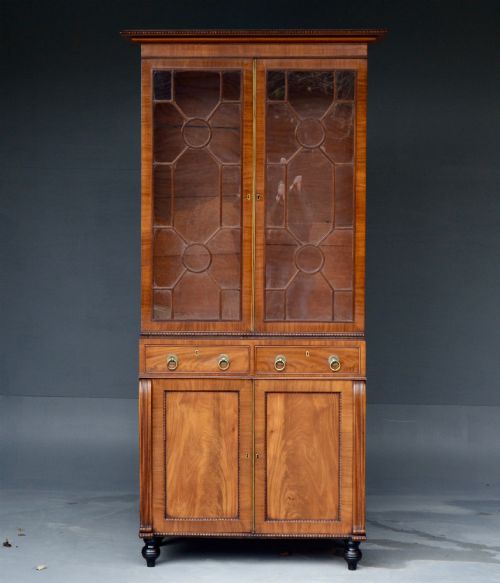
A library cabinet with doors is a storage piece designed to house books and display volumes safely away from dust. These cabinets appear across several distinct historical styles, including Regency, Victorian, Edwardian, and the 1920s.
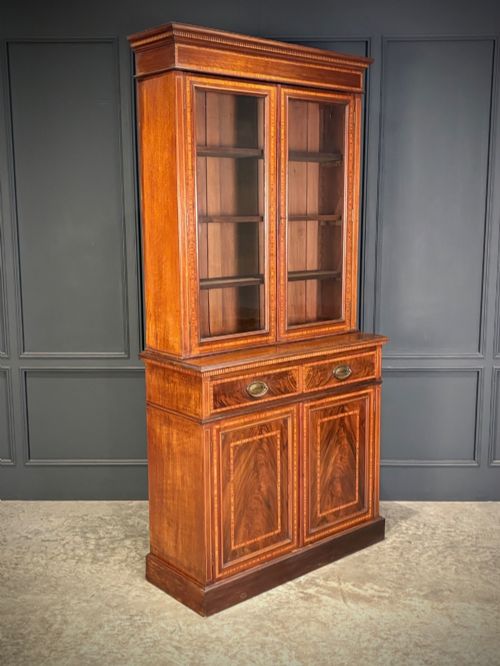
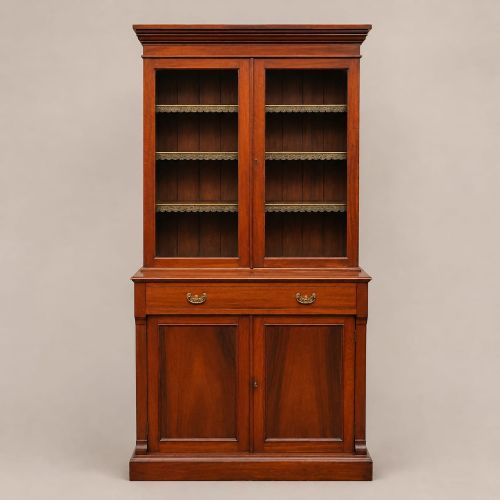
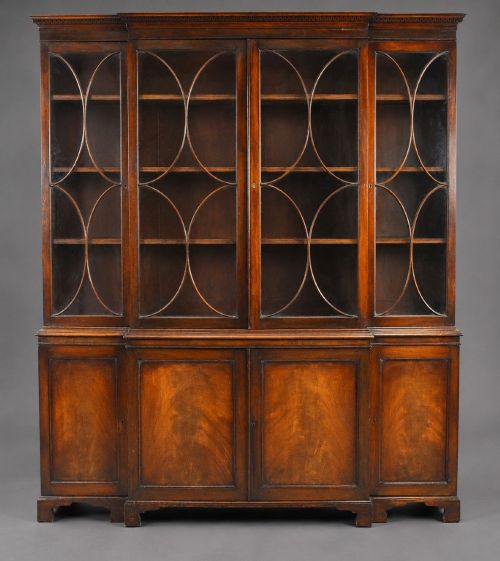
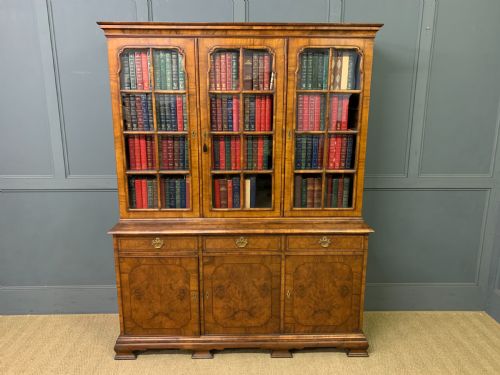
Most examples found here are executed in mahogany, oak, or walnut, often featuring glazed upper doors combined with lower wooden cupboards or drawers. Forms range from compact single-door units to large breakfront bookcases spanning multiple doors.
Makers and workshops of the nineteenth and early twentieth centuries produced these pieces to serve domestic studies, school libraries, and formal drawing rooms. The selection includes architectural designs alongside simpler utilitarian stacking and school library bookcases.
How they were made
Cabinetmakers utilised solid timbers such as oak, mahogany, and walnut, frequently applying flame mahogany veneer to primary surfaces for visual depth. Brass hardware, including hinges, locks, and handles, provides functional detail alongside glazed panels set into timber frames.
Construction techniques involve fitted adjustable shelves to accommodate varying book heights, alongside architectural cornices such as crenelated designs. Interiors sometimes incorporate integrated writing slopes or lower cupboards built directly into the base structure.
Library Cabinet with Doors Retail Price Guide 2026
Typical asking prices for library cabinet with doors among the pieces listed under this phrase on Sellingantiques today, from the lower quarter to the upper quarter. They describe what is for sale here now, not the wider market.
Periods represented span the 18th Century, Regency, William IV, 19th Century, Victorian, Edwardian, 1900, 1920, and Mid-Century Modern.
What varies in quality
Quality rests upon the selection of timber figures, such as figured or flame mahogany veneer, and the crispness of architectural mouldings and cornices. Better examples display careful joinery in the door frames and refined brass fittings rather than plain utilitarian hardware.
The sophistication of the internal fitting, including adjustable shelving systems and integrated cupboards or writing slopes, separates standard production pieces from finer cabinetmaker output.
Minty·Robert Strahan·James Winter and Sons
The Library Cabinet with Doors Glossary
- Breakfront
- A piece of furniture whose central section projects forward from the flanking wings. This architectural arrangement creates depth and visual rhythm across larger multi-door bookcases.
- Glazed
- Fitted with glass panels to allow the contents of the cabinet to be viewed while protected from dust. These panels are typically held within timber framing by putty or wooden glazing bars.
- Cornice
- The decorative mouldings that crown the top of a cabinet. Styles range from simple flat projections to crenelated or architectural pediments.
- Flame mahogany veneer
- A thin slice of mahogany timber cut from the fork of the tree where branches meet. This cut produces a characteristic swirling, flame-like grain pattern.
- Adjustable shelves
- Shelving resting on movable supports that allows the internal vertical space to be altered. This adaptation accommodates books of different heights.
Library Cabinet with Doors: Frequently Asked Questions
What is a library cabinet with doors?
A library cabinet with doors is a wooden storage piece built to hold books behind glass or solid panels. These units protect volumes from dust while displaying bindings.
They combine upper shelving areas with lower cupboards or drawers. The format suits studies, drawing rooms, and home libraries.
How do I date a Victorian bookcase?
Victorian library cabinets often display heavier proportions and rich mahogany or walnut timbers. Details like Gothic Revival motifs or architectural cornices point to specific decades within the era.
Interior construction, such as hand-cut dovetails and adjustable shelf mechanisms, also helps separate mid-Victorian pieces from later Edwardian examples.
Are the shelves adjustable?
Many library cabinets feature adjustable shelves to accommodate books of varying heights. This practical addition allows the internal layout to change as collections grow.
Mechanisms vary from traditional wooden racks to metal pins fitted inside the cabinet walls.
Where were these cabinets used?
These pieces were originally placed in private studies, grand libraries, and institutional rooms to organise reference volumes. Their dual storage options kept working papers below and reference books visible above.
Today, they serve similar functions in residential living spaces and home offices.