




Liberty Writing Desk
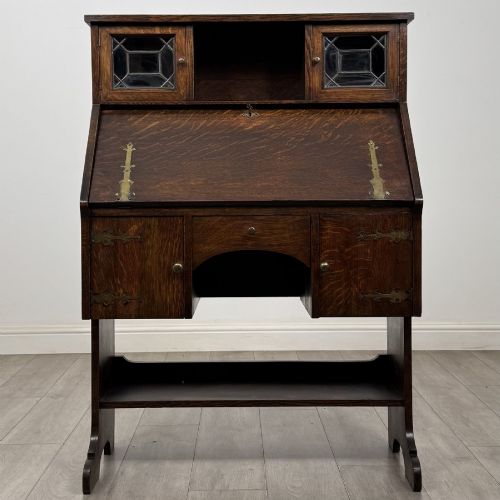
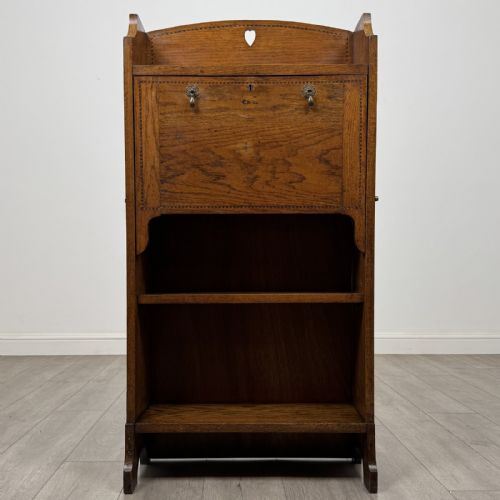
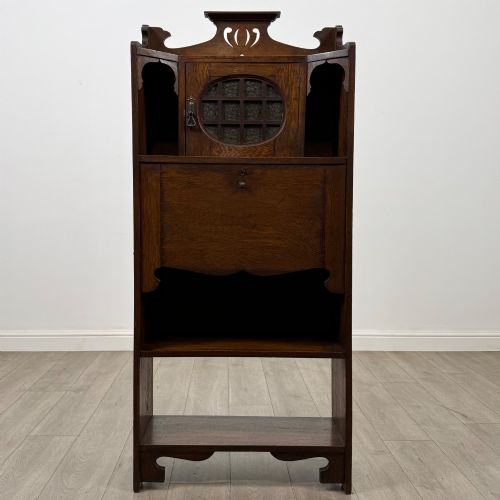
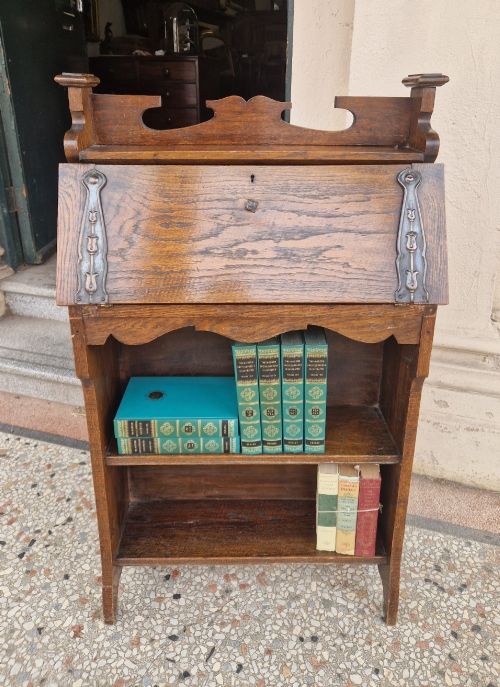
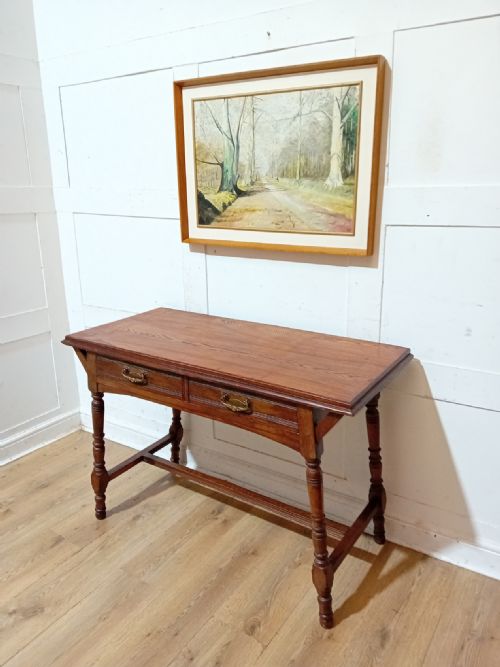
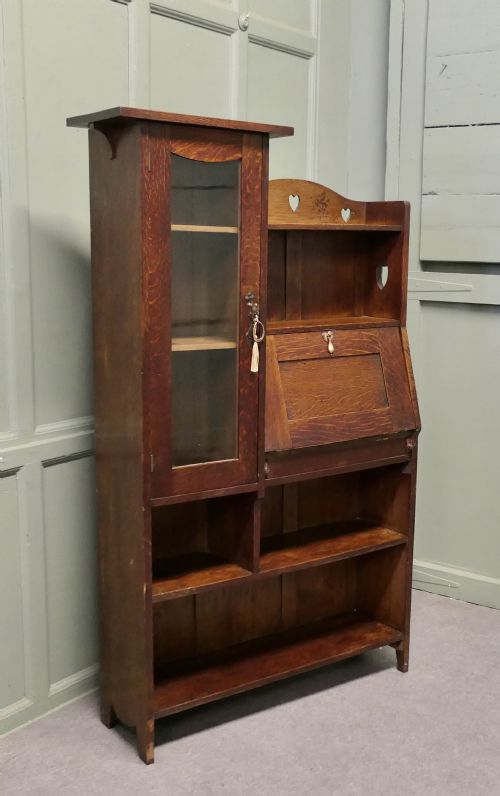
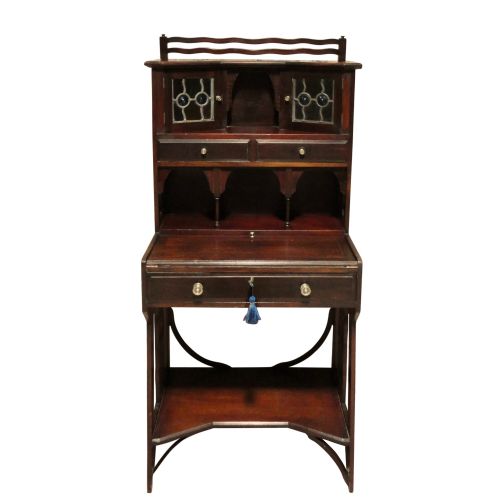
A liberty writing desk offers functional workspace combined with distinctive Arts and Crafts and Chinoiserie design, making it a striking centrepiece for any study.
Liberty Writing Desk
The objects on this page span from the 1880s through the 1920s, capturing the evolution of utilitarian furniture into artistic statements. Forms range from compact students bureaux to substantial writing desks and side tables, reflecting diverse workshop outputs associated with the period. Oak remains the predominant material choice, though select examples utilise mahogany or exotic hardwoods alongside decorative brass, copper, and glass elements.
How they were made
Makers constructed these desks primarily using solid oak, golden oak, and mahogany, often selecting timber for its pronounced grain and durability. Joinery relied upon traditional cabinet-making methods designed to withstand daily use while highlighting the natural character of the wood.
Surface ornamentation involved subtle inlaid details, alongside applied metalwork in brass and copper. Glazed cabinet doors and leaded glass elements were integrated into bureau bookcases, whilst specialised writing surfaces frequently incorporated inset leather panels.
Liberty Writing Desk Retail Price Guide 2026
Typical asking prices for liberty writing desk among the pieces listed under this phrase on Sellingantiques today, from the lower quarter to the upper quarter. They describe what is for sale here now, not the wider market.
Some desks hide secret compartments behind their pigeonholes, ready to guard love letters or misplaced fountain pens from inquisitive houseguests.
What varies in quality
The distinction between standard commercial output and exceptional work lies in the refinement of the timber selection and the complexity of the cabinet construction. Finer examples display meticulous attention to grain alignment, superior handling of inlaid details, and integrated hardware such as bespoke copper or brass fittings that elevate the piece beyond utilitarian function.
Stylistic ambition also divides the range, distinguishing simple oak tables from elaborate Moorish or Chinoiserie influenced bureaux with glazed cabinets and integrated bookcases. The integrity of secondary materials, including leaded glass and fitted leather writing surfaces, further determines the overall sophistication of an individual desk.
Liberty & Co
The Liberty Writing Desk Glossary
- Bureau
- A writing desk fitted with a hinged sloping flap that covers a workspace and internal pigeonholes. These often sit atop a chest of drawers or an open framework.
- Arts and Crafts
- A design movement promoting handcraftsmanship, simple forms, and traditional materials over mass production. It heavily influences the oak and ash furniture of this era.
- Chinoiserie
- European decorative style inspired by Chinese art and design, characterising specific hardwood writing tables on this page. It brings painted or lacquered motifs to traditional furniture forms.
- Golden Oak
- A light, warm-toned variety of oak timber favoured by late nineteenth and early twentieth-century cabinet makers. It accentuates the natural grain patterns in Arts and Crafts desks.
Liberty Writing Desk: Frequently Asked Questions
What materials are used in these desks?
These desks primarily utilise solid oak and mahogany as their main structural timbers. Metal accents in brass and copper appear alongside glass components in glazed cabinets.
Secondary materials include leather for writing surfaces and lead integrated into cabinet detailing.
How do I identify an Arts and Crafts desk?
Arts and Crafts desks are characterised by honest construction, visible wood grain, and minimal yet effective ornamentation. They frequently employ golden oak and feature functional built-in compartments.
Stylistic touches often include subtle inlaid details and distinctive copper or brass hardware rather than heavy historical revivals.
Were these desks used for writing or storage?
They served dual purposes as both functional writing surfaces and storage units for stationery and books. Many incorporate internal pigeonholes behind sloping flaps or cabinets.
Combination pieces like bureau bookcases merge workspace with shelving to accommodate domestic libraries.
How do I date a liberty writing desk?
Dating relies on stylistic markers and material choices spanning from the 1880s through the Edwardian era and 1920s. Pieces from the late nineteenth century often reflect Moorish or early Arts and Crafts aesthetics.
Later Edwardian and 1920s examples tend towards refined golden oak finishes and integrated glazed cabinetry.