




Liberty Style Copper
Liberty style copper brings together the tactile warmth of hammered metal and the organic motifs of the Arts and Crafts and Art Nouveau movements.
Liberty Style Copper
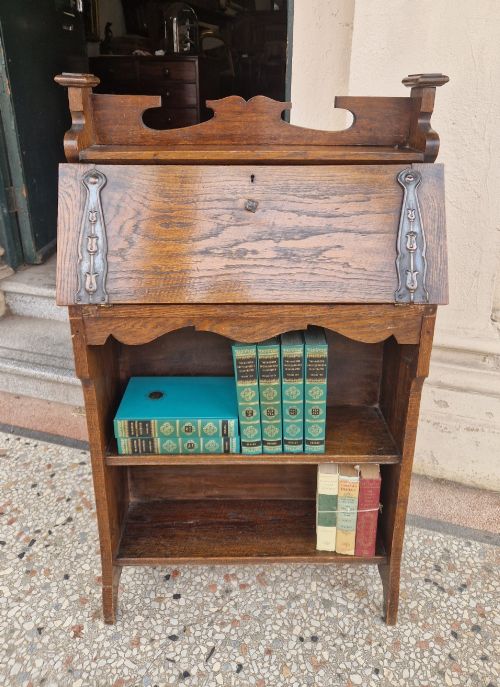
When you search for liberty style copper, you find domestic furnishings and decorative objects that embody the aesthetic principles of the late nineteenth and early twentieth centuries. These pieces bridge the gap between functional utility and artistic expression, frequently combining warm metallic surfaces with traditional timbers like oak.
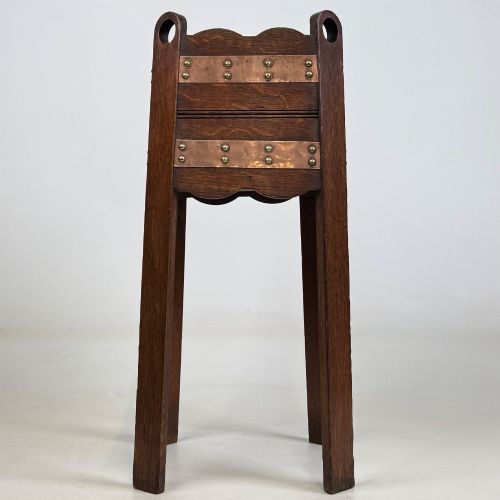
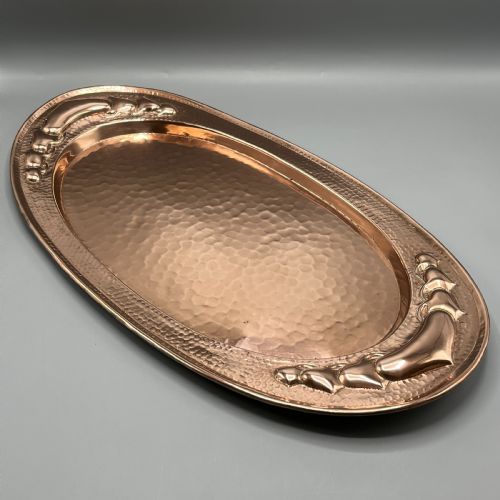
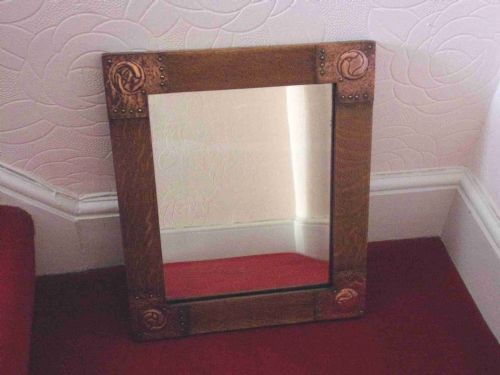
Wall mirrors form a significant portion of what you encounter on this page, often framed in repoussé copper featuring stylised trees, Celtic knots, or honesty seed pods. Alongside mirrors, the listings include occasional tables, plant stands, and decorative bowls accented with colourful cabochons.
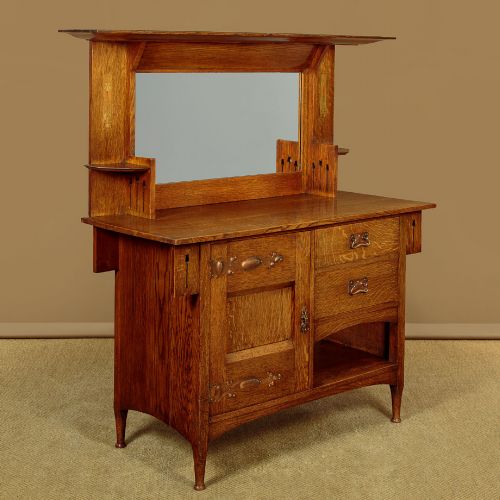
The objects span periods from the 1880s through to the Edwardian era, showing strong ties to the Arts and Crafts movement and Art Nouveau. You will frequently find copper paired with oak, brass, and enamel to create domestic items that celebrate craftsmanship.
How they were made
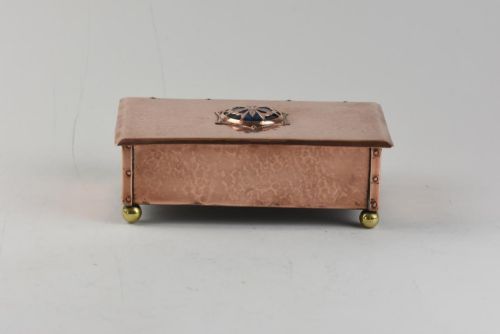
Makers utilised sheet copper as the primary medium for decorative panels, chargers, and mirror frames, often shaping the metal by hand. Artisans employed repoussé techniques to push the metal from the reverse side, creating raised patterns of fruit, foliage, and geometric interlace.
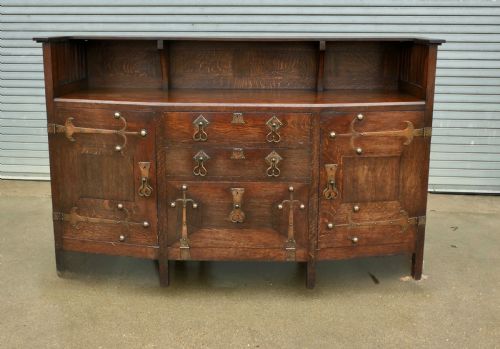
Many of the metal components incorporate contrasting insets, using enamel cabochons, Ruskin ceramic inserts, or brass mounts to add focal points of colour. These metal elements were frequently fixed to wooden carcasses, such as oak sideboards, tables, and letter boxes, using visible copper rivets.
Liberty Style Copper Retail Price Guide 2026
Typical asking prices for liberty style copper among the pieces listed under this phrase on Sellingantiques today, from the lower quarter to the upper quarter. They describe what is for sale here now, not the wider market.
Honesty seed pods and oil galleons share wall mirror space with stylised trees, proving copper could sail the seas or stand in the garden.
What varies in quality
The distinction between standard production items and finer examples lies in the depth and crispness of the hand-beated relief work. Superior pieces display deliberate, controlled hammer marks and deeply articulated motifs rather than shallow, mechanically pressed stamping.
Quality is also determined by the integration of subsidiary materials, such as the use of high-grade Ruskin pottery cabochons or carefully selected golden oak. Pieces that retain their original patination and unpolished surfaces command greater appreciation among collectors.
Liberty & Company·Leonard Wyburd
The Liberty Style Copper Glossary
- Repoussé
- A metalworking technique where the artisan hammers metal from the reverse side to form a raised design on the front. This method gives copper mirror frames and trays their tactile, three-dimensional surface texture.
- Cabochon
- A polished, convex gemstone or ceramic piece without facets, frequently set into metalwork. In these listings, they often appear as central colourful accents on copper bowls and mirrors.
- Arts and Crafts
- A design movement spanning the late nineteenth and early twentieth centuries that championed traditional craftsmanship and simple forms. It reacted against mass-produced industrial goods by reviving hand-worked materials like copper and oak.
- Art Nouveau
- An international style of art and architecture characterised by intricate linear designs and flowing, organic curves inspired by natural forms. This aesthetic heavily influenced the stylised plant and seed pod motifs found on copper frames.
- Ruskin pottery
- A British ceramic manufactory known for its innovative high-fired crystalline and coloured glazes. Their distinctive cabochons were frequently mounted onto Arts and Crafts copper bowls and mirrors.
Liberty Style Copper: Frequently Asked Questions
What is liberty style copper?
Liberty style copper refers to decorative metalwork and framed mirrors associated with the design ethos of the famous London store and the broader Arts and Crafts movement. These items typically feature hand-beated surfaces and organic motifs.
They reflect an era when domestic objects were designed to showcase artisanal skill and natural materials within everyday Edwardian and late Victorian homes.
How do I date these copper items?
Dating relies on stylistic clues, construction methods, and materials, with pieces generally spanning the late nineteenth century up to the 1910s. Earlier examples often align with the strict principles of the Arts and Crafts exhibition societies.
Later Edwardian pieces frequently incorporate commercial innovations like Ruskin ceramic cabochons or machine-sawn oak frames alongside the hand-worked copper panels.
Where should I place a copper mirror?
Copper mirrors suit rooms with natural light where the hammered metal can reflect and catch the illumination. They work well above sideboards, mantelpieces, or in entrance halls.
Pairing them with wooden furniture or neutral walls allows the warm metallic tones and organic repoussé designs to stand out as focal points.
How do I clean antique copper?
Antique copper is best maintained by gently dusting with a soft, dry cloth to preserve its natural historic patination. Avoid harsh chemical polishes that strip away the aged surface character.
Allowing the metal to retain its darker, mellowed tones respects the original finish achieved over a century of exposure to domestic environments.