



Liberty Arts and Crafts Shelf
These liberty arts and crafts shelf pieces bring honest construction and utility into a room, offering simple shelving that suits everyday living.
Liberty Arts and Crafts Shelf
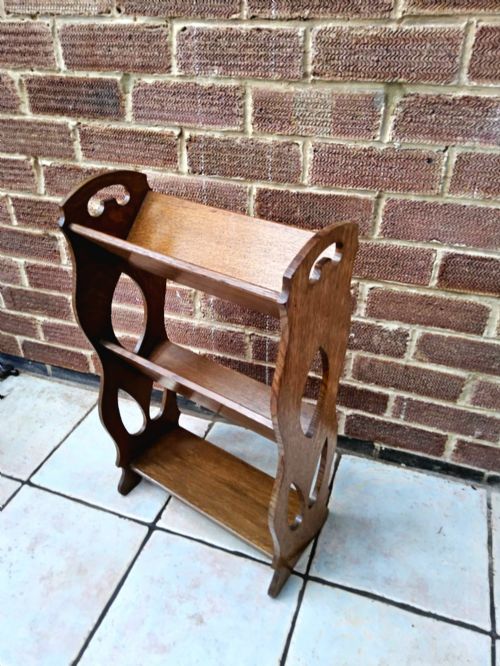
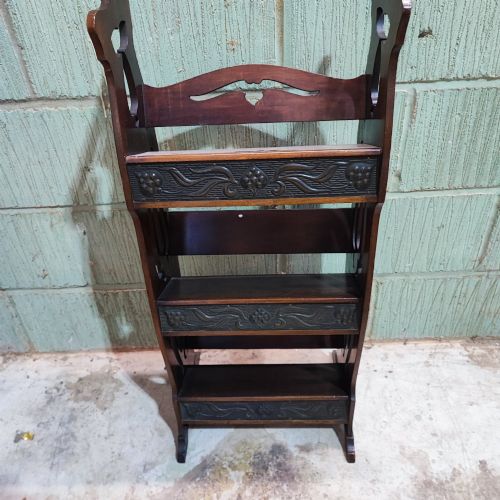
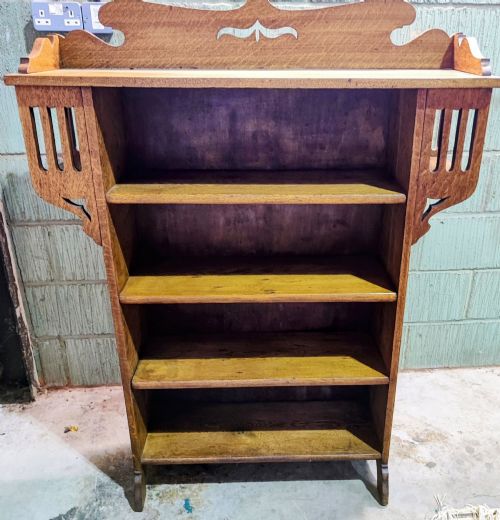
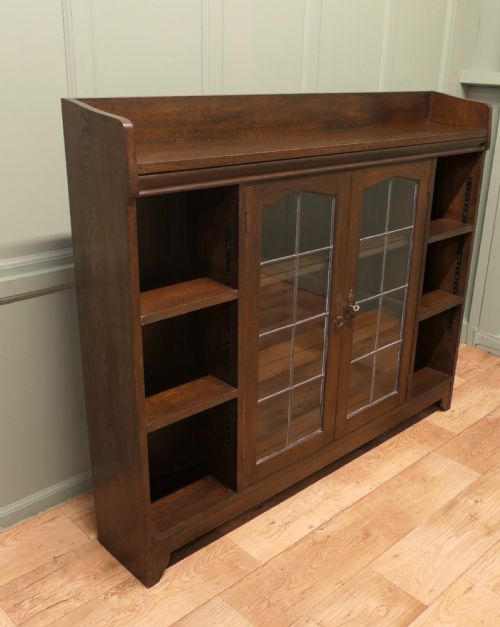
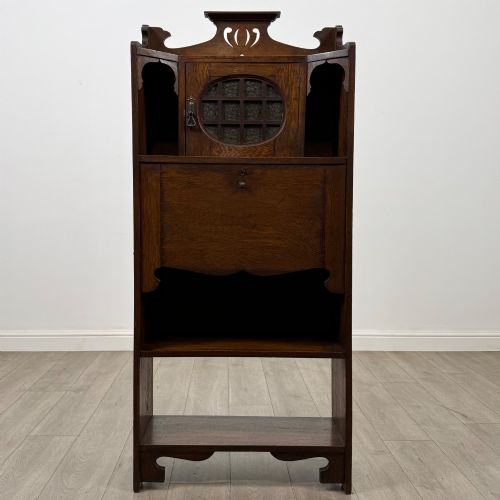
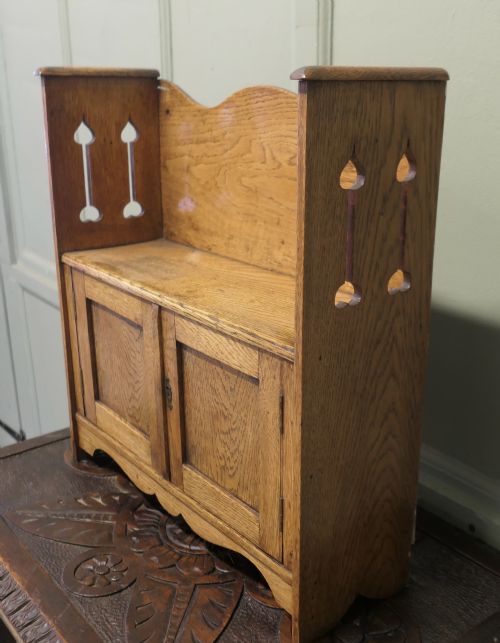
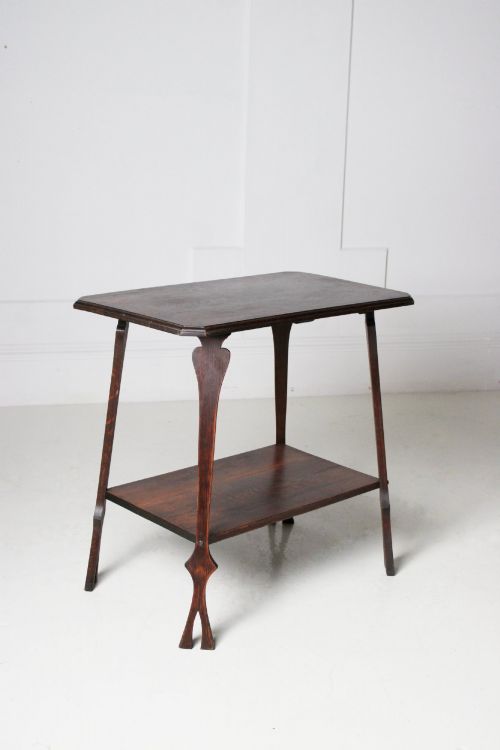
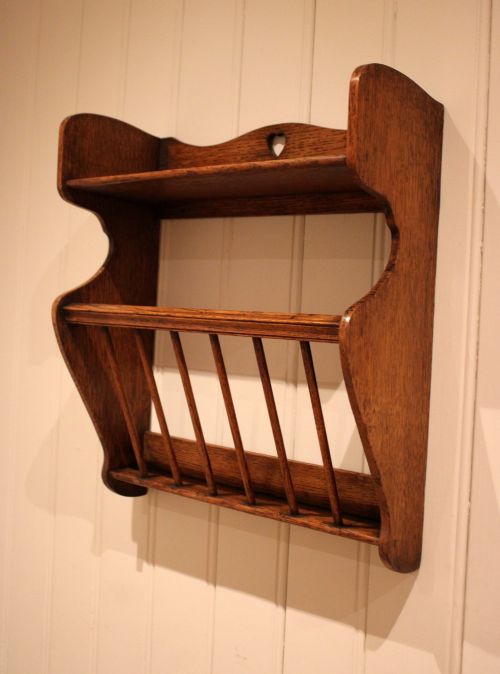
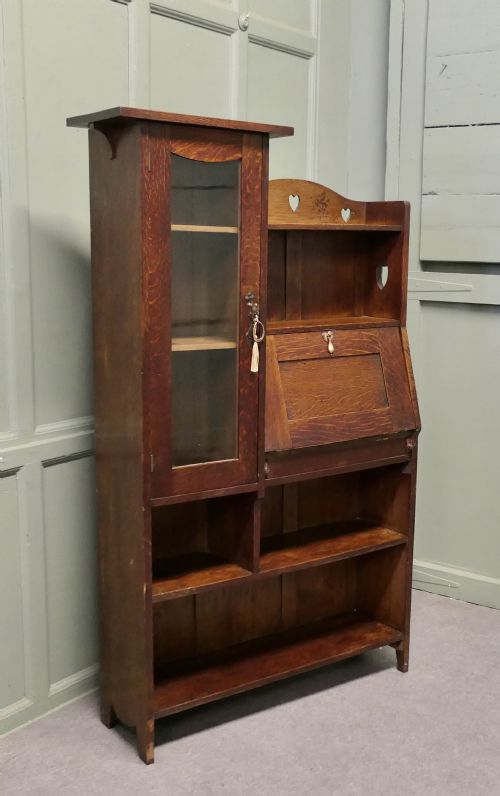
A liberty arts and crafts shelf embodies the practical philosophy of the movement, taking the form of wall cabinets, open bookcases, and wall shelves with magazine racks. You will frequently encounter oak construction across these pieces, often dating from the late nineteenth century into the Edwardian era.
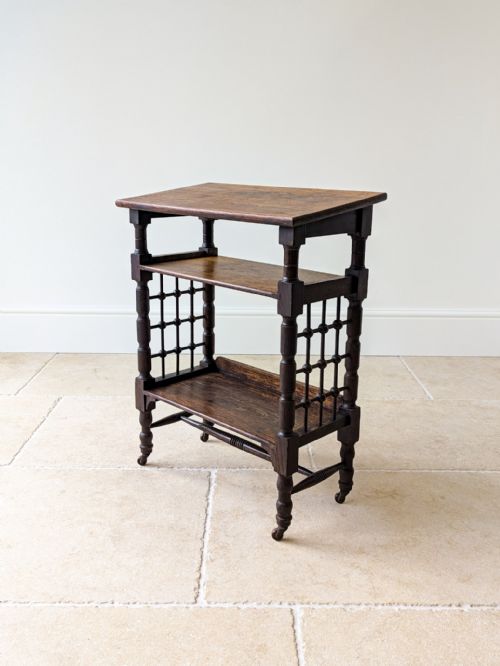
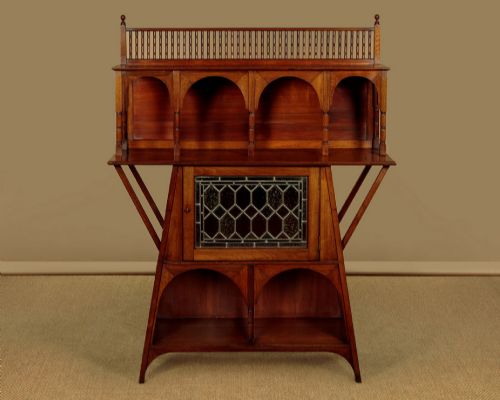
The selections span functional storage items, including side cabinets and waterfall bookcases, alongside occasional tables and desks. These pieces reflect the broader aesthetic of the period, incorporating styles such as Arts and Crafts, Art Nouveau, and Moorish Revival.
Makers and retailers like Liberty & Co and Shapland & Petter feature in this tradition, producing items that balance utility with distinct stylistic detailing. Buyers meet pieces ranging from simple open shelving to complex cabinets with glazed doors and inlaid detail.
Distinguishing quality in construction and detail
Quality rests on the selection of timber and the precision of the joinery, such as visible pegged joints and well-fitted shelves. The integration of auxiliary materials like decorative metalwork and enamel elements separates standard utility items from finer workshop output.
Subtlety of decorative elements, including fretwork patterns and inlaid details, distinguishes the better examples. The harmony between the structural woodwork and any applied stylistic influence determines the standing of an individual piece.
Liberty Arts and Crafts Shelf Retail Price Guide 2026
Typical asking prices for liberty arts and crafts shelf among the pieces listed under this phrase on Sellingantiques today, from the lower quarter to the upper quarter. They describe what is for sale here now, not the wider market.
The listings demonstrate a strong preference for oak, supplemented by glass, brass, lead, copper, and pewter across periods spanning the nineteenth and twentieth centuries.
Liberty and Co·Shapland and Petter·David Veasey·Archibald Knox
The Liberty Arts and Crafts Shelf Glossary
- Arts and Crafts
- A design movement prioritising traditional craftsmanship, simple forms, and natural materials over mass production. It emerged in the late nineteenth century.
- Tudric Pewter
- A trade name used by Liberty & Co for a brand of pewterware containing a high proportion of silver, often combined with enamel decoration.
- Fretwork
- Ornamental design created by cutting patterns through thin boards with a scroll saw or piercing tool. It frequently appears on side tables and shelf brackets.
- Pegged Joinery
- A method of securing mortise and tenon joints using wooden pins rather than modern adhesives. This technique allows for sturdy construction visible on many oak bookcases.
- Moorish Revival
- An architectural and decorative style incorporating Islamic design elements such as horseshoe arches and intricate woodwork. It influenced late nineteenth-century cabinetmaking.
Liberty Arts and Crafts Shelf: Frequently Asked Questions
What defines an arts and crafts shelf?
An arts and crafts shelf prioritises visible construction methods and honest materials, most commonly utilising solid oak with simple geometric lines.
These pieces focus on utility and often feature open shelving, pegged joints, or integrated magazine racks rather than heavy applied ornamentation.
How do I identify a Liberty piece?
Liberty items often display retailer attribution through distinctive design elements, specific metalwork like Tudric pewter, or association with known designers.
Documentation or attribution to makers such as Archibald Knox and David Veasey further helps confirm the origin of the work.
Are these shelves suitable for modern homes?
These pieces provide practical storage through open bookcases and wall cabinets that adapt easily to contemporary domestic spaces.
Their restrained use of oak and subtle decorative details allow them to sit comfortably alongside modern furniture.
What materials were commonly used?
Oak is the predominant timber found in these constructions, occasionally supported by mahogany for specific cabinet or bureau interiors.
Metal accents in brass, copper, lead, and pewter appear alongside glass panels and enamel inserts on decorative clocks and fittings.