
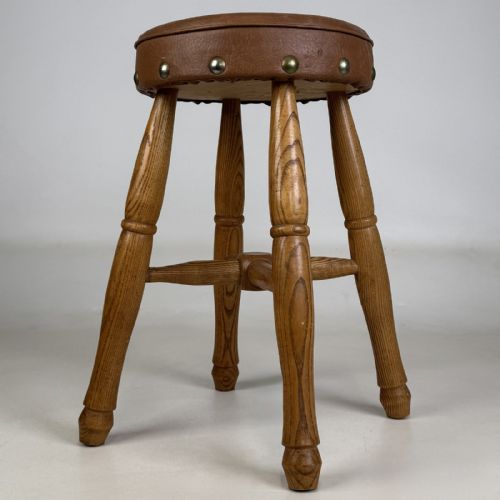
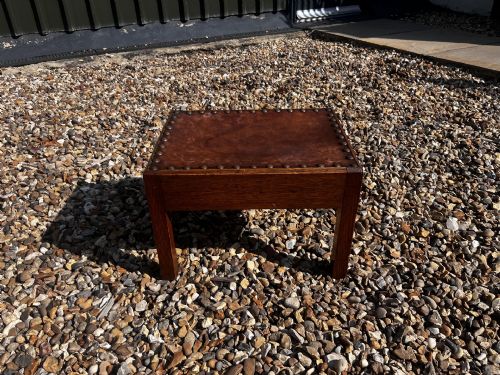


Leather Topped Stool
These leather topped stool pieces combine sturdy timber frames with durable hides, offering practical seating and access solutions for traditional interiors.
Leather Topped Stool
A leather topped stool serves various functional roles across the home, from domestic seating to multi-tiered library access. When buyers search for a leather topped stool, they encounter several distinct forms spanning multiple historical periods.
The most common variants on this page include mahogany library steps featuring leather treads, alongside traditional oak and walnut stools from the Victorian and Edwardian eras. These pieces bridge the gap between utilitarian workshop items and refined domestic furniture.
Makers utilised different timber bases to support the leather surfaces, resulting in varied silhouettes ranging from swivel piano seats to adjustable bar stools and multi-step stair structures.
Materials and construction methods
Makers constructed the frames primarily from hardwoods such as mahogany, oak, and walnut, frequently combining them with supple leather upholstery for the seating or tread surfaces. Brass fixings and metal components appear on adjustable mechanisms and library steps.
Joinery techniques matched the functional requirements of each piece, whether creating the stable base of an Arts and Crafts stool or the stepped framework of library steps. Beech and other timbers provided additional structural support where necessary.
Listings feature timber frames in mahogany, oak, and walnut, paired with leather inserts and brass hardware across multiple historical periods.
Assessing quality in construction and material
Quality separates standard utilitarian furniture from finer workshop pieces through the selection of dense hardwoods like mahogany and oak for the frame. The integration of the leather top into the wooden structure dictates the overall finish and durability of the piece.
Maker marks and specific stamps provide indicators of origin, distinguishing standard domestic items from workshop-attributed pieces. The complexity of mechanical elements, such as swivel mechanisms or adjustable height screws, further marks the gradation between basic and more elaborate examples.
Arthur Simpson Of Kendal·J.Jarvis
The Leather Topped Stool Glossary
- Library steps
- A set of portable stairs designed to reach high bookshelves, often incorporating leather inserts on the treads to provide grip and reduce noise.
- Swivel seat
- A seating platform mounted on a central axis that allows the top to rotate, commonly found on piano stools from the Victorian period.
- Canterbury stool
- A low seat incorporating compartmentalised storage beneath or beside the cushion, typically used for holding sheet music or books.
- Tread
- The horizontal upper surface of a step where a foot rests, frequently covered in leather on library steps found in this collection.
Leather Topped Stool: Frequently Asked Questions
What is a leather topped stool used for?
These pieces function primarily as domestic seating, piano benches, or multi-tiered library steps for reaching elevated bookshelves. Their sturdy timber frames and leather surfaces accommodated everyday utility in traditional spaces.
Over time, owners placed them in studies, libraries, and living rooms where both sitting and vertical access were required. Their varied forms adapted to domestic tasks throughout the nineteenth and early twentieth centuries.
How do I identify a Victorian example?
Victorian pieces typically utilise dense timbers like mahogany and walnut, often featuring turned legs and swivel or storage elements. The construction methods reflect the prevailing cabinet-making standards of the nineteenth century.
Examining the underside and the joinery helps confirm the period, alongside characteristic design motifs such as those found on piano and Canterbury stools.
What materials were used for the frames?
Makers relied heavily on hardwoods including mahogany, oak, and walnut to build durable structural frames. Beech and general metal components also appear in specific mechanical applications.
These materials provided the necessary strength for items subjected to weight bearing, such as library steps and adjustable bar seating.
How do library steps incorporate leather?
Library steps feature leather inserts fitted directly into the horizontal treads of the wooden stairs. This application provided a non-slip surface for users climbing to reach upper shelves.
The leather was typically secured around the edges of the wooden tread, combining practical utility with the formal appearance of period libraries.