

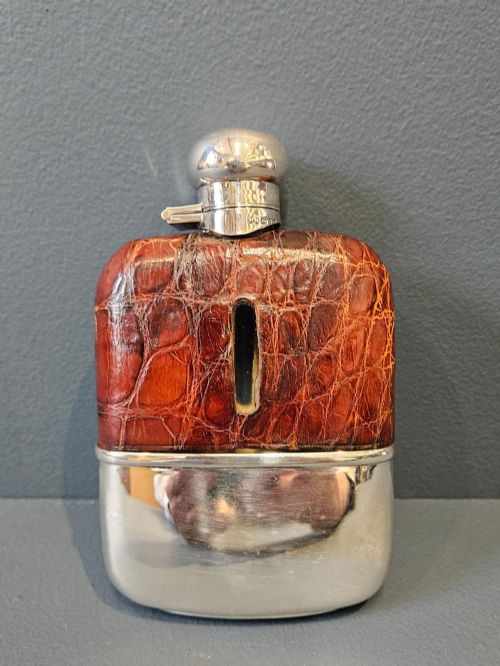


Leather Pocket Flask
A leather pocket flask is a sturdy companion for a nip on the move, combining precious metal with tough hide.
Leather Pocket Flask
A leather pocket flask is a compact vessel designed for carrying spirits securely about the person during travel or outdoor pursuits. These portable items emerge from various eras including the Victorian, Edwardian, and Art Deco periods, spanning the late nineteenth century through to the nineteen-thirties.
The specimens seen here typically take the form of hip flasks or spirit flasks, often incorporating a cup that fits snugly over the base. Buyers encounter variations ranging from plain leather bindings to exotic crocodile skin and crocodile leather finishes.
Most examples consist of a glass body partially or fully sheathed in hide, topped with a captive silver or silver-plated cap. Makers utilise sturdy materials to ensure these pocket companions withstand the rigours of daily use while retaining their period charm.
How they were made
The construction of a leather pocket flask relies on a combination of glassblowing, metalwork, and leathercraft. A moulded glass body forms the interior reservoir to contain the spirit safely without imparting flavour.
Outer coverings of leather, crocodile skin, or crocodile leather are hand-stitched or fitted precisely around the glass, sometimes featuring a removable cup in sterling silver or silver plate. Metal mounts, collars, and hinged caps are soldered and fitted by hand to ensure a watertight seal.
Leather Pocket Flask Retail Price Guide 2026
Typical asking prices for leather pocket flask among the pieces listed under this phrase on Sellingantiques today, from the lower quarter to the upper quarter. They describe what is for sale here now, not the wider market.
What varies in quality
Quality in a leather pocket flask rests upon the preciousness of the metal and the fineness of the hide. Sterling silver mounts and cups command greater attention than simple silver-plate, while genuine crocodile skin displays a more distinct texture than plain leather.
The precision of the stitching and the tightness of the cap fitting indicate the standard of craftsmanship. Well-preserved hallmarks on sterling silver components confirm the origin and date, adding further assurance of quality.
Hukin & Heath·James Dixon & Sons
The Leather Pocket Flask Glossary
- Hip Flask
- A curved container designed to fit comfortably against the body in a pocket. These vessels are shaped to follow the line of the hip or coat pocket.
- Sterling Silver
- An alloy containing ninety-two point five percent silver and seven point five percent other metals, usually copper. It provides durability alongside a bright, lustrous finish.
- Silver Plate
- A base metal coated with a thin layer of pure silver. This technique offered a more affordable alternative to solid silver while maintaining a similar appearance.
- Captive Cap
- A drinking top attached to the flask by a hinged arm. This clever design prevents the stopper from being misplaced during outdoor use.
- Hallmark
- An official stamp applied to precious metals indicating the standard of purity, the assay office, and the year of manufacture. These marks provide a reliable guide to age and origin.
Leather Pocket Flask: Frequently Asked Questions
What is a leather pocket flask?
A leather pocket flask is a portable drinking vessel featuring a glass body encased in hide, designed for carrying spirits discreetly.
These items date from the Victorian era through the early twentieth century and often include a metal cup.
How do I date my flask?
Dating relies primarily on hallmarks stamped into sterling silver mounts, which indicate the assay office and year of creation.
Stylistic details such as Edwardian proportions or Art Deco lines also help determine the period.
Are these flasks watertight?
Many period flasks remain capable of holding liquids if the cork or washer inside the cap is intact.
Collectors should check the seal gently before filling them with spirits for actual use.
Why use crocodile leather?
Crocodile skin and leather provided a durable, tactile exterior that improved grip and resisted wear.
Exotic hides also denoted a higher status for the owner during the Victorian and Edwardian periods.