





Leather Pad Chairs
Leather pad chairs bring together solid timber frames and durable hide upholstery for functional seating across several historic eras.
Leather Pad Chairs
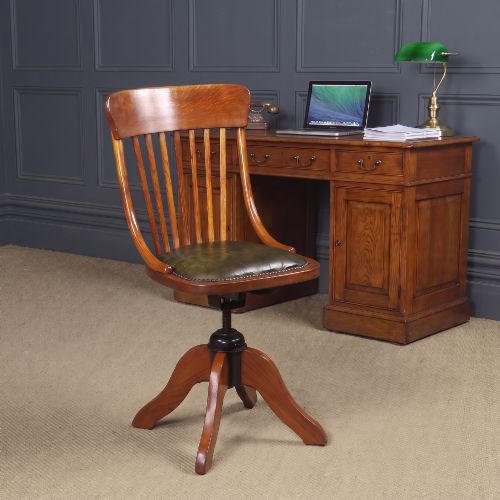
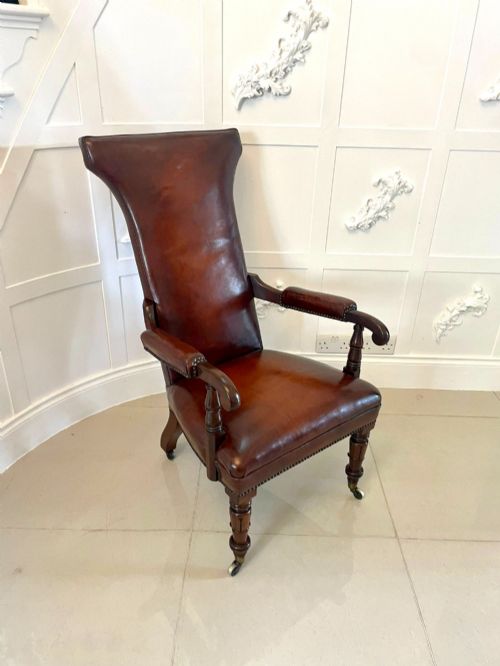
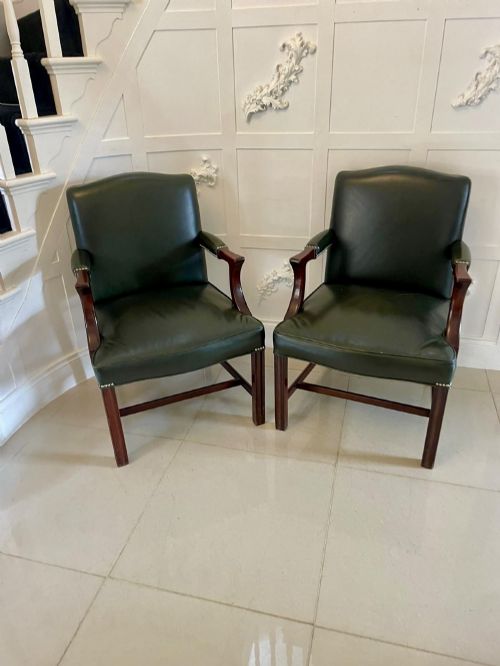
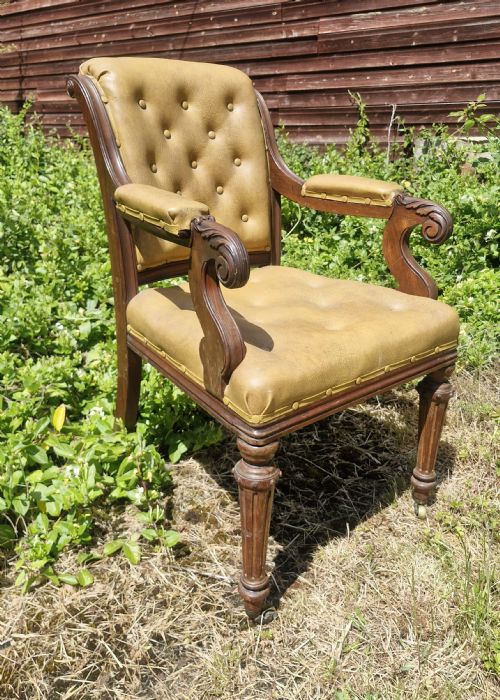
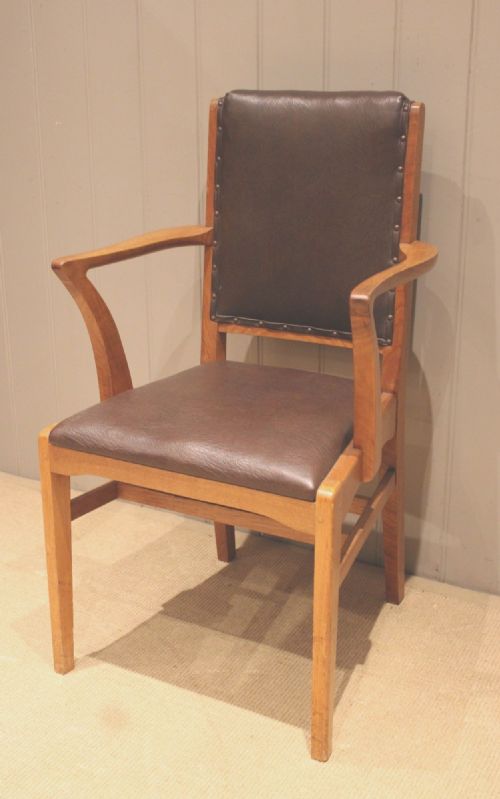
Leather pad chairs encompass a diverse selection of seating, ranging from robust office and desk chairs to library armchairs and dining sets. When exploring leather pad chairs, buyers encounter forms that span the nineteenth and early twentieth centuries, alongside revival interpretations of Georgian and Regency styles.
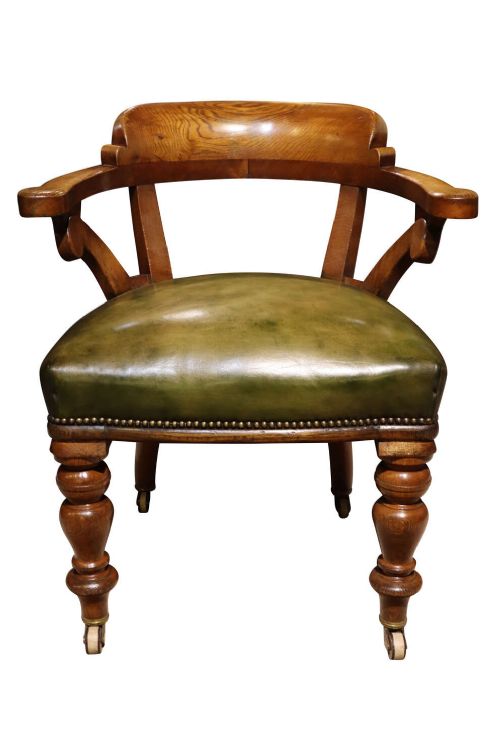
The materials utilised for these frames are predominantly oak, mahogany, and walnut, frequently paired with fitted hide pads in shades of green or brown. Office variants often incorporate swivel mechanisms or revolving designs, while library and dining pieces focus on solid timber frames and upholstered inserts.
Materials and construction methods
Makers constructed the structural frames of these seats using hardwoods such as mahogany, oak, and walnut, often shaping them with carved details, cabriole legs, or bentwood techniques. These timber elements provide the necessary rigidity to support regular daily use in domestic or professional settings.
Upholstery involves fitting leather pads directly into the wooden framework, sometimes complemented by brass hardware, cane, or iron components. Desk and office variations frequently integrate metal swivel mechanisms into the timber base to allow for movement.
Leather Pad Chairs Retail Price Guide 2026
Typical asking prices for leather pad chairs among the pieces listed under this phrase on Sellingantiques today, from the lower quarter to the upper quarter. They describe what is for sale here now, not the wider market.
The listings demonstrate a strong representation of Edwardian and Victorian oak and mahogany desk chairs fitted with green leather.
Indicators of manufacturing standard
The standard of a piece is evident in the selection of the timber and the precision of the frame joinery, with dense oaks and figured mahohany representing higher production values. Heavily carved details and well-fitted swivel mechanisms further distinguish superior examples from standard utility seating.
The integration of the leather pad relative to the wooden surround demonstrates the care taken by the maker. Uniform hide tension and clean brass detailing indicate careful workshop execution.
Hille·Holland & Son's·Thonet·Watkins & Doncaster·Daws
The Leather Pad Chairs Glossary
- Bergère
- An enclosed upholstered armchair with wooden framing, often featuring cane panels alongside padded elements.
- Swivel
- A mechanical desk chair base that allows the upper seat to rotate fully on a central iron or metal pivot.
- Smokers Bow
- A sturdy low-backed wooden armchair with a turned spindle gallery, commonly used as a robust office or desk seat.
- Elbow chair
- An armchair with shorter armrests designed to fit comfortably beneath a desk or dining table.
- Cabriole leg
- A furniture leg that curves outward and then tapers inward, typical of certain Victorian and revival seating forms.
Leather Pad Chairs: Frequently Asked Questions
What defines a leather pad chair?
These seats feature a wooden frame constructed from timbers such as mahogany, oak, or walnut, paired with an integrated leather seat pad. They encompass various forms including library armchairs, office desk seats, and dining chairs.
Most examples originate from the nineteenth and early twentieth centuries, incorporating styles that range from Victorian and Edwardian to Georgian and Regency revivals.
How do I choose a desk chair?
Consider whether you require a stationary side chair, an elbow desk chair, or a revolving swivel model with an adjustable mechanism. Oak and mahogany office chairs from the Edwardian and George V periods offer robust construction suited for modern workspaces.
Check the height relative to your desk and ensure the timber frame matches the scale of your room.
Where were these chairs used?
Historically, these seating forms served multiple environments, from institutional libraries and museum reading rooms to private studies and formal dining rooms. Office variants equipped with swivel bases supported administrative work in commercial offices.
Library and rocking chairs provided comfortable seating for domestic reading spaces and children's nurseries.
How do I date a timber chair?
Dating relies on identifying the primary wood species, construction methods, and stylistic cues associated with periods like the Victorian era, the Edwardian period, or the 1920s. The presence of metal swivel hardware often points toward late nineteenth or early twentieth-century manufacturing.
Revival pieces adopt earlier Georgian or Regency aesthetics while retaining the structural characteristics of their actual manufacturing decade.