

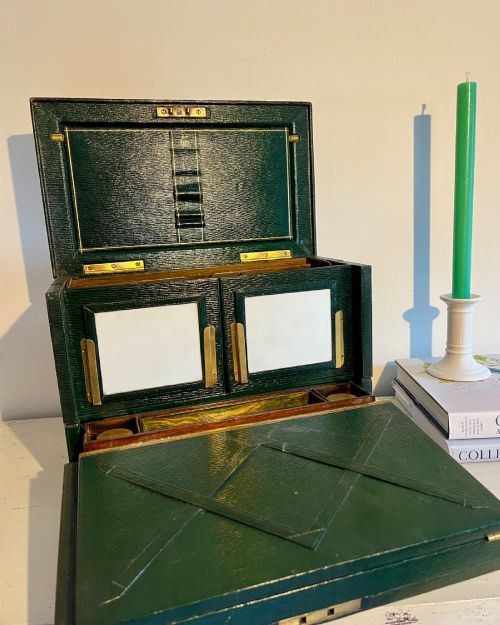
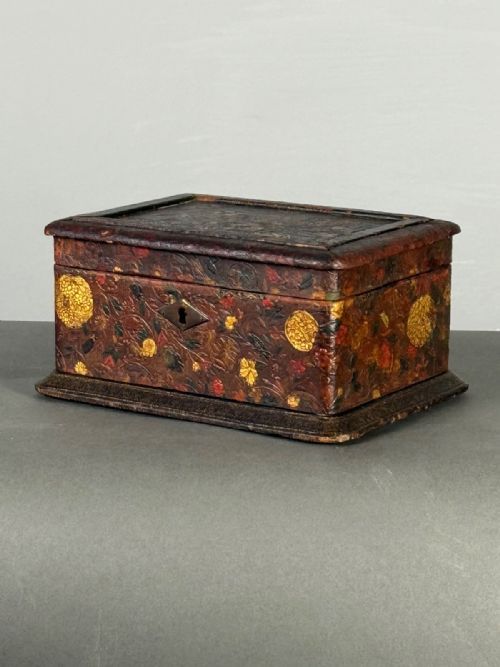
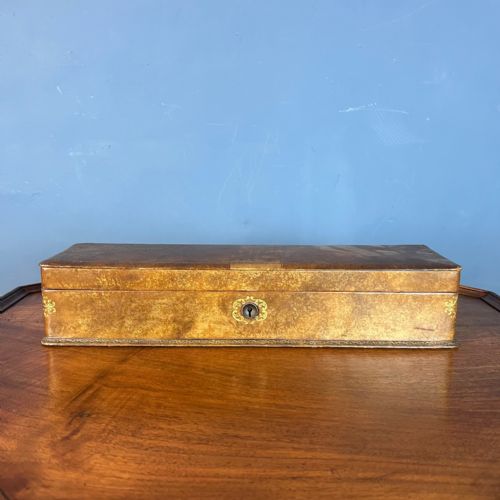


Leather Desktop Box
These leather desktop box pieces are functional desk accessories designed to hold correspondence, trinkets, or smoking items, combining practical storage with period craftsmanship.
Leather Desktop Box
A leather desktop box functions primarily as a repository for stationery, letters, jewellery, or tobacco, keeping desks orderly. The examples on this page span the nineteenth and early twentieth centuries, encompassing Victorian, Edwardian, and Art Deco periods.
Forms vary significantly across the listings, ranging from straightforward pen boxes and stationery cabinets to book boxes, cigar cabinets, and table cabinets. Materials like oak and walnut frequently form the underlying carcase before the leather is applied.
Materials and construction
Makers constructed these pieces using wood foundations such as oak and walnut, overlaid with leather surfaces that were frequently finished with gold leaf tooling. Brass mounts, hinges, and locks added structural reinforcement and visual contrast to the exterior.
Interior fittings often incorporated glass, porcelain, and pigments to create dedicated compartments for ink stands, writing implements, or small valuables. The application of polychrome detailing and specialised paper linings completed the construction of finer examples.
Leather Desktop Box Retail Price Guide 2026
Typical asking prices for leather desktop box among the pieces listed under this phrase on Sellingantiques today, from the lower quarter to the upper quarter. They describe what is for sale here now, not the wider market.
Listings feature items spanning the 19th century through the 1930s, incorporating Victorian, Arts and Crafts, and Art Deco styles.
Distinctions in quality
Quality rests upon the precision of the leatherwork and the crispness of the gilt tooling, alongside the structural integrity of the underlying wooden carcase. Pieces featuring integrated locking mechanisms by established retailers demonstrate a higher tier of production.
The sophistication of the internal arrangement also separates standard containers from superior examples, particularly those with fitted compartments for ink stands or specialised trays. Materials utilised for interior accents, such as fine glass or porcelain, further indicate the grade of the piece.
Susse Freres Paris·Houghton and Gunn
The Leather Desktop Box Glossary
- Stationery box
- A desktop container designed specifically to hold writing paper, envelopes, and correspondence. These often feature tiered interiors to keep documents separated.
- Tooled leather
- Leather decorated by pressing heated metal tools into the surface to create patterns, frequently enhanced with gold leaf. This technique defines many Victorian desk accessories.
- Table cabinet
- A small freestanding piece of furniture intended for placement on a desk or table, providing compartmentalised storage for valuables or documents. They often include locking doors or drop-front panels.
- Gilt-brass
- Brass metal treated with a gold-coloured finish or gold leaf application. It appears frequently as decorative corner mounts, hinges, and escutcheons on nineteenth-century boxes.
Leather Desktop Box: Frequently Asked Questions
What were leather desktop boxes used for?
These boxes served to organise and secure writing materials, correspondence, and personal valuables on a desk.
They provided a tidy workspace by keeping loose papers, pens, and small items enclosed within a decorative container.
How do I date a leather box?
Dating relies on observing stylistic markers, construction materials, and the types of locks or brass mounts used.
Victorian and Arts and Crafts examples often display characteristic oak carcases and specific tooling patterns typical of the late nineteenth century.
Are these boxes suitable for modern desks?
They fit well on modern desks while offering practical storage for contemporary stationery or small electronic accessories.
Their compact forms allow them to function as both decorative objects and usable desktop organisers.