

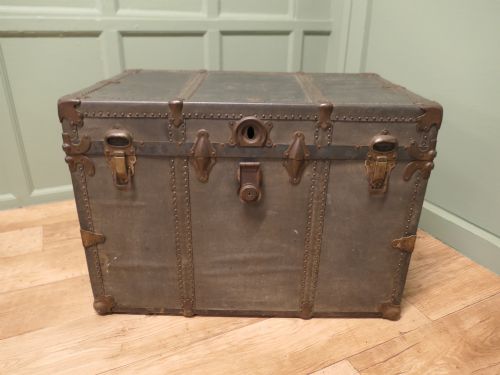
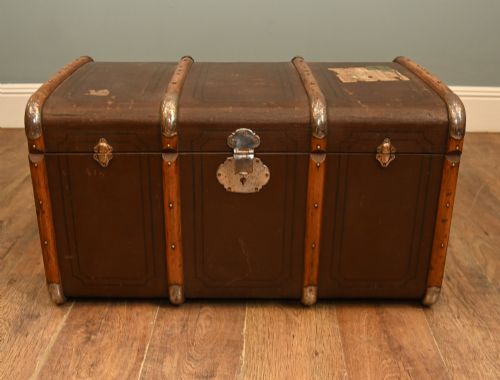


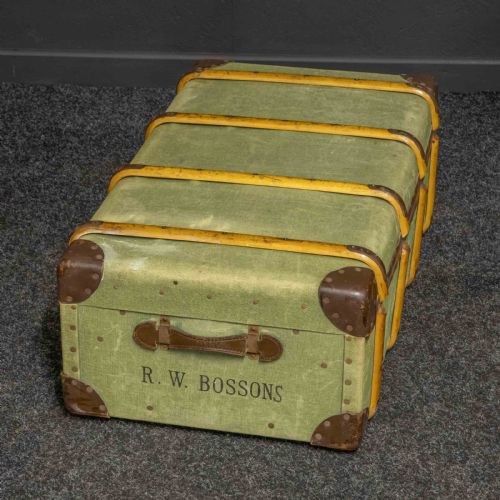


Leather Coffee Table Box
These leather coffee table box examples transform vintage luggage and ottomans into sturdy room centerpieces that hold clutter while anchoring a seating area.
Leather Coffee Table Box
A leather coffee table box serves as a functional anchor in a room, combining the deep storage of historical travel gear with the low profile needed for a sitting area. Buyers seeking a leather coffee table box find repurposed trunks, chests, and ottomans that adapt industrial history for domestic use.
The selections on this page span several distinct periods, including Regency, Victorian, and 1920s Art Deco. Forms range from large mahogany and leather ottomans to canvas-bound travel trunks and brass-bound camphor chests.
Examples originate from diverse traditions, from traditional English coaching chests to Parisian steamer luggage by Aux Etats Unis. Each piece brings its own travelling heritage directly into a modern living space.
How they were made
Construction relies heavily on durable hardwoods such as mahogany and camphor wood, clad in leather, pig skin, or canvas. These robust materials allowed travel trunks and chests to withstand the rigours of 19th-century and early 20th-century transit.
Metal components provide both structural reinforcement and decorative detail. Brass bindings, locks, and studs secure the edges and corners of coaching trunks and campaign chests against heavy handling.
Leather Coffee Table Box Retail Price Guide 2026
Typical asking prices for leather coffee table box among the pieces listed under this phrase on Sellingantiques today, from the lower quarter to the upper quarter. They describe what is for sale here now, not the wider market.
Listings feature items spanning the Regency period through to 1920s Art Deco, incorporating materials like mahogany, camphor wood, and brass.
What varies in quality
The integrity of the internal structure and the preservation of the outer skin dictate the calibre of each piece. Superior examples retain their original hardwood frames and functional hardware without losing the tactile warmth of hand-dyed leather.
Maker provenance and complexity of fitted interior compartments elevate certain pieces above standard storage chests. The precision of brass bound edges and the quality of the original lacquering or pig skin application separate utilitarian items from finer decorative pieces.
The Leather Coffee Table Box Glossary
- Ottoman
- A low, upholstered seat or footstool that often lifts to reveal storage space. These pieces function well as central room tables when topped with a flat surface.
- Campaign trunk
- A portable chest designed for military officers on the move, typically reinforced with brass corners and recessed handles for transit. They offer a structured, geometric aesthetic.
- Steamer trunk
- A flat-topped piece of luggage built for ocean liners during the early 20th century. Their lower profile makes them suitable alternatives to conventional coffee tables.
- Camphor wood
- An aromatic hardwood valued for its insect-repellent properties and durability. It frequently forms the internal structure of travel chests.
- Brass bound
- A method of reinforcing box edges and corners with metal strips and brackets. This technique protects vulnerable wooden joints from impact during travel.
Leather Coffee Table Box: Frequently Asked Questions
How do I use a trunk as a table?
Select a chest with a flat, stable top that sits at a comfortable height relative to your sofas and armchairs. Place a solid tray on top to hold drinks and books while protecting the leather surface from spills.
Ensure the internal storage remains accessible by keeping heavy objects off the surface so you can clear the top quickly when you need to access items stored inside.
Are these trunks waterproof?
Historical travel trunks utilised treated leather, canvas, and lacquered pig skin to resist moisture during sea voyages and railway journeys. However, decades of age mean modern spills require prompt wiping to prevent staining.
Treat the surface with appropriate leather conditioners rather than assuming historical waterproofing remains fully intact against standing liquids.
How do I clean old leather?
Dust the surface regularly with a soft, dry cloth to remove grit that can abrade the hide. Apply a pH-balanced leather cleaner followed by a nourishing wax or balm to maintain flexibility.
Avoid harsh modern detergents and excessive water, which strip natural oils from Victorian and Edwardian hides and cause cracking over time.
How do I date a trunk?
Examine the hardware, locking mechanisms, and internal linings for clues to the manufacturing era. Brass bindings, wooden framing types, and maker labels help distinguish Regency and Victorian pieces from 1920s Art Deco luggage.
Materials like camphor wood and black lacquered pig skin often point to specific regional export traditions and precise periods of popularity.