


Leather Captain Style Chair
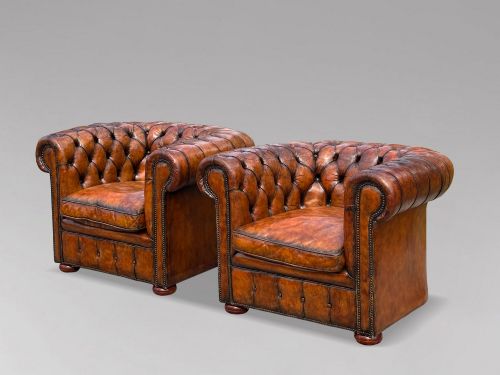
A leather captain style chair brings solidity and a well-worn grace to a study, offering deep seating and sturdy wooden frames.
Leather Captain Style Chair
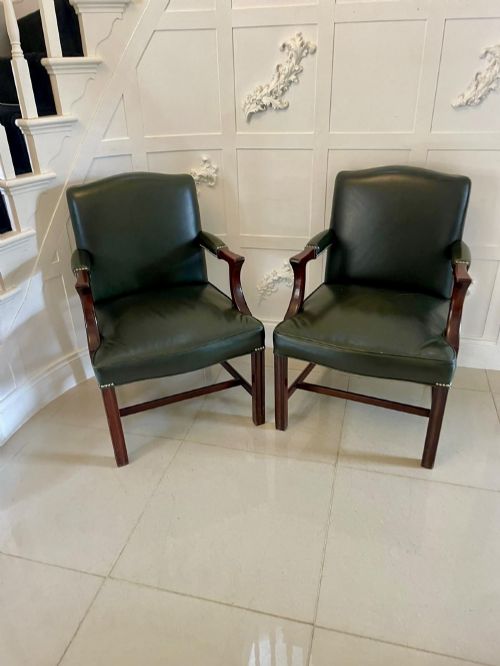
A leather captain style chair encompasses traditional swivel and fixed desk seating designed for working at a partner desk or library table. You will frequently find variants from the nineteenth century and the Edwardian era, spanning forms such as Gainsborough styles, library armchairs, and carver chairs.
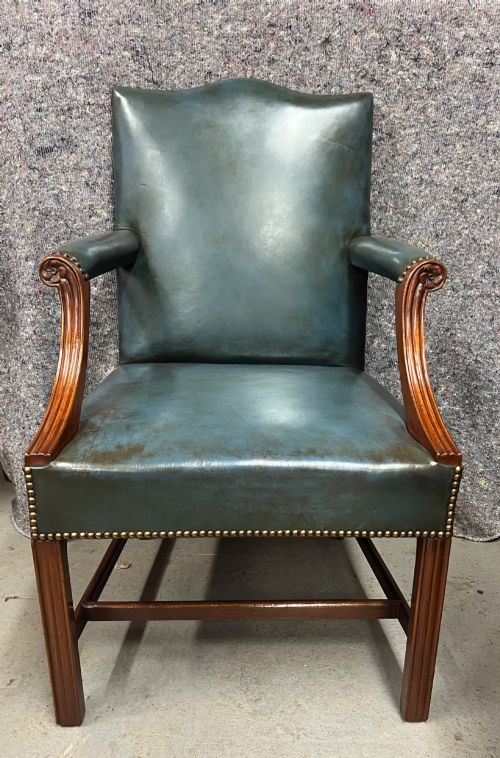
The standard configuration combines a robust timber frame with padded leather upholstery, often featuring open arms or scroll armrests. Pieces emerge in various historical interpretations including Regency, Victorian, and Georgian revival aesthetics.
Makers adapted these seats for heavy daily use in studies and offices, resulting in substantial proportions and supportive backrests. The form bridges the gap between formal dining carvers and dedicated pivoting office seats.
Construction and Materials
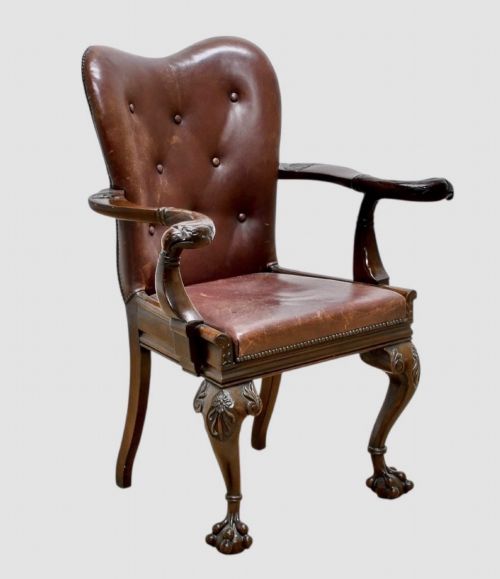
Frames rely predominantly on dense timbers like mahogany, walnut, oak, and burr elm, providing structural integrity for daily use. Cabinetmakers shaped these woods into curved scroll arms, carved rails, and sturdy cabriole or tapered legs.
Upholstery involves durable leather hides secured to the wooden frames with traditional methods, sometimes incorporating brass stud detailing or hand-dyed finishes. These materials ensure long-term resilience while developing a distinct patina through handling and age.
Design influences range from Chippendale and Queen Anne revivals to French Empire aesthetics and utilitarian nineteenth-century forms.
Assessing Quality
Quality rests upon the crispness of the timber carving and the selection of cabinet woods, with figured mahogany and burr elm sitting at the higher end. The joinery beneath the seat must demonstrate tight construction and secure joints that withstand weight and movement.
The refinement of the leather upholstery and the hand-finishing of the woodwork distinguish finer examples from standard commercial seating. Proportions that balance comfort with architectural presence separate superior interpretations from later reproductions.
The Leather Captain Style Chair Glossary
- Carver chair
- An armchair designed to match a set of dining chairs, typically featuring open arms and a wider seat. These often double as desk chairs in period settings.
- Scroll arm
- An armrest shaped into a curved, voluted scroll mimicking classical architectural forms. This detail appears frequently on nineteenth-century library and desk seating.
- Gainsborough style
- A wide, upholstered armchair with open padded arms and short legs, popular for desk use from the eighteenth century onward. The design prioritises comfort while remaining compact enough for a study.
- Ormolu
- Gilded bronze mounts applied to furniture for decorative enrichment, seen on French Empire and revival pieces. This material adds metallic contrast to dark timber frames.
- Burr elm
- A timber harvested from tree growths that produces highly figured, swirling grain patterns. Cabinetmakers utilised this wood on prominent surfaces like desk chair crest rails.
Leather Captain Style Chair: Frequently Asked Questions
How do I date a leather captain style chair?
Dating relies on examining the timber species, construction joints, and stylistic details such as scroll arms or carved splats. Earlier pieces exhibit hand-cut joinery and mature patina on the wood.
Secondary indicators include the tanning methods of the leather and the presence of period hardware like brass studs. Comparing these elements against documented nineteenth and early twentieth-century examples clarifies the period.
Can I use these chairs at a modern desk?
Most antique desk chairs fit standard modern writing tables, though checking seat heights is advisable before purchase. Fixed-leg variants provide stable seating for writing and reading.
They bring character to contemporary workspaces while offering the ergonomic support intended by nineteenth-century makers. Placing a protective mat beneath the legs preserves delicate flooring.
What is the difference between a carver and a desk chair?
Carver chairs originated as the head-of-table seating in dining sets, featuring supportive armrests and matching side chairs. Desk chairs are specifically engineered for prolonged sitting at writing surfaces.
Over time, many carvers migrated into studies due to their comfortable proportions and sturdy wooden frames. Both types share open arm designs suitable for tucking beneath table skirts.
How should I maintain antique leather upholstery?
Maintaining leather involves regular dusting with a soft cloth and occasional treatment with appropriate conditioning balms to prevent cracking. Keeping the chair away from direct heat sources preserves the natural hide.
Avoid harsh chemical cleaners that strip the original dye and finish. Gentle care ensures the leather retains its suppleness and historical character over decades of use.