


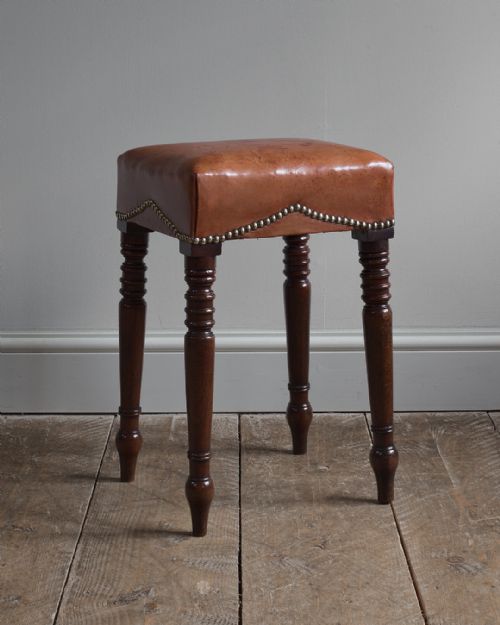


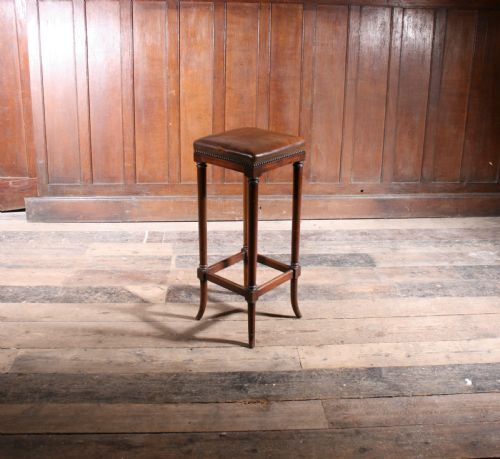


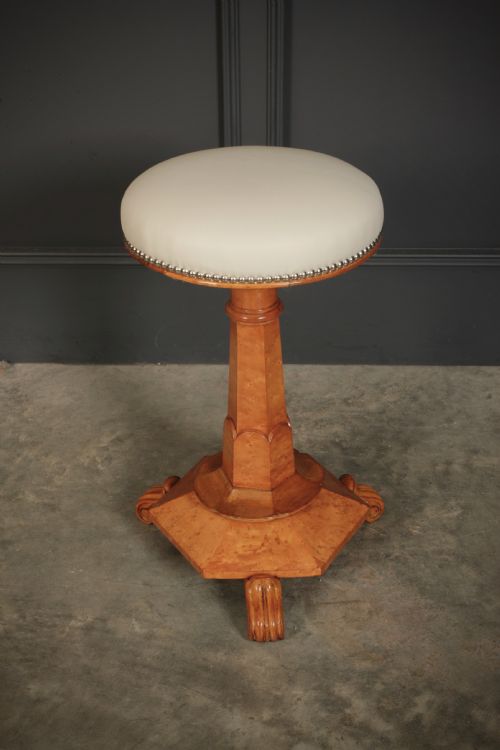


Leather and Wood Stool
These leather and wood stool selections combine sturdy timber frames with hard-wearing hides, offering practical seating and library access across centuries of design.
Leather and Wood Stool
A leather and wood stool bridges the gap between domestic comfort and functional utility, spanning forms from simple footstools to multi-tiered library steps. Buyers searching this phrase encounter a rich mix of seating designed for specific domestic tasks, including piano playing, reading, and entertaining.
The pieces on this page draw from periods ranging from the Georgian era through the Victorian period and into the Art Deco style of the twentieth century. Common configurations include revolving piano seats, X-framed stools, and tall bar seating.
Origins reflect diverse workshop traditions, from British cabinet makers utilising mahogany and oak to specialised seating makers influenced by Moorish and French country aesthetics. This variety ensures that every piece serves a distinct architectural purpose within a room.
Materials and construction methods
Timbers such as mahogany, walnut, oak, and yew form the structural backbone of these pieces, providing the necessary density and weight for load-bearing items like library steps and heavy stools. Craftsmen often turned, carved, or shaped these woods into cabriole legs, spiral supports, and X-frames.
Leather provides the upholstery surface for treads, seats, and footrests, fastened securely to the wooden frames with brass tacks or studs. This combination marries the tensile strength of natural hide with the rigid stability of seasoned hardwood.
Leather and Wood Stool Retail Price Guide 2026
Typical asking prices for leather and wood stool among the pieces listed under this phrase on Sellingantiques today, from the lower quarter to the upper quarter. They describe what is for sale here now, not the wider market.
Some stools come equipped with revolving tops and lions head carvings, ensuring your furniture maintains a watchful gaze over the room.
Markers of construction and material quality
Quality rests in the integrity of the timber joinery and the selection of the primary wood, where dense grains in mahogany and walnut indicate superior cabinet work. The handling of secondary woods and the precision of turned supports or carved details distinguish standard production from finer workshop output.
The condition and application of the leather upholstery significantly influence the character of the piece, particularly where hides are tooled or finished by hand. Metal elements, including brass fittings and revolving mechanisms, demonstrate the mechanical precision applied during original manufacture.
Liberty
The Leather and Wood Stool Glossary
- Cabriole leg
- A furniture leg that curves outward and then tapers inward, mimicking an animal's limb. This form appears frequently on mid-period seating.
- X-framed stool
- A seating form supported by intersecting members that form an X shape when viewed from the side. Such pieces often display high decorative ambition.
- Library steps
- A set of portable stairs designed to reach high bookshelves, frequently incorporating leather-lined treads to prevent slipping. They often double as seating or combine stool functions.
- Revolving piano stool
- An adjustable seat designed for musicians, featuring a central screw mechanism that raises or lowers the top. These pieces prioritize mechanical function alongside stability.
- Moorish revival
- A design style incorporating geometric patterns and intricate woodwork inspired by Islamic architecture. Pieces from this movement often utilise low seating platforms.
Leather and Wood Stool: Frequently Asked Questions
What are leather and wood stools used for?
These pieces serve multiple functions around the home, acting as footstools, piano seats, bar seating, and elevated platforms for libraries. Their dual nature combines utilitarian support with domestic comfort.
Taller variants assist with reaching high shelves or serving at counters, while lower examples support resting feet or seated musicians.
How do I date a wooden stool?
Dating relies on identifying the prevailing timber species, construction joints, and stylistic markers associated with specific periods like the Georgian era or Victorian times. Turned supports and carved details offer further clues.
Examining the underside and interior fixings reveals the manufacturing techniques typical of nineteenth or twentieth-century workshops.
How do I care for leather upholstery?
Leather surfaces require gentle cleaning and periodic conditioning to maintain the suppleness of the hide over decades of use. Avoiding direct sunlight prevents the material from drying out.
Wooden frames benefit from occasional dusting and maintenance suited to polished hardwoods like mahogany and walnut.
Are library steps considered stools?
Library steps often incorporate stool elements, functioning as ascending platforms while sharing materials and joinery with traditional seating. Many examples feature leather-topped treads.
Their sturdy timber construction allows them to bridge the gap between architectural fittings and movable furniture.