



Leaded Glass Buffet
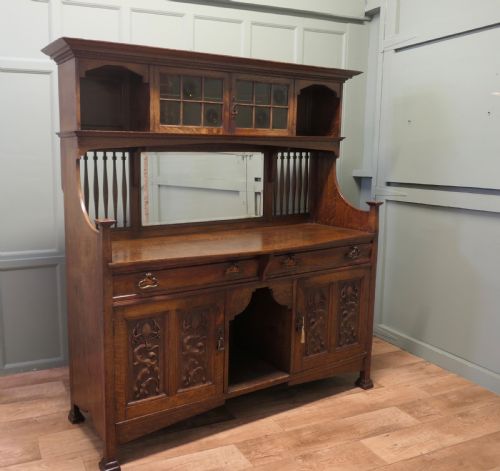
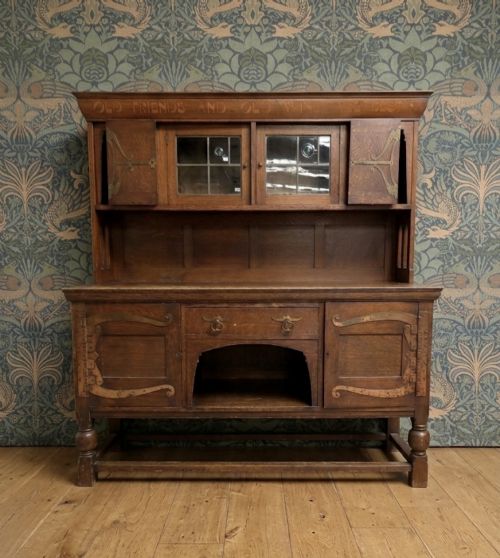
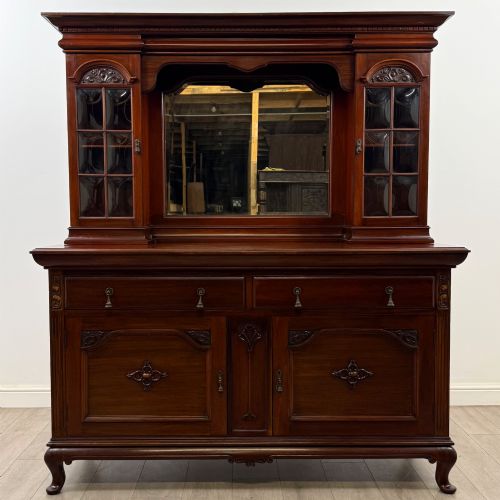
These leaded glass buffet pieces are solid timber storage furniture featuring glazed cabinet doors, built to hold dining room wares and display glassware.
Leaded Glass Buffet
When you search for leaded glass buffet furniture, you encounter substantial dining room storage items, predominantly sideboards, dressers, and cabinets. These pieces combine closed wooden storage with glazed upper sections or cabinet doors.
The items seen here span the Victorian, Edwardian, and 19th-century periods, capturing the shift from ornate nineteenth-century carving towards cleaner Arts and Crafts lines. Oak and mahogany serve as the primary woods, often fitted with brass hardware and mirrored panels.
Makers such as Shapland and Petter, Ambrose Heal for Heal & Son, and Liberty & Co. defined this category, producing oak cabinets and sideboards that showcase leaded glass panes within their doors.
Materials and construction
Carpenters built these sideboards and dressers using solid oak and mahogany, joining the timber with traditional framing techniques suited to heavy daily domestic use. Brass fixtures, iron elements, and mirrored glass sections completed the structural assembly.
The distinctive leaded glass doors required individual glass panes held together by came work, integrated directly into wooden cabinet frames alongside carved wooden panels and brass drop handles.
Leaded Glass Buffet Retail Price Guide 2026
Typical asking prices for leaded glass buffet among the pieces listed under this phrase on Sellingantiques today, from the lower quarter to the upper quarter. They describe what is for sale here now, not the wider market.
Cabinet doors held together by little strips of lead ensure your best china stays safely behind bars.
Distinctions in quality
Quality in these pieces rests upon the precision of the cabinetwork and the reputation of the workshop behind the construction. Pieces originating from known makers like Liberty & Co. or designed by Ambrose Heal demonstrate superior timber selection and refined joinery compared to unmarked vernacular items.
The integration of the leaded glass panels and the execution of carved details further separate standard production from exceptional examples. Substantial oak framing, harmonious brass hardware, and well-proportioned mirror inserts indicate higher standards of period manufacture.
Shapland and Petter·Ambrose Heal for Heal & Son·Liberty & Co.
The Leaded Glass Buffet Glossary
- Leaded glass
- Glass panes joined together with lead cames to form decorative windows within cabinet doors. This technique allowed makers to create geometric or stylized patterns typical of the period.
- Sideboard
- A dining room piece designed for serving food and storing tableware. These items typically feature cupboards, drawers, and sometimes upper shelving or glazed display areas.
- Arts and Crafts
- A design movement emphasising handcraftsmanship, simple forms, and natural materials. Furniture from this style often highlights the grain of the oak and the integrity of construction.
- Jacobean Revival
- A nineteenth-century revival style incorporating heavy turning, panelled woodwork, and dark finishes reminiscent of seventeenth-century English furniture. Pieces in this style appear alongside Arts and Crafts designs.
- Dresser
- A piece of furniture combining storage cupboards with display surfaces or shelving. In this selection, dressers frequently incorporate glazed upper doors for china and glassware.
Leaded Glass Buffet: Frequently Asked Questions
What is a leaded glass buffet?
A leaded glass buffet is a large dining room storage piece, such as a sideboard or cabinet, featuring glass doors assembled with lead cames.
These items combine cupboard storage with display space for glassware and ceramics.
How do I date a leaded glass cabinet?
Dating relies on stylistic markers, construction methods, and materials such as oak or mahogany seen across Victorian and Edwardian examples.
Makers' marks or workshop labels also provide precise dates for pieces originating from firms like Liberty & Co.
Where were these pieces used?
These items were built for the dining room to store and display table services, linen, and glassware.
The upper glazed sections protected delicate items while keeping them visible.
How do I care for antique oak furniture?
Maintenance involves keeping the timber away from direct heat sources and sudden humidity changes to prevent wood movement.
Regular dusting and occasional application of appropriate furniture wax preserve the finish of the oak and mahogany surfaces.