




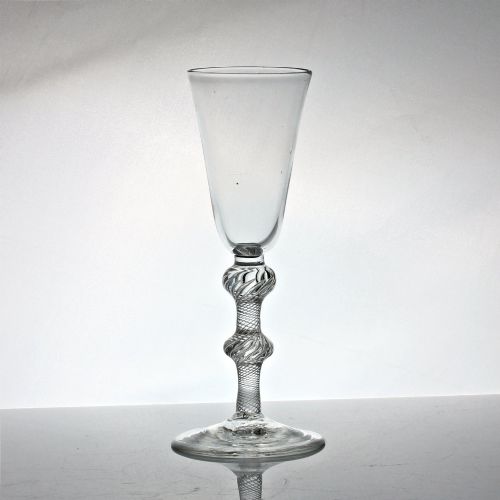

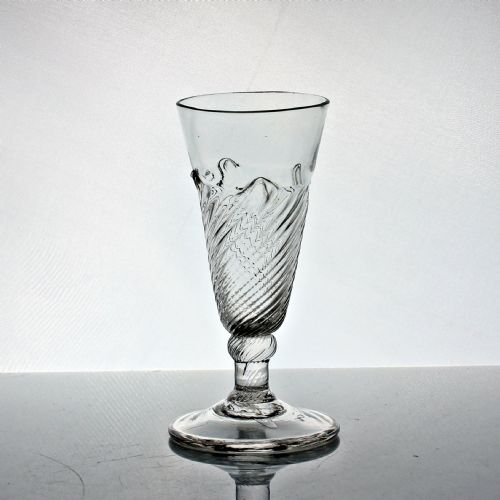


Lead Glass Ale Flute
These lead glass ale flutes are tall Georgian drinking vessels shaped for carbonated brews, prized for their slender bowls and historic twists.
Lead Glass Ale Flute
A lead glass ale flute is a tall, slender drinking vessel designed specifically for serving ale during the Georgian period. When exploring this selection, buyers encounter distinct forms originating from the eighteenth century, showcasing narrow bowls intended to preserve the head on a brew.
The most common examples on this page are Georgian stemware pieces featuring engraved hop and barley motifs or intricate internal air and opaque twists. These items range from mid eighteenth-century wrythen designs to later facet-cut flutes with folded feet.
Makers shaped these tall drinking glasses to be both functional and decorative, often pairing deep funnel bowls with heavy balustroid or multi-spiral stems. Every piece reflects the domestic drinking habits and glasshouse techniques of Georgian England.
How they were made
Glasshouses produced these pieces using lead glass, flint glass, and clear glass, manipulated while hot by skilled artisans. Hand-blown techniques allowed craftsmen to form slender flutes and apply folded feet for stability at the base.
Workers incorporated internal air twists and double series opaque twists by drawing out bubbles within the molten metal before shaping the stem. Decoration was then added to the exterior through wheel engraving, depicting detailed hop and barley motifs, or by precise facet cutting.
Lead Glass Ale Flute Retail Price Guide 2026
Typical asking prices for lead glass ale flute among the pieces listed under this phrase on Sellingantiques today, from the lower quarter to the upper quarter. They describe what is for sale here now, not the wider market.
Georgian drinkers relied on these narrow bowls so heavily that tavern keepers worried patrons would spill less and drink more.
What varies in quality
Quality in these drinking glasses rests primarily on the clarity of the metal and the precision of the internal twists. Superior examples display brilliant clear glass without excessive cloudiness or heavy impurities from the furnace.
The crispness of the wheel engraving also dictates the grade of the piece, with finely detailed hop and barley heads separating standard items from finer works. Additionally, symmetry in the bowl and a neatly formed folded foot indicate greater skill from the glasshouse.
The Lead Glass Ale Flute Glossary
- Flint glass
- A heavy, brilliant variety of glass containing lead oxide that increased refractive index and weight. It became the favoured material for eighteenth-century British drinking vessels.
- Air twist
- A decorative stem formation created by drawing out internal bubbles of air into a spiral thread. This technique required considerable skill from the glassblower.
- Opaque twist
- A stem featuring threads of white enamel glass encased within clear flint glass. These white strands form single or double series patterns.
- Folded foot
- A base formed by turning the outer rim of the hot glass underneath to create a thickened, rounded edge. This provided extra weight and durability to the foot.
- Wrythen
- A surface pattern of subtle spiral ribs or moulding on the body of the glass. It is achieved by twisting the hot parison during the blowing process.
Lead Glass Ale Flute: Frequently Asked Questions
What were lead glass ale flutes used for?
These tall glasses served as drinking vessels for ale and beer during social gatherings in the eighteenth century. Their narrow bowls were specifically formed to maintain the carbonation and head of the brew.
Over time, they became staple tableware items in Georgian households, reflecting the era's appreciation for refined dining and entertaining.
How do you date an eighteenth century ale glass?
Dating relies on observing stylistic markers such as stem construction, bowl shape, and foot formation. Air twists and folded feet typically point towards the middle decades of the eighteenth century, while facet cutting became more common later.
Comparing the weight of the lead crystal and the specific engraving style also helps place a piece within the Georgian timeline.
Why are some ale glasses called dwarf flutes?
Dwarf flutes describe shorter, sturdier variants of the standard tall drinking vessel. They retain the narrow bowl proportions necessary for ale but feature condensed stems.
These shorter pieces were practical for everyday use while maintaining the decorative twisted stems and engraved motifs of taller counterparts.