
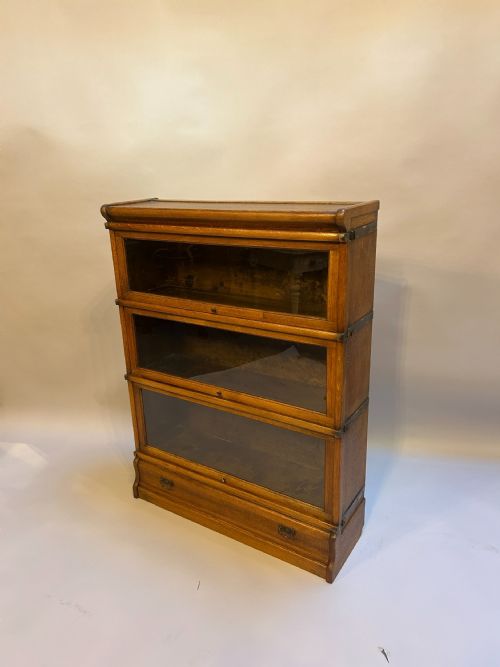
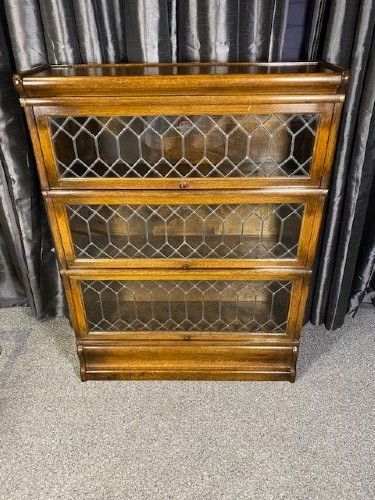
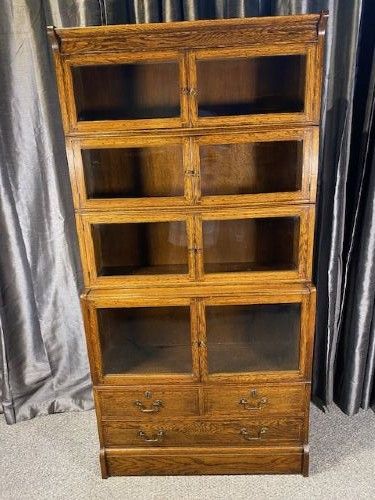
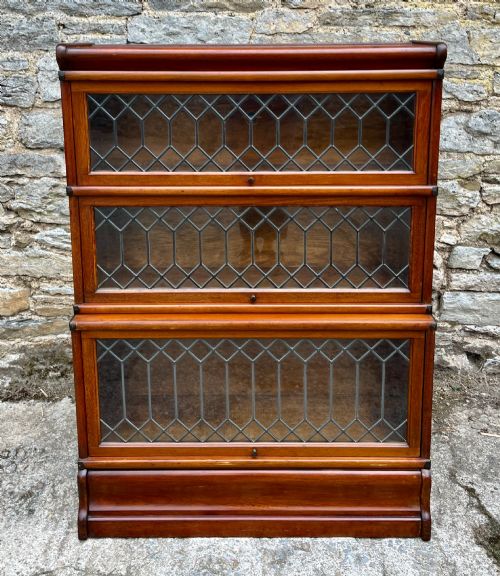

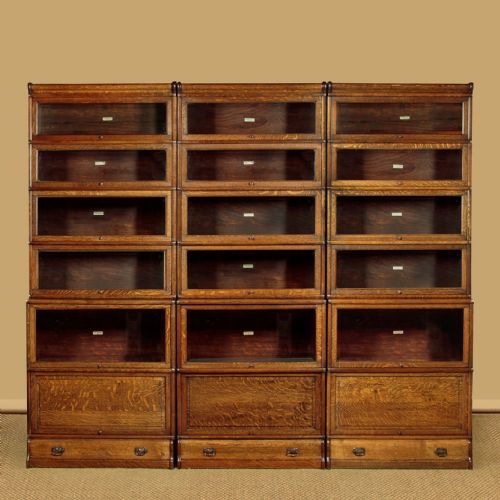


Lawyers Stacking Bookcase
Lawyers stacking bookcase designs offer modular sectional storage with glass doors, bringing practical period utility to any room.
Lawyers Stacking Bookcase
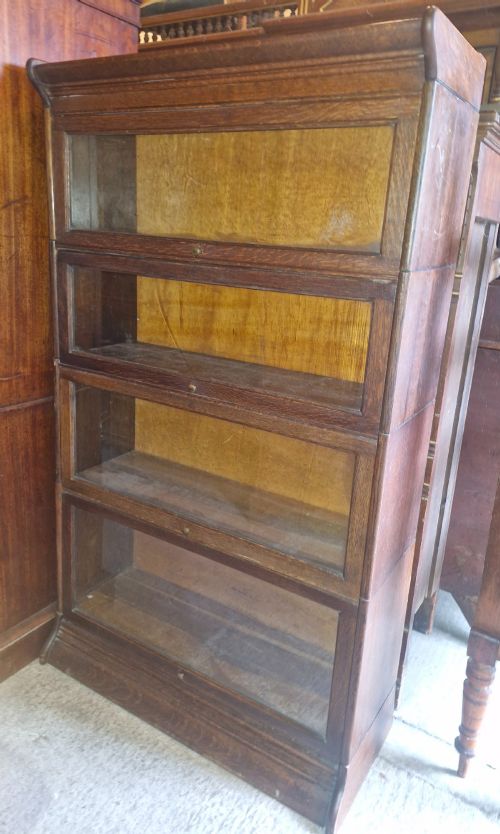
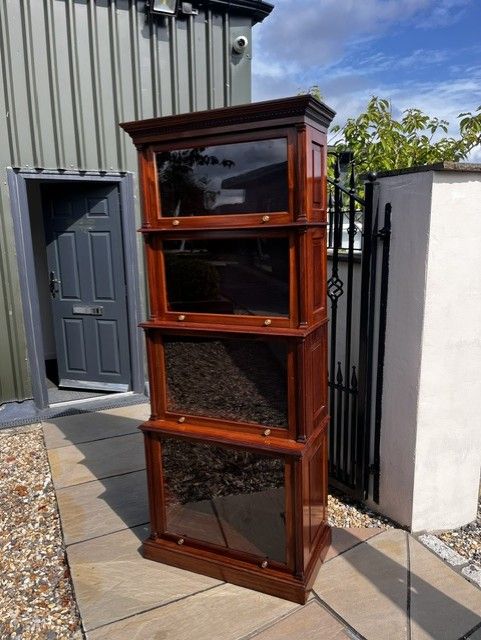
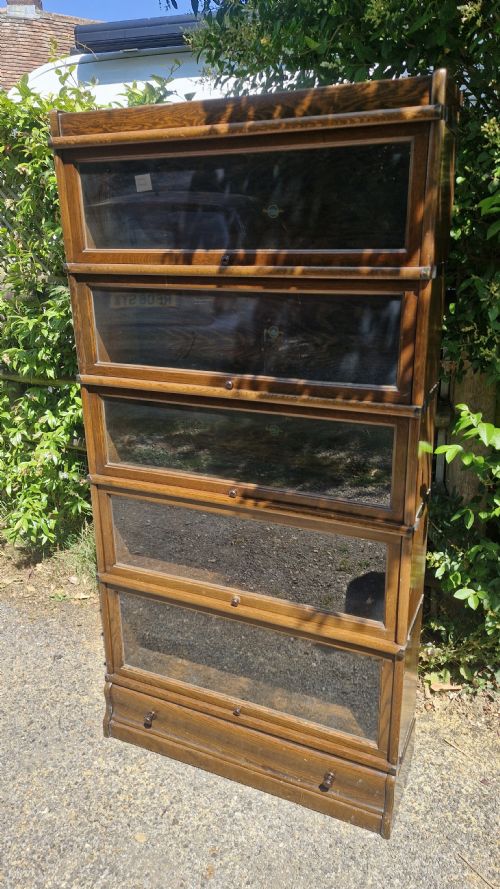
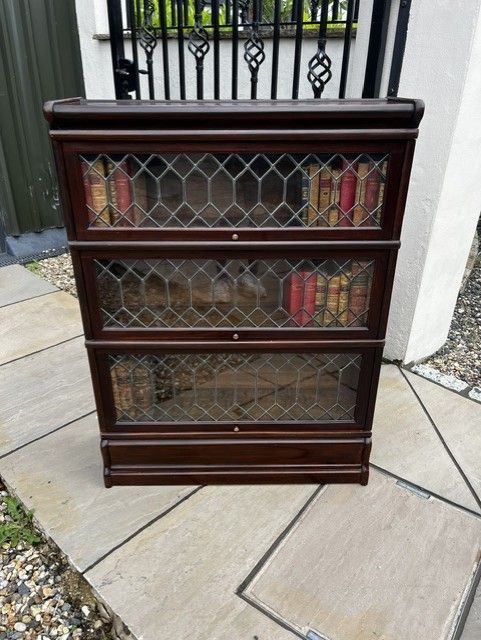
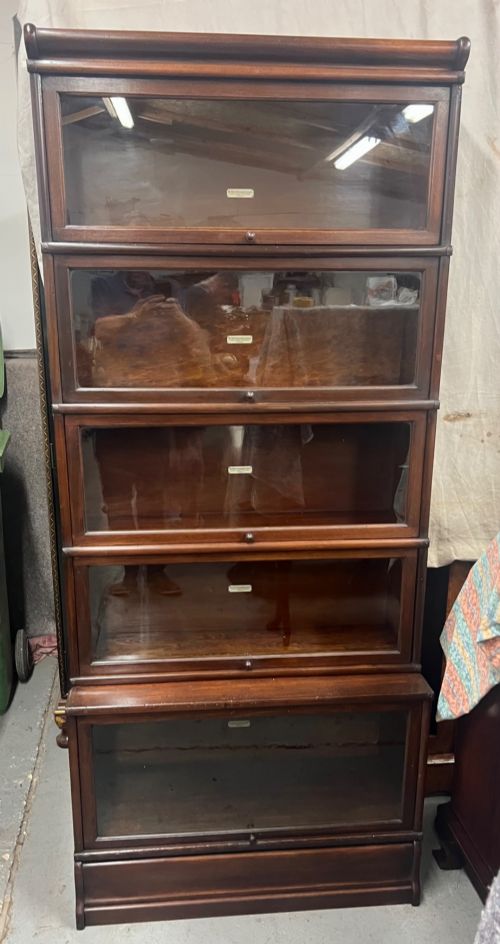
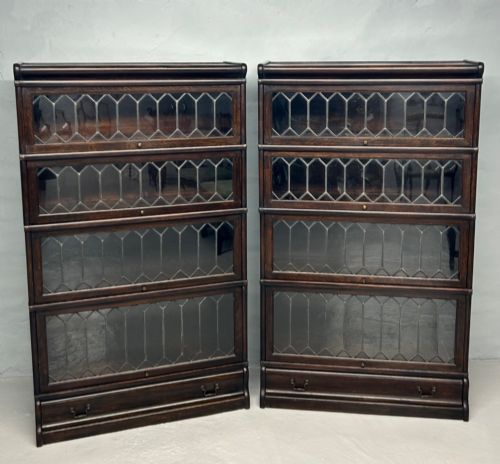
A lawyers stacking bookcase consists of multiple modular tiers that fit one above the other to create a tall storage unit. These pieces span the Edwardian era through the nineteen thirties, with oak and mahogany appearing frequently across the inventory.
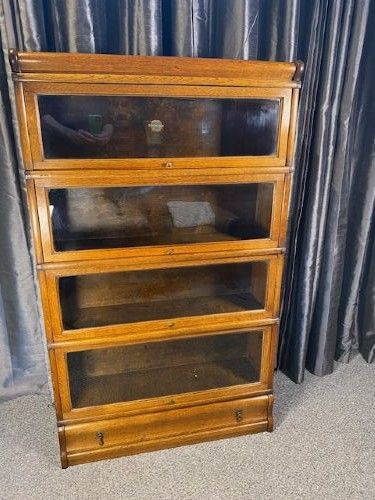
The most common version encountered here is the oak sectional cabinet featuring glazed lifting doors. These units served professional offices before finding a permanent place in domestic studies and libraries.
What Varies in Quality
Quality rests upon the selection of timber and the precision of the modular joinery. Examples featuring figured solid mahogany or golden oak demonstrate superior material selection compared to plainer utility variants.
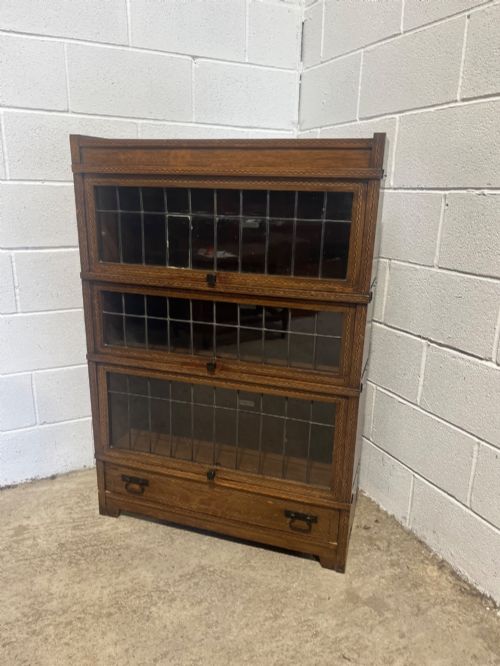
The sophistication of the brass mechanism and the clarity of the leaded or standard glass components further distinguish fine workshop output from standard commercial production.
These modular towers allowed lawyers to stack more sections toward the ceiling as their arguments and book collections expanded.
Globe Wernicke·Gunn·Warwick
The Lawyers Stacking Bookcase Glossary
- Sectional
- A piece built from multiple independent horizontal tiers that stack vertically to form a single tall cabinet.
- Barrister
- An alternative term for a lawyers bookcase, referencing the professional use of modular shelving in legal offices.
- Leaded
- Glass panels held together with narrow lead came strips, forming geometric patterns within the cabinet doors.
- Golden oak
- A bright warm timber finish applied to oak furniture popular during the Edwardian period.
- Tier
- An individual stacking compartment fitted with its own glass door.
Lawyers Stacking Bookcase: Frequently Asked Questions
Can the sections be separated?
The tiers lift apart entirely because they rely on gravity and interlocking base and top cornices rather than fixed screws.
This modular construction makes moving and reconfiguring the tall cabinets straightforward, though each heavy wooden section requires two people to lift safely.
How do I date these bookcases?
Dating relies on timber choice, hardware style, and maker marks stamped inside the modular sections. Edwardian examples often display rich golden oak or inlaid details, whilst later pieces from the nineteen thirties adopt simpler lines.
Matching the brass mechanism type with known production eras helps narrow down the manufacturing decade of unmarked pieces.
Are these suitable for modern books?
The individual tiers come in varying internal heights to accommodate standard novels, reference volumes, and larger art folios alike.
Checking the height of each specific section before loading ensures that taller volumes fit comfortably behind the glass lifting doors.