





Late Victorian Walnut Chest
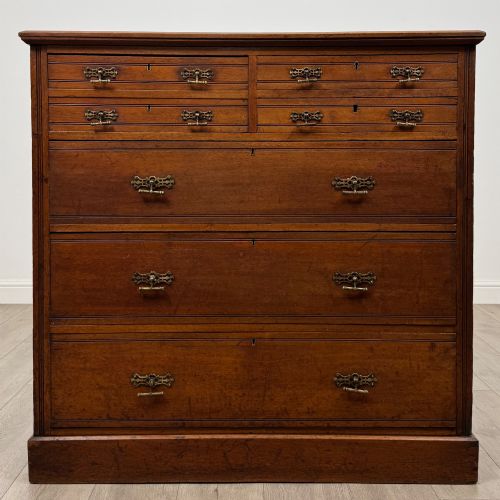
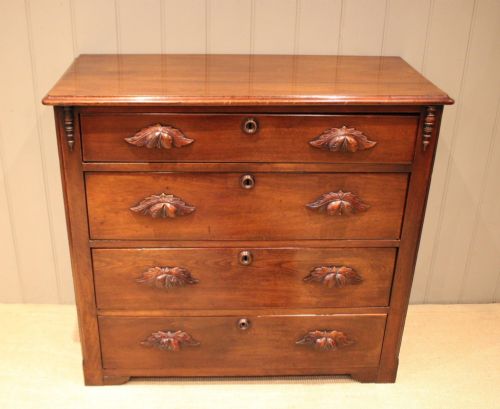
A late victorian walnut chest offers rich timber figures and solid proportions, bringing reliable storage and period character to a bedroom.
Late Victorian Walnut Chest
A late victorian walnut chest is primarily a drawer-based storage piece made during the final decades of the nineteenth century, typically featuring multiple timber drawers housed within a sturdy carcase. These items range from low bedside lockers and tall narrow formats to wider chests with four or five working drawers.
The version most commonly met on this page is the standard drawer chest in plain or burr timber, often accompanied by related forms such as dressing chests, Wellington chests, and smaller bedside units. Walnut remains the defining medium across these pieces, frequently displaying deep grain patterns developed during the Victorian and Edwardian periods.
Construction and materials
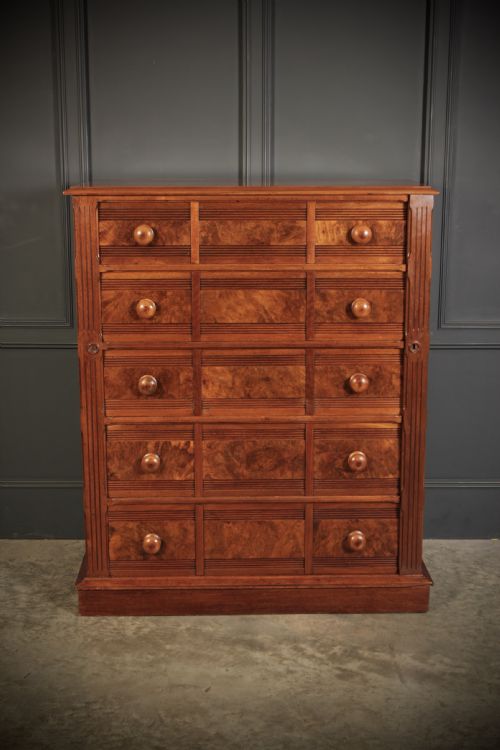
Makers utilised solid walnut and decorative burr veneers applied to structural secondary timbers, creating rich surface figures across the drawer fronts and top panels. Cabinetmakers selected these timbers for stability and visual warmth, often pairing the primary wood with contrasting satin walnut, satin birch, or ash.
Metal components such as brass handles, escutcheons, and locking mechanisms provide functional detailing on drawers and cabinet doors. Glass elements appear primarily in associated pieces like dressing table swing mirrors, whilst internal linings incorporate paper or fabric finishes.
Late Victorian Walnut Chest Retail Price Guide 2026
Typical asking prices for late victorian walnut chest among the pieces listed under this phrase on Sellingantiques today, from the lower quarter to the upper quarter. They describe what is for sale here now, not the wider market.
Microscope slide cabinets share the exact same walnut housing style as larger bedroom chests, proving Victorians liked their science neatly filed.
Evaluating craftsmanship
Quality rests in the selection of the timber veneer and the precision of the drawer construction, where uniform grain matching across drawer fronts denotes superior workshop practice. Finer examples display meticulous attention to internal drawer framing and the crisp execution of carved or moulded details.
The integrity of the original polish and the preservation of brass hardware also separate standard items from superior pieces. Pieces retaining their fitted locks, keys, and original surface patination demonstrate a higher grade of historical preservation.
Jas Shoolbred·Shoolbred and Co·Shapland and Petter
The Late Victorian Walnut Chest Glossary
- Burr walnut
- A figured timber grain formed from tree growths, producing swirling patterns highly prized for drawer fronts and decorative panels. This veneer requires skilled application to prevent splitting over time.
- Wellington chest
- A tall, narrow locking chest typically fitted with seven or more drawers secured by a hinged vertical side locking bar. This form maximises vertical storage in compact floor spaces.
- Satin walnut
- A common alternative timber used in late nineteenth-century cabinetmaking, known for its warm yellow-brown tone and distinct grain. It appears frequently in secondary bedroom suites and interior drawer construction.
- Dressing chest
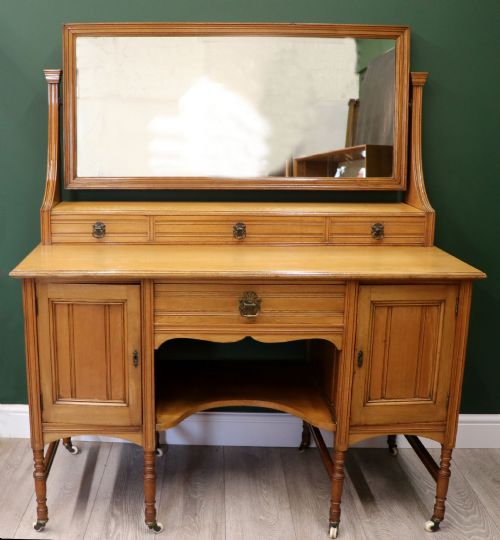
- A low chest of drawers combined with an attached upright mirror, designed for bedroom use. Many examples incorporate small jewellery drawers or trinket boxes upon the upper surface.
- Bedside locker
- A small cabinet or chest designed to stand beside a bed, providing enclosed storage via a door or stacked drawers. These pieces often match larger wardrobe and chest suites.
Late Victorian Walnut Chest: Frequently Asked Questions
How many drawers do these chests usually have?
Most standard drawer chests provide four or five horizontal tiers of varying depths, often arranged with smaller top drawers over deeper lower ones.
Taller variants such as Wellington styles can contain up to nine narrow drawers secured by a locking stile.
What is burr walnut?
Burr walnut is a specialised wood veneer taken from the knotted growth of a walnut tree, yielding complex, swirling grain patterns.
Cabinetmakers applied these decorative sheets over solid wood carcases to create striking visual focal points on drawer fronts.
Are these chests suitable for modern bedrooms?
Their practical proportions and warm timber tones allow them to sit comfortably within contemporary interiors while offering robust daily storage.
Smaller formats function effectively as bedside tables or compact drawer units in limited spaces.
How do I care for walnut furniture?
Protect the polished wood surfaces by keeping pieces away from direct heat sources and strong sunlight, which can dry out the timber.
Regular dusting with a soft, dry cloth maintains the finish without requiring heavy chemical polishes.