





Late Victorian Pendulum Clock
A late victorian pendulum clock brings mechanical precision and period character into a room, offering rhythmic movement alongside classic timber or gilt brass cases.
Late Victorian Pendulum Clock
A late victorian pendulum clock encompasses a wide variety of forms, spanning wall clocks, mantel clocks, and longcase clocks produced during the late nineteenth century. These timepieces display influences ranging from traditional British case designs to French crystal regulators and continental Vienna regulators.
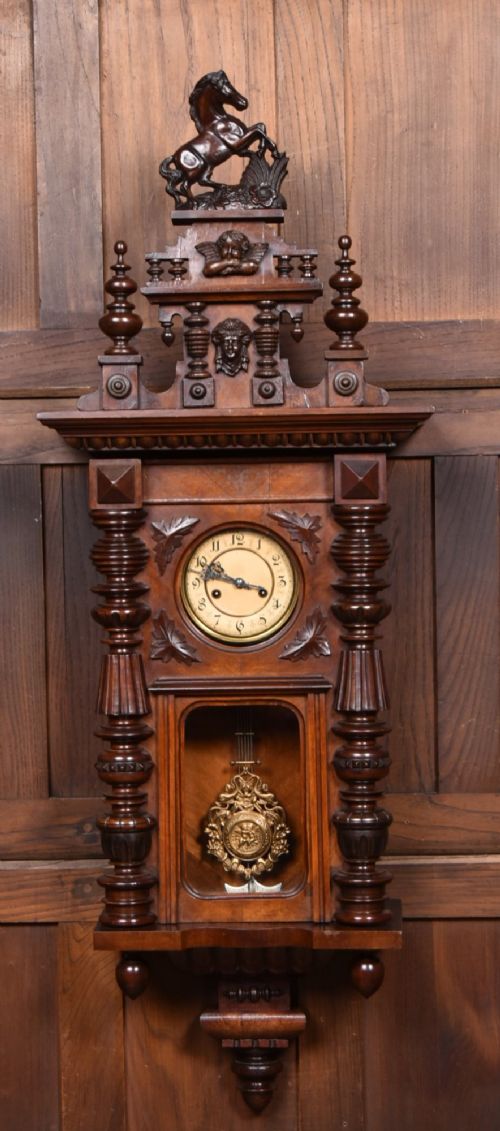
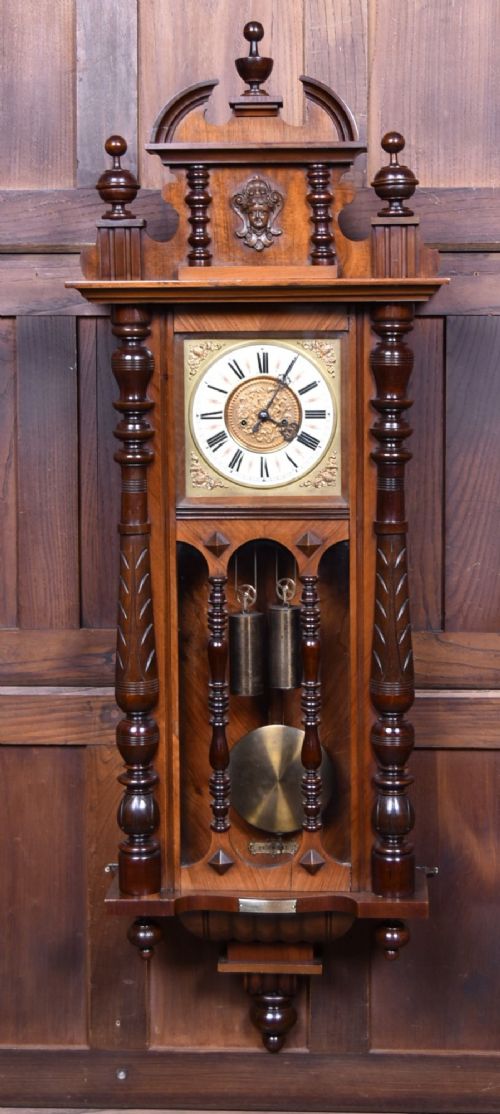
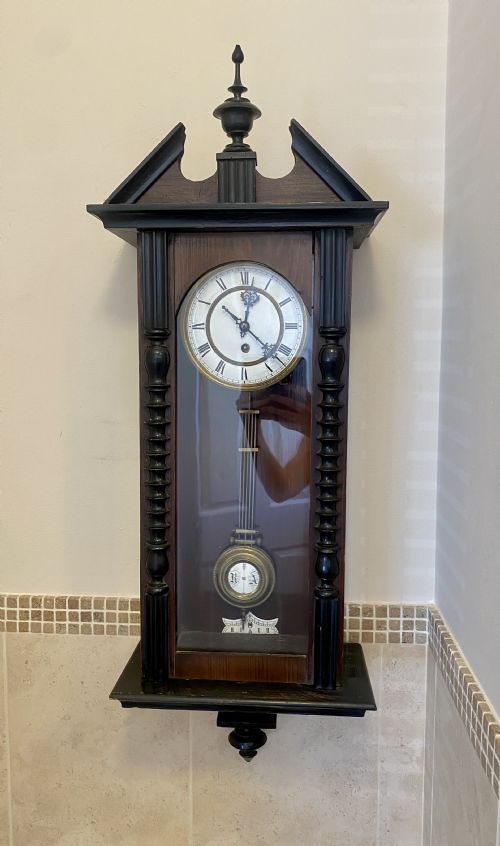
The wall-mounted varieties frequently feature walnut or mahogany cases with visible pendulums, whilst mantel versions often utilise glass panels to showcase the internal mechanism. Floor-standing examples like longcase and grandmother clocks provide an imposing presence in oak, mahogany, or rosewood.
Originating predominantly from British, French, and German workshops, these clocks reflect the diverse stylistic preferences of the period, including Biedermeier, Louis XVI style, and Chippendale revival forms. Buyers encounter pieces housed in timber, bronze, and gilt brass, each designed to regulate time through a swinging pendulum.
Materials and construction
Cases rely heavily on hardwoods such as walnut, mahogany, oak, and rosewood, often selected for their rich grain and durability. Timber components are frequently polished to a deep finish, providing a solid housing for the delicate internal movements.
Late Victorian Pendulum Clock Retail Price Guide 2026
Typical asking prices for late victorian pendulum clock among the pieces listed under this phrase on Sellingantiques today, from the lower quarter to the upper quarter. They describe what is for sale here now, not the wider market.
Period aesthetics range from strict Victorian and late nineteenth-century British styles to French neocladdic and Louis XVI revivals.
Assessing craftsmanship and condition
Quality rests upon the refinement of the movement and the fidelity of the case construction, distinguishing standard production from exceptional workshop output. Finer examples display meticulous joinery in woods like mahogany and walnut, alongside finely cast bronze or gilt brass mounts.
The sophistication of the dial, whether enamelled with intricate markers or framed in matching timber and mother-of-pearl, indicates the tier of the piece. Well-executed movements, signed by established makers or housed in heavy four-glass and regulator cases, command greater attention from discerning collectors.
Mappin and Webb·AG Lenzkirch·Lemerle Charpentier·Samuel Marti·James Bell Bath
The Late Victorian Pendulum Clock Glossary
- Fusee
- A conical pulley used in spring-driven clocks to ensure uniform tension as the mainspring unwinds. This mechanism helps maintain consistent timekeeping across the duration of the wind.
- Crystal regulator
- A mantel clock featuring glass panels on all four sides, revealing the inner workings and pendulum from multiple angles. These pieces frequently originate from late nineteenth-century French workshops.
- Vienna regulator
- A precision wall clock characterised by a long glass door and a visible pendulum swinging behind it. They are prized for their accurate weight-driven or spring-driven movements.
- Cloisonné
- An enamelwork technique where thin metal wires form compartments on a metal base, which are then filled with coloured paste and fired. This decorative method appears on the framing and mounts of select mantel clocks.
Late Victorian Pendulum Clock: Frequently Asked Questions
How do I wind a fusee clock?
A fusee clock requires a specialised winding key inserted into the dial aperture to tension the mainspring.
Care must be taken not to overwind the mechanism, ensuring the pendulum remains undisturbed during the process.
Where should I hang a wall clock?
Wall clocks require a sturdy, plumb vertical surface capable of supporting the weight of timber cases and internal movements.
Placing them away from high-vibration areas ensures the pendulum swings evenly and maintains accurate time.
What is a four-glass clock?
A four-glass clock is a mantel timepiece enclosed in glass panels on the front, back, and sides.
This design allows light to pass through the case, highlighting the mercury or brass pendulum and the moving escapement.
How do I identify a Vienna regulator?
Vienna regulators are distinguished by their tall glazed wall cases designed to showcase a long pendulum and weight cords.
Their dials are typically porcelain enamel with fine roman numerals, driven by precise mechanical movements.