

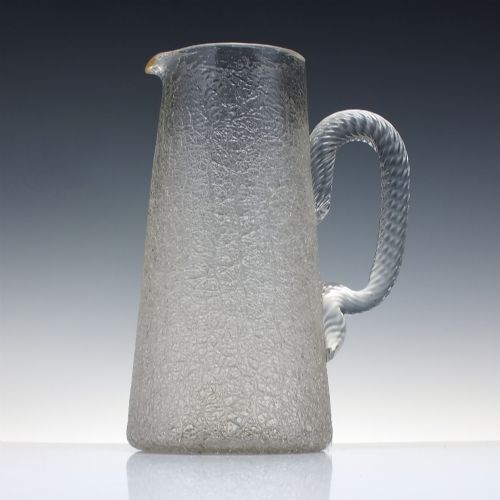


Late Victorian Glass Jug
A late victorian glass jug combines heavy cut crystal or etched glass with polished silver plate, offering a centrepiece for the dining table.
Late Victorian Glass Jug
A late victorian glass jug serves as a functional vessel for wine, claret, lemonade, or water, emerging in various forms across the nineteenth century. Buyers encounter claret jugs fitted with metal mounts, alongside water pitchers, ewers, and wine jugs.
The objects stem from periods including eighteen eighty, eighteen ninety, and nineteen hundred, reflecting late nineteenth-century dining customs. English production dominates the records, supplemented by late nineteenth-century Italian examples.
The most common survivors on this page combine clear cut glass bodies with silver-plated mounts, hinged lids, and handles. Collectors also find etched glass designs featuring birds, branches, grapes, and vines.
How they were made
Makers utilised hand-blown glass, cut crystal glass, and overshot techniques to form the bodies, often applying gold leaf or enamel details. Wheel engraving and etching created botanical or avian motifs across the exterior surface.
Metalworkers combined silver plate and sterling silver for the mounts, handles, hinged lids, and decorative finials. Stourbridge workshops mastered detailed hand wheel engraving on glass vessels during this era.
Late Victorian Glass Jug Retail Price Guide 2026
Typical asking prices for late victorian glass jug among the pieces listed under this phrase on Sellingantiques today, from the lower quarter to the upper quarter. They describe what is for sale here now, not the wider market.
Listings feature periods from eighteen eighty to nineteen hundred, encompassing the nineteenth century.
What varies in quality
The standard of a late victorian glass jug rests on the depth and crispness of the glass cutting or engraving. Heavy cut crystal and finely wheel-engraved motifs indicate superior workshop output compared to shallow surface marking.
The weight and detail of the metal mount also distinguish fine pieces. Cast silver-plated mounts featuring bacchus masks, ropes, tassels, or floral hinges outshine plain, thin collars.
Hukin And Heath·John Grinsell·Elkington And Co·Martin Hall And Co
The Late Victorian Glass Jug Glossary
- Claret Jug
- A specialised vessel designed specifically for serving red wine at the table. These pieces usually feature a pouring spout and a hinged metal lid.
- Silver Plate
- A thin layer of silver fused to a base metal, typically copper or brass, used extensively for Victorian mounts and handles. This technique provided the appearance of solid silver at a lower cost.
- Cut Crystal
- High-clarity glass shaped by deep wheel-cutting to create geometric facets that refract light. It forms the heavy, brilliant bodies of many nineteenth-century serving vessels.
- Stourbridge
- An English town renowned for its glass manufacturing and cutting industry during the Victorian period. Artisans there produced notable hand-engraved and coloured glass objects.
- Ewer
- A large jug with a wide spout and a curved handle, traditionally used for pouring water. Victorian examples often adopt classical revival shapes in glass and metal.
Late Victorian Glass Jug: Frequently Asked Questions
What is a claret jug used for?
A claret jug held red wine for pouring during formal Victorian dinners. The vessel allowed the wine to breathe before serving.
Hostesses placed them on the dining table alongside matching decanters and water pitchers.
How do I clean a silver mounted glass jug?
Wash the glass body gently in warm soapy water using a soft cloth. Avoid submerging metal mounts for extended periods to protect the silver plate.
Polish the silver portions carefully with a dedicated cloth, keeping polish away from the glass surface.
Are these jugs safe for daily use?
While structurally sound, antique glass and silver plate require careful handling during use and washing. Modern dishwashers will damage the antique metal finish and delicate glass.
Hand washing preserves the historic materials and prevents accidental thermal shock to the vessel.
How do I identify a late victorian piece?
Look for characteristic nineteenth-century forms, heavy cut crystal bodies, and typical silver-plated mounts. Hallmarks on the metal components often provide exact assay office dates.
Stylistic motifs like grapevines, birds, and bacchus masks frequently point toward the late Victorian era.