

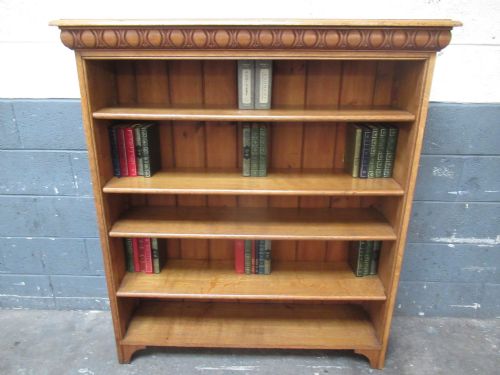

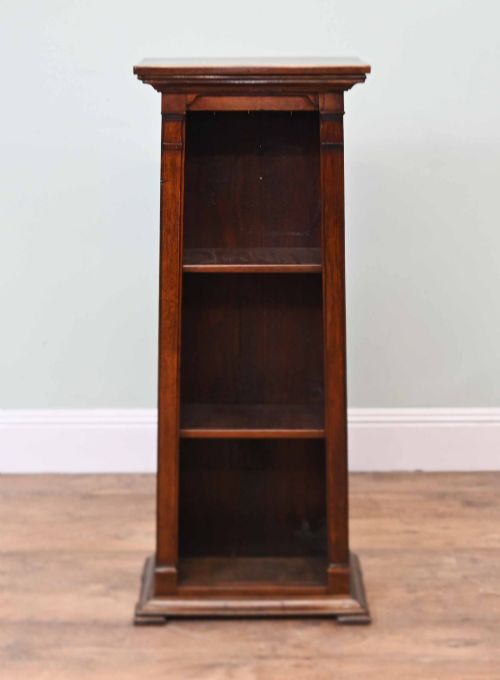
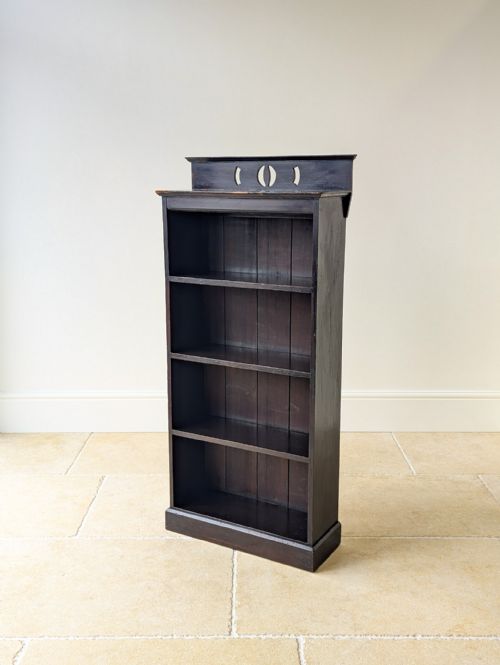
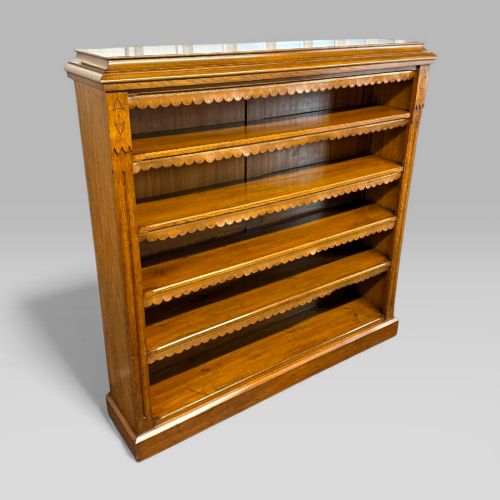


Late Victorian Book Shelf
These late victorian book shelf pieces offer practical storage and timeless nineteenth century character for any room.
Late Victorian Book Shelf
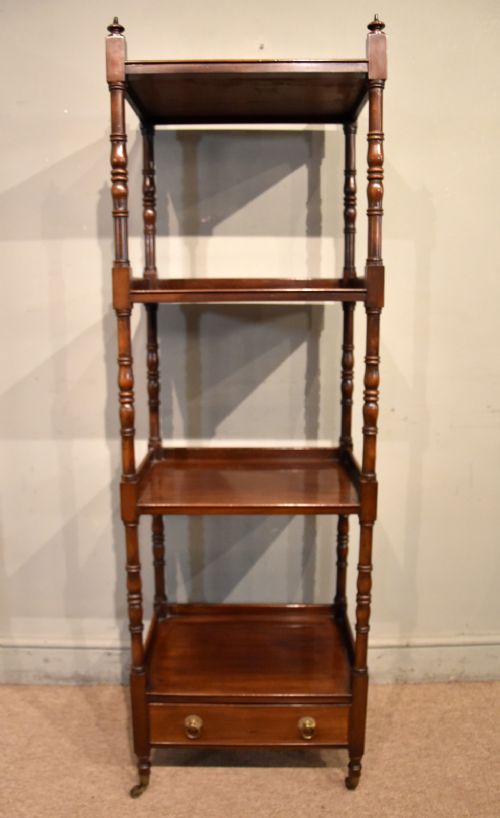
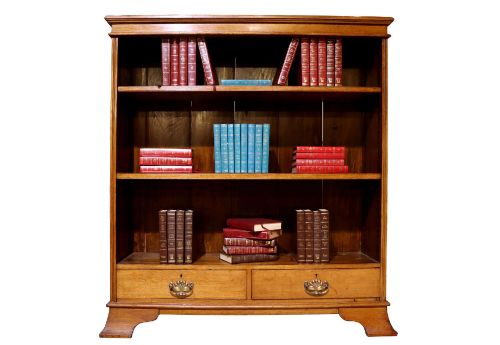
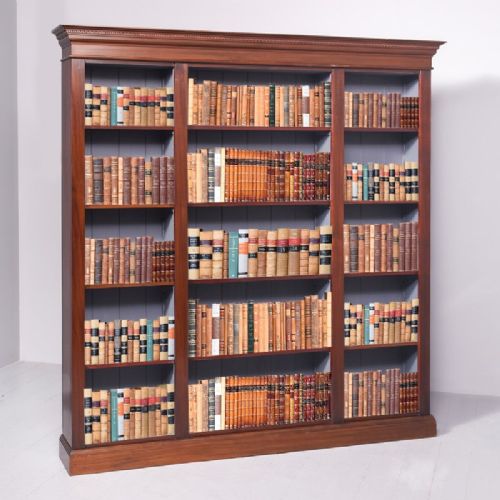
A late victorian book shelf brings solid timber construction and practical shelving to everyday spaces, matching the forms found in nineteenth century homes. Buyers searching for a late victorian book shelf typically encounter open bookcases, revolving designs, and multi-tiered whatnots from this era.
Most examples on this page date from the late nineteenth century into the early twentieth century, spanning standard open bookcases and taller adjusted shelving units. These pieces range from simple pine and stained pine storage to more decorative walnut, mahogany, and satinwood inlaid variants.
Georgian revival influences appear alongside standard Victorian aesthetics, reflecting the historicism popular among makers of the period. Whether configured as a low open cabinet or a tall shelving unit, each piece serves the traditional function of holding books and display items.
Materials and construction methods
Makers utilised a variety of timbers including mahogany, walnut, oak, and pine to construct these storage pieces. Solid construction ensures durability, while decorative elements like satinwood inlay add visual contrast to the timber surfaces.
Hardware components such as brass fittings appear on revolving mechanisms and adjustable shelf supports. Stained pine provides an alternative finish, mimicking the appearance of richer hardwoods while maintaining a robust structural core.
Late Victorian Book Shelf Retail Price Guide 2026
Typical asking prices for late victorian book shelf among the pieces listed under this phrase on Sellingantiques today, from the lower quarter to the upper quarter. They describe what is for sale here now, not the wider market.
Listings feature woods ranging from mahogany and walnut to oak, pine, and satinwood.
What separates the finest examples
Quality rests primarily on the choice of timber and the sophistication of the joinery rather than mere age. Dense hardwoods like mahogany and figured walnut display superior grain patterns compared to standard pine alternatives.
Details such as adjustable shelving mechanisms and fine satinwood inlay distinguish standard utility pieces from finer cabinet work. The integration of revolving mechanisms or multi-tiered structures also elevates the functional ambition of the piece.
The Late Victorian Book Shelf Glossary
- Open bookcase
- A piece of furniture designed for storing books without front doors, allowing direct access to the volumes inside.
- Revolving bookcase
- A compact shelving unit mounted on a rotating base, permitting access to books from multiple angles.
- Whatnot
- A multi-tiered piece of furniture traditionally used for displaying ornaments, books, or small household objects.
- Satinwood inlay
- A decorative technique using contrasting light-coloured wood inserted into the primary timber surface to create patterns.
- Adjustable shelves
- Internal boards that can be moved to different heights within the bookcase using slots or movable supports.
Late Victorian Book Shelf: Frequently Asked Questions
What woods were used for a late victorian book shelf?
Makers constructed these pieces from a range of timbers including mahogany, walnut, oak, and solid pine. Some examples feature satinwood inlay for decorative effect.
Stained pine also appears as a more economical alternative to the denser hardwoods favoured by cabinet makers of the period.
Can I adjust the shelf heights?
Many examples on this page specifically feature adjustable shelving to accommodate volumes of varying sizes. This practical adaptation became increasingly common during the late nineteenth century.
Fixed shelves also appear, particularly in smaller open formats or specific whatnot configurations.
What is a revolving bookcase?
A revolving bookcase is a freestanding table or floor-standing unit mounted on a concealed rotating mechanism. This allows users to access a large collection of books from a single seated position.
These pieces were particularly popular in libraries and studies where floor space was at a premium.