


Late Georgian Dining Chairs
Late georgian dining chairs bring architectural poise and robust timber character to the table.
Late Georgian Dining Chairs
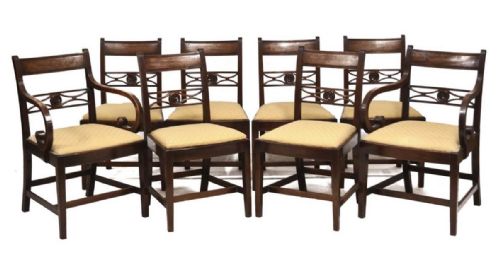
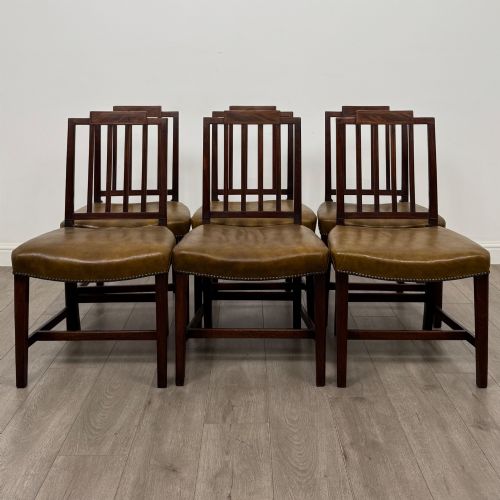
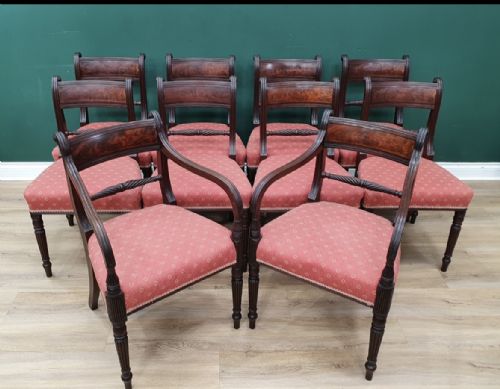
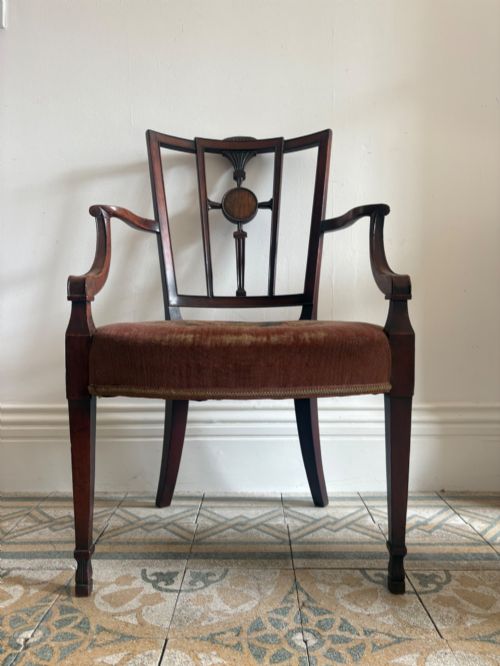
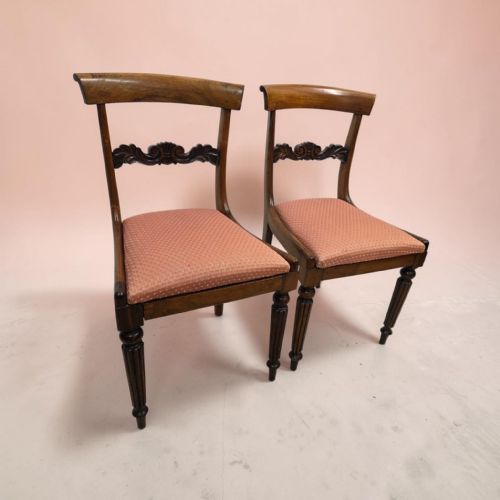
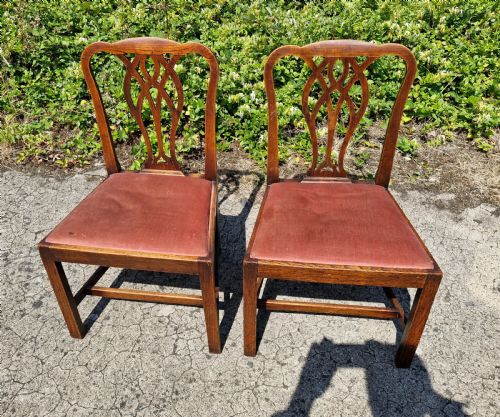
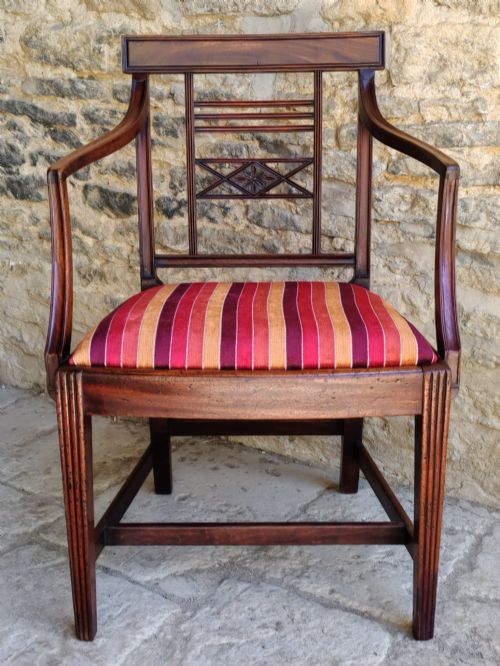
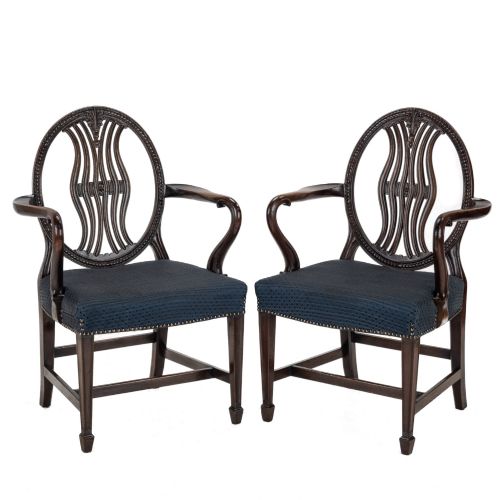
Late georgian dining chairs span the late eighteenth and early nineteenth centuries, covering the George III, Regency, and William IV eras. Buyers encounter single chairs and armchairs, often grouped in sets ranging from pairs to twelve.
The material record shows mahogany predominates alongside elm, oak, and fruitwood, paired with seats in leather, fabric, velvet, and needlepoint. Workshops produced urban formal dining sets and country vernacular chairs alike.
Revival pieces from the late nineteenth century also appear, following Chippendale and Hepplewhite designs from earlier decades. The selection balances city drawing-room seating with sturdy country-made examples.
Materials and construction
Cabinetmakers relied heavily on solid mahogany and flame mahogany for formal urban seating, while regional makers utilised elm, oak, and fruitwood for country dining chairs. Brass details and rosewood roundels occasionally accent the primary timbers.
Joinery involved traditional mortise and tenon frames designed to endure daily sitting at the dining table. Seats were frequently built as drop-in frames or upholstered directly over webbing and stuffing using leather, fabric, or tapestry.
Quality and craftsmanship
Timber selection dictates visual impact, with richly figured flame mahogany and well-matched grain separating superior urban seating from simpler country equivalents in elm or fruitwood. Crisp hand-carving on splats, rails, and legs denotes maker skill.
Structural integrity and timber retention through the joints determine long-term durability. Original surface patination and untouched timber frames hold greater distinction than heavily restored structures.
Gillows
The Late Georgian Dining Chairs Glossary
- Carver
- An armchair designed for the head of the dining table, usually matching a set of single chairs. These chairs feature armrests to accommodate formal dining traditions.
- Drop in seat
- A removable upholstered frame that drops into the wooden seat rails of a chair. This construction method allows easier reupholstery.
- Bar back
- A horizontal cross-rail across the back of a dining chair, often curved to support the spine. This style gained popularity during the late Georgian and William IV periods.
- Splat
- The vertical central slat of a chair back connecting the top rail to the seat. Carvers shaped these into ribbons, urns, and ladder designs.
Late Georgian Dining Chairs: Frequently Asked Questions
How many chairs come in a set?
Sets range from pairs up to twelve pieces, frequently combining single chairs with matching armchairs for the heads of the table.
Buyers often find sets of six or eight, while larger dining suites appear less frequently in the record.
What woods were used?
Mahogany serves as the primary timber for formal urban dining chairs, sometimes appearing as flame mahogany veneer.
Country versions utilise regional timbers such as elm, oak, and fruitwood, occasionally combined in a single chair.
How do I spot a revival chair?
Revival chairs date from the late nineteenth century while adopting eighteenth-century Chippendale or Hepplewhite design idioms.
Constructive details and timber age help distinguish these later interpretations from original period pieces.
What seat coverings are original?
Original seating surfaces include hand-dyed leather, woven fabric, needlepoint, tapestry, and velvet over drop-in or webbed frames.
Upholstery materials often reflect later restoration work rather than the exact eighteenth-century fabric.