
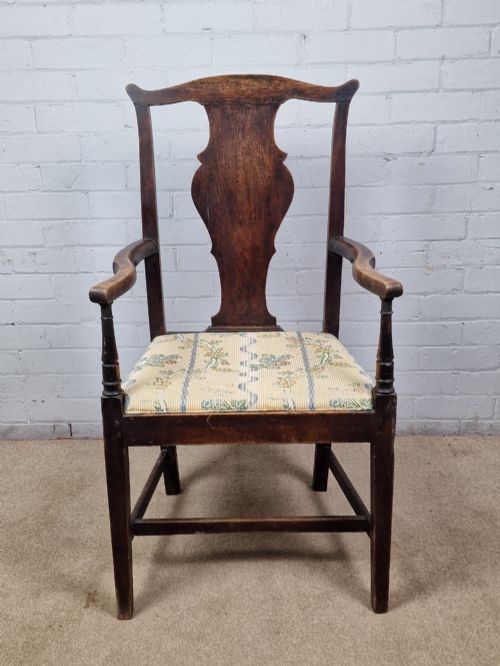
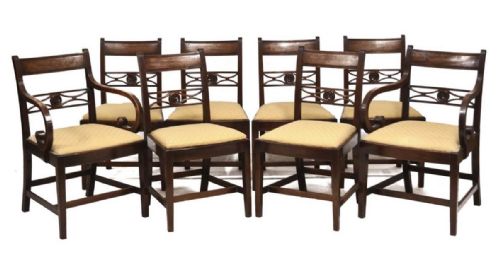
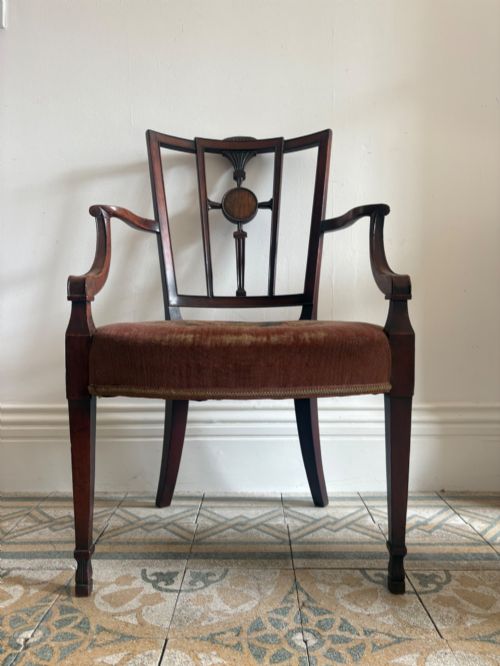
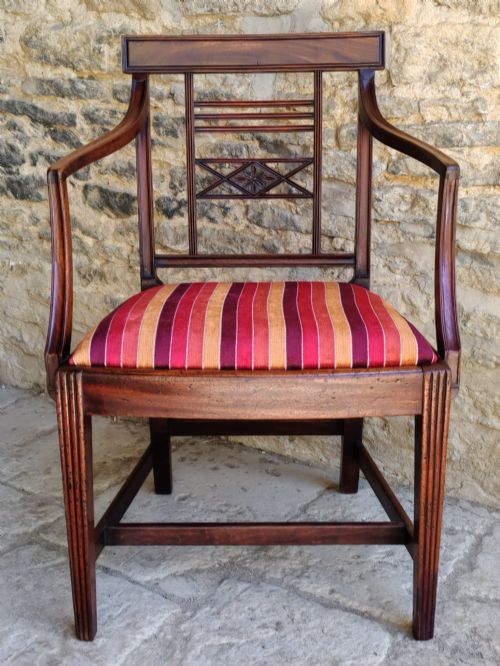
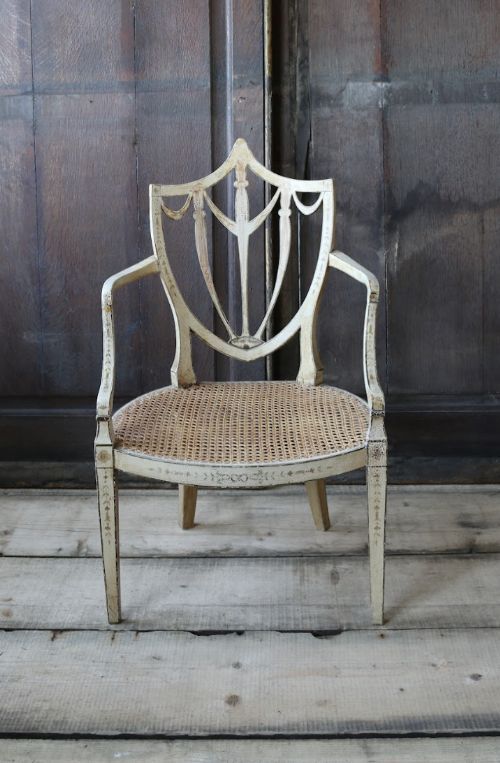


Late 18th Century Carver
A late 18th century carver is a sturdy dining armchair built for comfort at the head of the table, offering classic proportions that anchor any period interior.
Late 18th Century Carver
A late 18th century carver is an armchair designed to stand at the head of a dining table, featuring supportive armrests and upright posture. When you search for a late 18th century carver, you are looking at seating produced during the Georgian era, typically associated with the late seventeen-eighties or seventeen-nineties.
The examples found here range from straightforward mahogany dining chairs with open arms to painted George III armchairs and Dutch marquetry high back pieces. Walnut and oak also appear among the woods, while seats feature hand-dyed leather, fabric upholstery, or cane.
Makers and workshops of the period utilised prevailing styles such as Sheraton, Hepplewhite, and George III neoclassical designs. These seating forms served practical domestic duties in dining rooms and parlours across England and continental Europe.
How they were made
Cabinetmakers constructed these frames primarily from solid mahogany, oak, or walnut, sometimes applying paint and parcel gilt surfaces over the timber. Joinery relied on traditional mortise and tenon techniques to ensure stability at the stress points where the arms meet the back and legs.
Decorative elements involve intricate details such as rosewood roundels, marquetry inlay, and carved shield-backs. Seat foundations were built to hold squabs or drop-in pads covered in fabric, leather, or woven cane, matched to the requirements of the original commission.
One exceptional armchair hides a Masonic connection within its frame, proving that eighteenth-century dining chairs occasionally kept secret society business.
What varies in quality
The distinction between standard and superior pieces rests on the crispness of the timber carving and the sophistication of the decorative elements. Chairs carrying maker stamps or featuring unusual structural components, such as block feet or inlaid rosewood roundels, demonstrate higher ambition from the workshop.
Condition and originality dictate the standing of a piece within this range. Retaining the original painted surfaces, early gilding, or period upholstery materials elevates the integrity of the object far above chairs that have undergone heavy structural intervention over the centuries.
Gillows
The Late 18th Century Carver Glossary
- Carver
- An armchair designed to match a set of single dining chairs, traditionally placed at the ends of the table. These seats provide broader proportions and armrests for the host.
- Shield-back
- A chair back shaped like a heraldic shield, popularised in dining furniture during the late eighteenth century. This design often incorporates carved splats and symmetrical woodwork.
- Marquetry
- The art of applying pieces of veneer to a structure to form decorative patterns and pictures. Dutch workshops frequently employed this technique on walnut and other dense timbers.
- Parcel gilt
- A decorative method where specific carved details or highlights are partially covered in gold leaf. This finish contrasts against painted or polished wood surfaces.
Late 18th Century Carver: Frequently Asked Questions
What is a carver chair?
A carver is a dining armchair with integrated armrests built to match a set of single chairs. It stood at the head of the dining table for the host.
The term distinguishes the larger seating from standard dining chairs without arms. These pieces date predominantly to the eighteenth and nineteenth centuries.
How do I date a Georgian armchair?
Dating relies on observing the timber, structural design, and decorative motifs characteristic of reigns like George III. Details such as shield-backs or tapered legs point toward the final decades of the eighteenth century.
Comparison with documented workshop styles and stamped signatures helps narrow the period of manufacture. Secondary woods used in the frame construction also offer clues to origin.
Can I use these chairs daily?
These historical armchairs function well in modern homes when handled with reasonable care and proper weight distribution. Solid timber frames provide robust support for daily sitting.
Upholstered pads and leather seats can be maintained or replaced using traditional methods. Placing them away from direct heat sources protects the antique wood from drying.
What wood was used most often?
Mahogany served as the primary timber for fine dining furniture during the late eighteenth century due to its strength and rich grain. Oak and walnut also appear regularly across the surviving examples.
Cabinetmakers selected these hardwoods to withstand the structural demands placed upon chair legs and arm supports. Painted finishes were frequently applied over these timbers to suit neoclassical tastes.