






Large Wool Verdure Tapestry
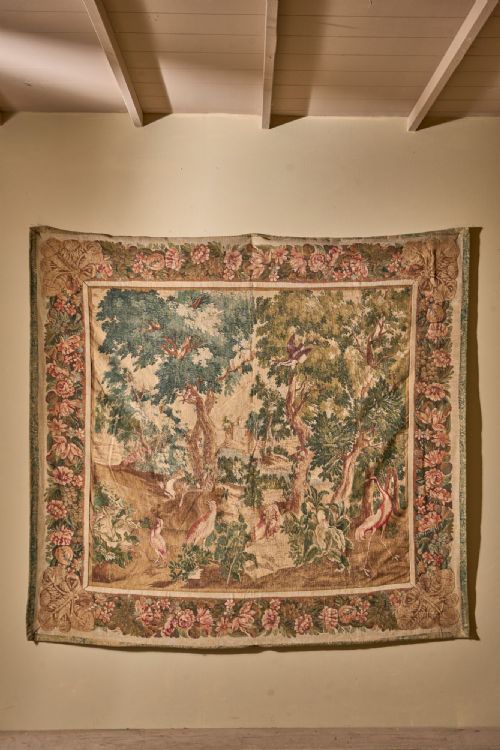
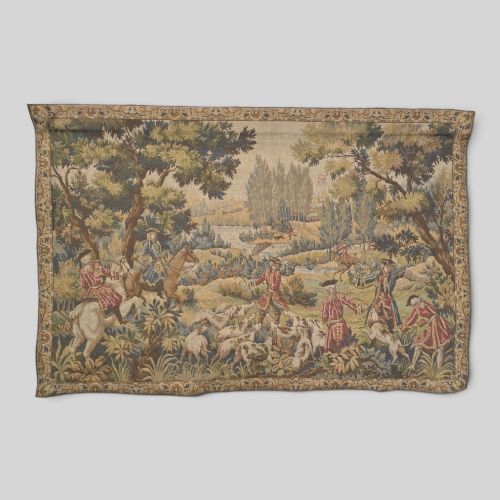
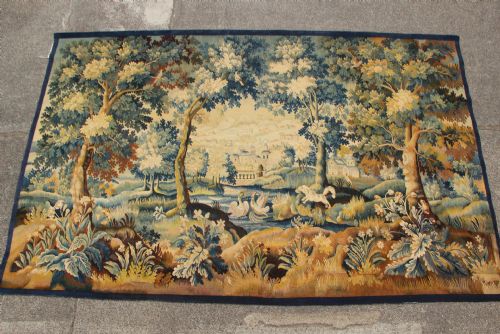
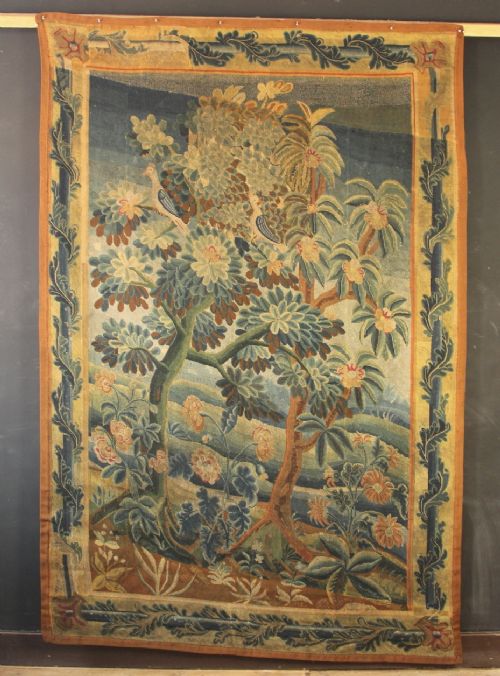
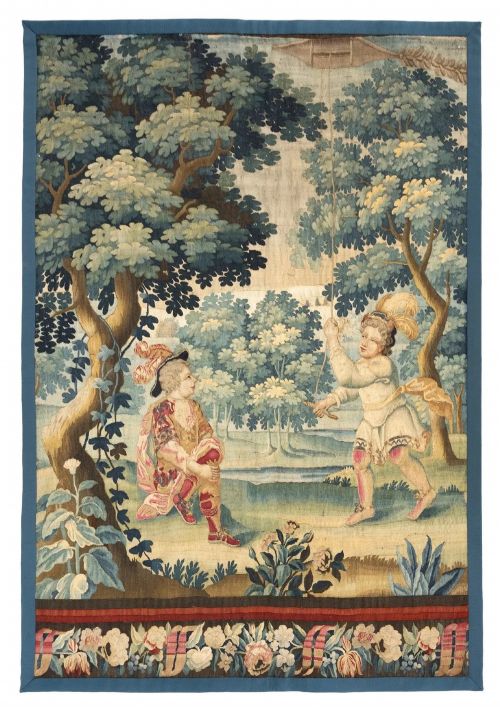
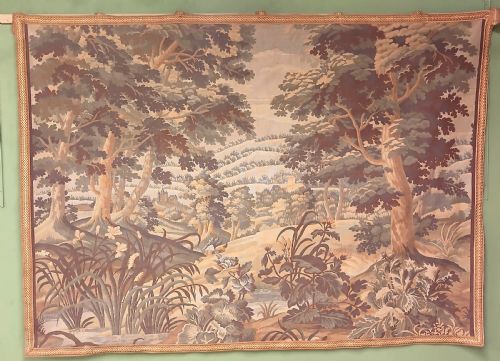
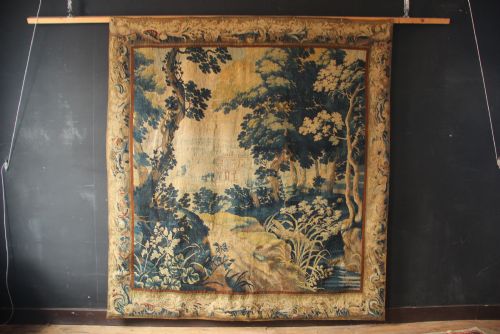
A large wool verdure tapestry brings woodland foliage and distant chateaux into a room, offering historic woven scenery.
Large Wool Verdure Tapestry
A large wool verdure tapestry depicts dense foliage, trees, and often distant chateaux or pastoral scenes. These wall hangings emerge primarily from Flemish and French workshops spanning the seventeenth, eighteenth, and nineteenth centuries. Buyers frequently encounter pieces originating from Aubusson, Audenaarde, or broader European traditions.
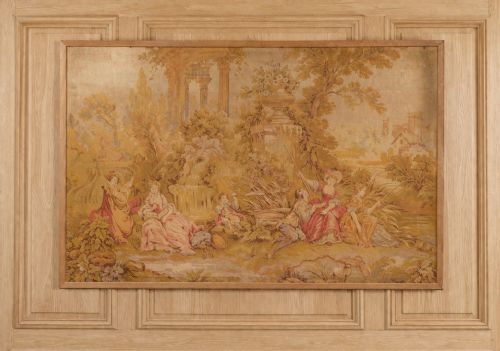
The format typically involves substantial dimensions designed for expansive wall spaces in period interiors. Pieces range from late seventeenth-century Flemish compositions to late nineteenth-century French revivals, showcasing woodland landscapes dominated by green and earthy tones. Wall tapestries and framed woven panels represent the primary forms found in this category.
Materials and construction
The construction relies fundamentally on a warp of linen or cotton carrying wefts of wool and occasionally silk. Weaving was executed on high-warp or low-warp looms by skilled artisans who built up the pictorial designs thread by thread. Wool provided durability and rich texture, while silk highlights introduced subtle light reflection within foliage and garments.
Natural dyeing techniques produced the characteristic verdant palette, utilising plant materials that aged into muted ochres, blues, and deep browns. Wooden stretching frames or mounting battens frequently supported the textiles for wall display, preserving the integrity of the woven panel.
Listings feature wool, silk, cotton, and linen materials across French and Flemish Baroque, Rococo, and nineteenth-century styles.
Evaluating quality and execution
Quality rests heavily on the fineness of the weave and the complexity of the landscape perspective. Superior examples demonstrate intricate detailing in leaves, birds, and architectural elements, creating depth through careful colour gradation. Coarser pieces employ simpler repetitive patterns with less nuanced tonal transitions.
The condition of the textile fibres and the stability of the remaining structural weave dictate the integrity of the piece. Well-preserved wool and silk retain greater chromatic variation and structural cohesion, whereas heavy historical restoration alters the visual harmony of the surface.
The Large Wool Verdure Tapestry Glossary
- Verdure tapestry
- A wall hanging dominated by botanical motifs, foliage, trees, and landscape views, often featuring small birds or distant buildings. These pieces formed a major output of seventeenth and eighteenth-century weaving centres.
- Aubusson
- A town in central France renowned for its tapestry production, giving its name to a distinct style of woven wall hangings. Aubusson pieces often incorporate floral and pastoral motifs.
- Flemish Baroque
- An artistic style prevalent in seventeenth-century Flanders that influenced the dramatic composition and rich coloration of large wall textiles. Works from this origin frequently display dense, theatrical foliage.
- Needlework tapestry
- A textile worked by hand with needle and thread upon a ground fabric rather than produced entirely on a loom. These pieces achieve pictorial effects akin to woven tapestries.
- Warp and weft
- The foundational structural elements of woven textiles, where vertical warp threads support horizontal weft threads carrying the design colour. Wool and silk formed these vital components.
Large Wool Verdure Tapestry: Frequently Asked Questions
How do I hang a large tapestry safely?
Large woven panels require weight distribution across a custom support batten or a lined Velcro mounting system rather than direct hanging by single points.
This method prevents undue stress on the historic wool and linen fibres over time.
Where were most verdure tapestries made?
Production centred primarily in historic weaving hubs across Flanders and France, including Audenaarde and Aubusson.
Workshops in these regions developed distinct traditions of landscape and foliage design.
How do I distinguish seventeenth from nineteenth-century pieces?
Seventeenth-century examples typically display deeper, muted palettes and Flemish stylistic conventions, whereas nineteenth-century revivals often show brighter synthetic influence and different border treatments.
Examining the specific weave structure and wool quality clarifies the manufacturing era.
Can these textiles be cleaned?
Professional conservation cleaning is necessary for historic wool and silk tapestries to avoid fibre degradation or dye bleeding.
Routine maintenance involves gentle surface dusting with a soft brush.