



Large Wooden Drawer Unit
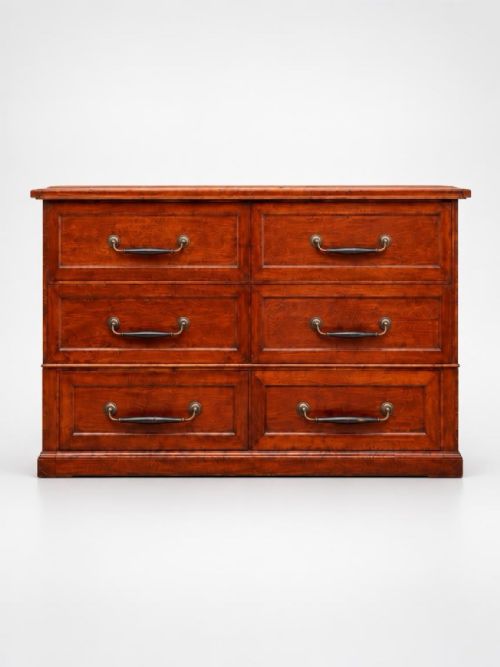
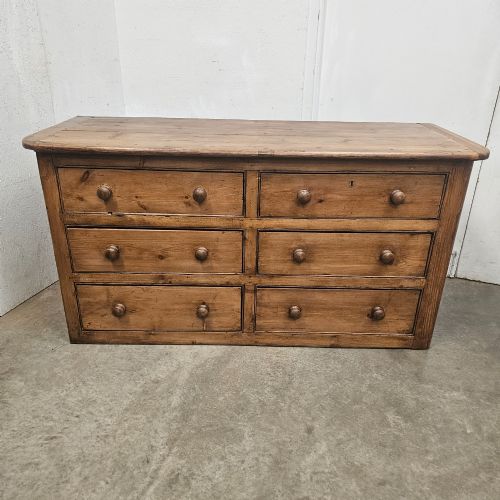
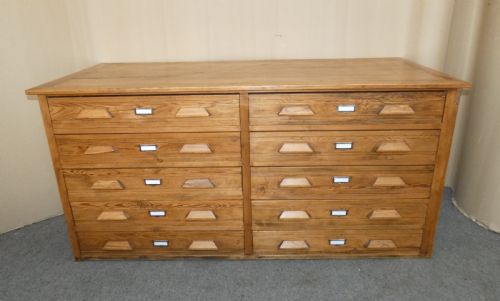
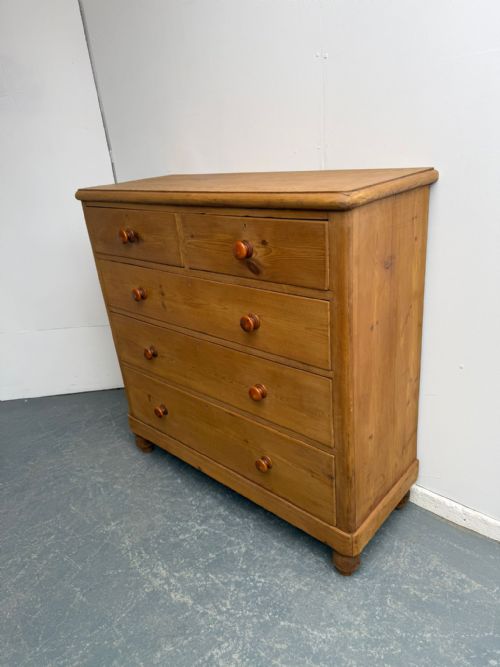
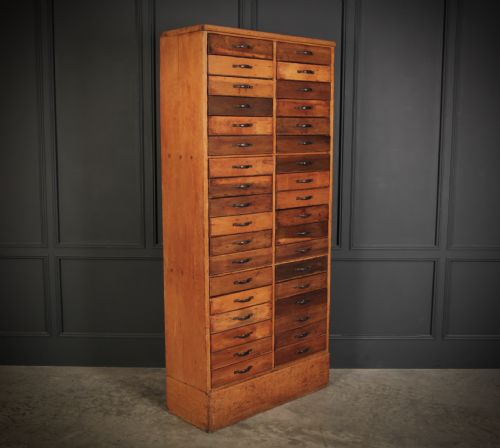
These large wooden drawer unit options are substantial storage pieces built to hold trade stock, papers, or household linen.
Large Wooden Drawer Unit
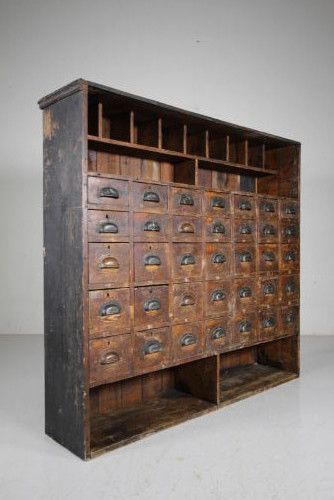
A large wooden drawer unit brings heavy-duty timber storage into a room, taking the form of banks of drawers, plan chests, and haberdashery cabinets. Buyers searching this phrase want considerable capacity paired with period character, finding pieces designed for commercial, utilitarian, or domestic use.
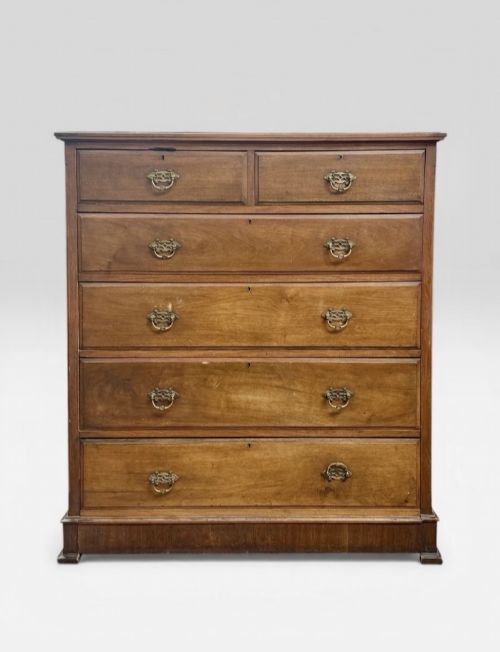
The versions most commonly met here span the nineteenth and early twentieth centuries, drawing on Victorian, Edwardian, and industrial utility styles. They include tall chests in pine and mahogany alongside multi-drawer shop counters and drapers cabinets.
How they were made
Construction relies heavily on robust timbers such as pine, mahogany, oak, walnut, and fruitwood, selected for their strength in daily trade or domestic service. These woods are frequently paired with utilitarian metal, cast iron, or brass handles and label holders built to withstand constant handling.
Joinery techniques focus on sheer durability, creating deep carcasses and heavy runners that support numerous laden drawers without sagging. Surfaces are left waxed, stripped, or polished according to whether the piece served in a provincial workshop, a Victorian shop, or a formal interior.
Large Wooden Drawer Unit Retail Price Guide 2026
Typical asking prices for large wooden drawer unit among the pieces listed under this phrase on Sellingantiques today, from the lower quarter to the upper quarter. They describe what is for sale here now, not the wider market.
Many of these shop drawers still carry faint traces of long-lost haberdashery inventory trapped in the corners.
What varies in quality
Quality in a large wooden drawer unit rests on the integrity of its internal construction and the original purpose of the piece. Commercial shop fittings and architects plan chests carry heavier timber scantlings and tighter dovetails than domestic equivalents, reflecting the punishing work environments for which they were built.
The degree of original hardware survival and the choice of primary timber also mark out the better examples. Fine mahogany or figured walnut chests show superior cabinet-making ambition, whereas stripped pine pieces rely on honest utility and the warmth of patinated softwood.
The Large Wooden Drawer Unit Glossary
- Bank of drawers
- A multi-drawer storage fixture originally designed for commercial, workshop, or institutional use. These assemblies offer numerous shallow or deep compartments.
- Plan chest
- A wide, shallow set of drawers built specifically to store architectural drawings, maps, or large sheets of paper flat. They require substantial floor space and feature heavy timber carcasses.
- Haberdashery cabinet
- A shop display and storage unit fitted with multiple glazed or panelled drawers to organise small drapery goods. They often incorporate brass pulls and label holders.
- Pine
- A softwood commonly utilised in nineteenth-century utility furniture and country pieces. It takes wax finishes well and develops a rich patina through decades of use.
Large Wooden Drawer Unit: Frequently Asked Questions
What rooms suit a large wooden drawer unit?
These substantial pieces anchor kitchens, studios, and hallways, providing deep storage for tableware, art supplies, or linens. Their generous proportions demand adequate wall space and clearance for the drawers to open fully.
Pinned against a plain wall, a tall bank of drawers or a wide chest adds architectural weight and industrial character to domestic interiors.
How do I tell an industrial unit from a domestic one?
Industrial and commercial pieces, such as haberdashery cabinets and plan chests, feature utilitarian hardware like brass label holders and heavy cast iron fittings. They are built for rigorous daily trade use rather than formal domestic display.
Domestic chests of drawers in mahogany or walnut employ finer cabinet timbers and decorative mouldings, reflecting a gentler indoor service.
Are pine drawer units durable?
Nineteenth-century pine storage pieces were constructed from mature softwood timbers that offer surprising strength and resilience. Waxed or stripped surfaces handle everyday knocks well and acquire a pleasing warmth over time.
Thick carcass construction ensures these units remain stable even when loaded with heavy items.
How do I care for antique wood finishes?
Maintain waxed pine and fruitwood surfaces with traditional beeswax applied sparingly and buffed with a soft cloth. Avoid placing these wooden units near direct heat sources to prevent timber shrinkage.
Keep humidity levels steady in the room to protect original joints and prevent drawers from binding in their runners.