


Large Wooden Commodes
Large wooden commodes are substantial storage pieces offering impressive capacity and timeless timber grain.
Large Wooden Commodes
Large wooden commodes serve primarily as robust storage furniture, taking the form of chests of drawers and tallboys across domestic interiors. These pieces deliver significant capacity through multi-drawer configurations designed for household linen and apparel.
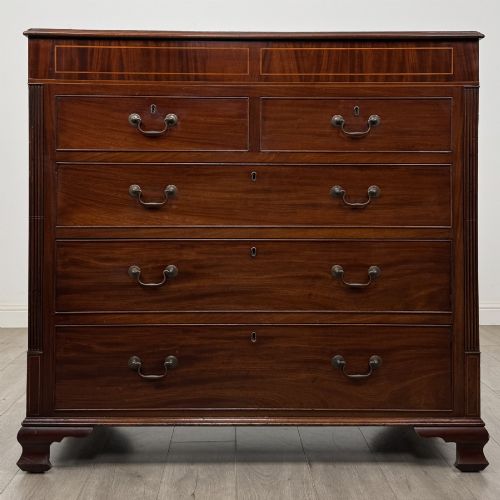
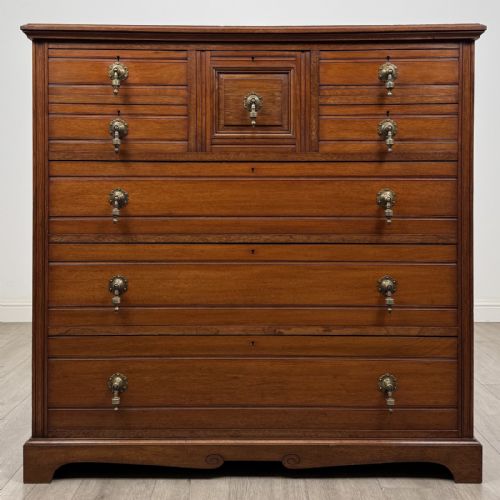
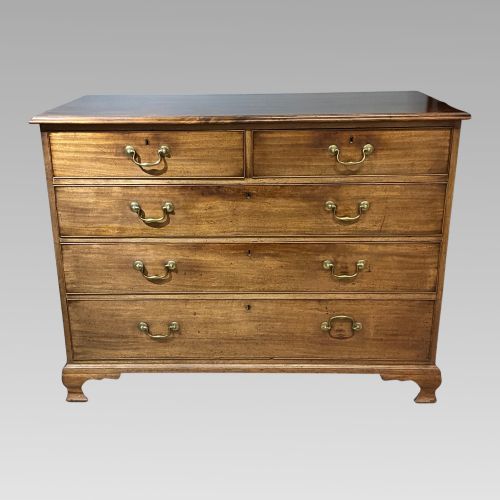
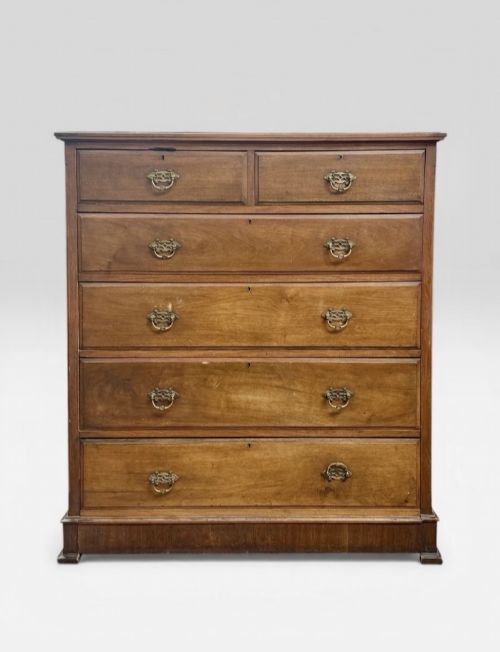
The selections available span Georgian, Victorian, and Regency periods, showing cabinetmaking traditions from English, Scottish, Italian, German, and American workshops. Mahogany and pine appear frequently, alongside walnut, satin birch, and oak.
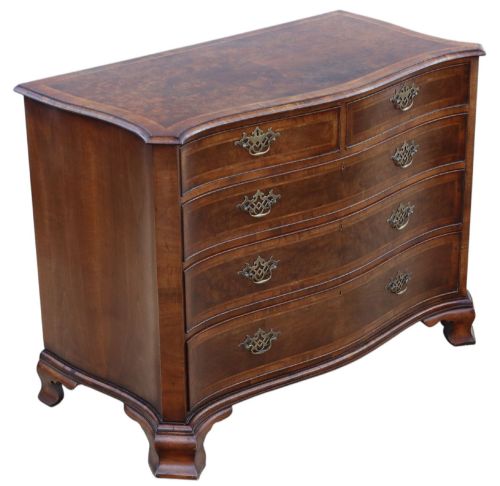
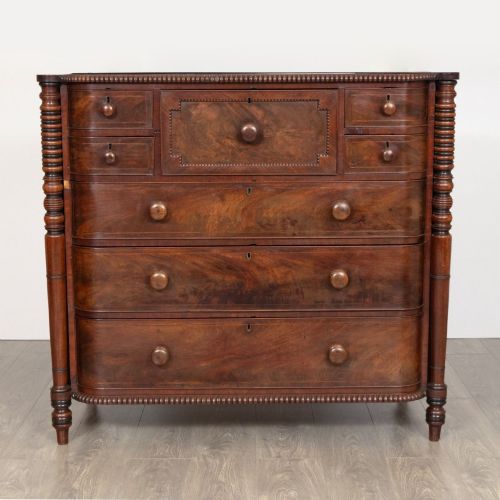
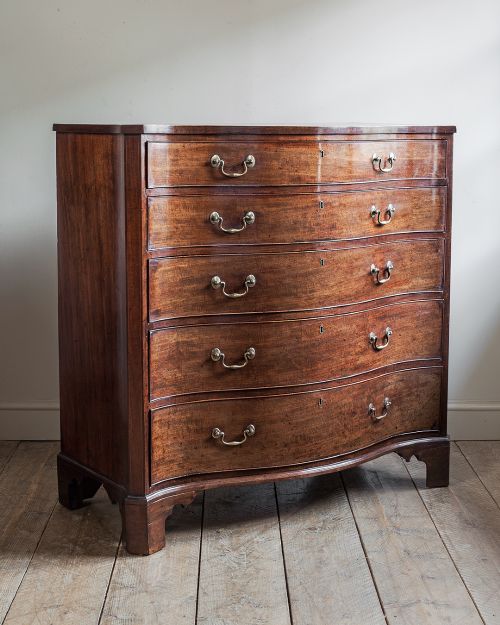
Victorian mahogany and pine chests dominate the options, alongside substantial George III mahogany serpentine designs and regional variations. Buyers encounter pieces featuring bun feet, secret drawers, and painted finishes.
Materials and construction
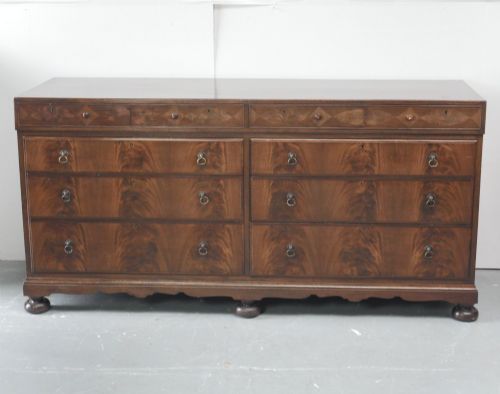
Cabinetmakers utilised solid timbers and selected veneers, applying flame mahogany, crossbanded burr walnut, and satin birch to primary display surfaces. Pine served frequently for internal carcases and regional painted storage units.
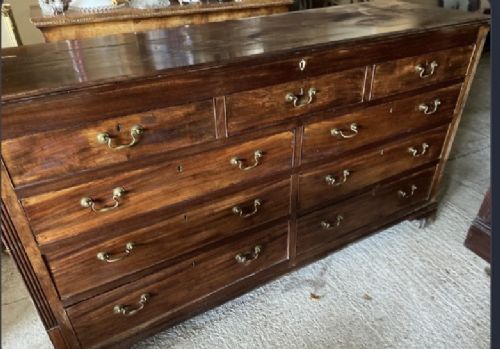
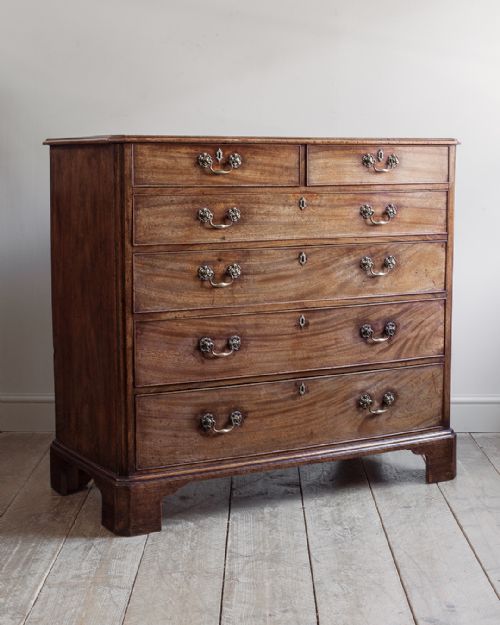
Construction methods incorporated dovetailed drawer boxes and substantial timber carcases designed to support heavy loads over centuries of domestic use. Brass hardware, including drop handles and escutcheons, fastened securely to drawer fronts.
Large Wooden Commodes Retail Price Guide 2026
Typical asking prices for large wooden commodes among the pieces listed under this phrase on Sellingantiques today, from the lower quarter to the upper quarter. They describe what is for sale here now, not the wider market.
Listings feature mahogany, pine, walnut, and satin birch across Victorian, Georgian, and Regency periods.
Distinctions in craftsmanship
Quality separates pieces through the selection of timber figures, such as highly figured flame mahogany or burr walnut veneers matched symmetrically across drawer fronts. Superior examples exhibit refined serpentine or bowfront shapes that demand advanced woodworking skill.
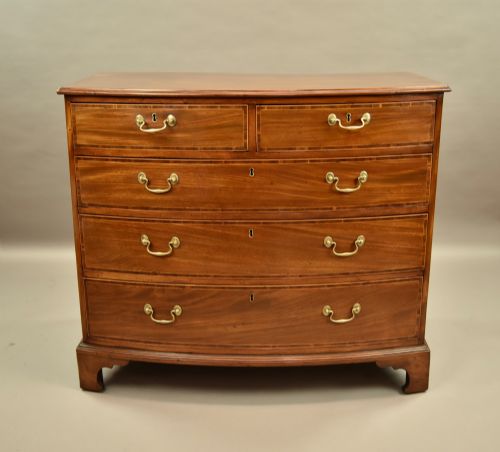
Cabinetmaking standard shows in the crispness of carved details, such as bracket feet, cockbeading around drawers, and the integration of concealed compartments like secret drawers. Original surfaces, whether polished French polish or untouched period paint, preserve the integrity of the piece.
Whytock & Reid
The Large Wooden Commodes Glossary
- Serpentine
- A front profile curving outward in the centre and inward at the sides, creating a fluid and graceful facade. This shape requires precise carpentry to execute properly.
- Bowfront
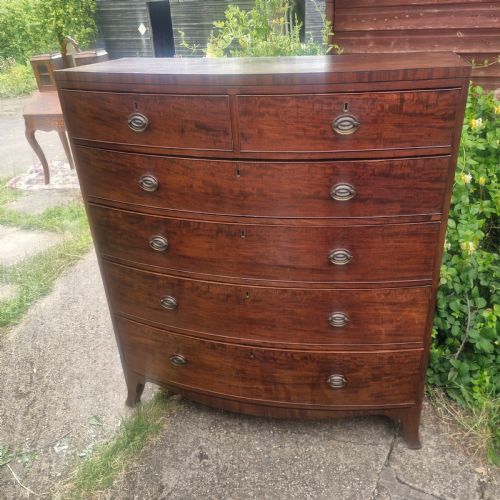
- A convex, outwardly curved front elevation popular during the Georgian and Regency periods. It softens the boxy appearance of standard storage chests.
- Flame mahogany
- A veneer cut from timber where the branch meets the trunk, producing a distinctive, flickering flame pattern. Cabinetmakers reserved this timber for principal display surfaces.
- Crossbanded
- A decorative border technique where strips of veneer are laid perpendicular to the grain of the central panel. This frames the drawer fronts with contrasting timber grain.
- Bun feet
- Rounded, flattened ball feet supporting the base of the chest, common on Victorian furniture. They lift the heavy carcase slightly off the floor.
- Tallboy
- A tall chest of drawers made by stacking one chest on top of another, providing maximum vertical storage. Gentleman's tallboys often incorporate upper cupboard sections.
Large Wooden Commodes: Frequently Asked Questions
Where should I place a large wooden commode?
Large wooden commodes require substantial wall space and clearance for drawers to open fully in bedrooms, hallways, or living rooms. Their significant presence anchors a room, making them suitable focal points against blank walls.
Ensure the floor surface is level to support the weight of these heavy timber pieces without straining the joints or binding the drawers.
How do I maintain the wood finish?
Dust surfaces regularly with a soft, dry cloth and avoid placing wooden commodes in direct sunlight or near heat sources to prevent timber cracking. Wax polish applied sparingly preserves antique polished surfaces without building up heavy residue.
Check drawer runners periodically and apply a small amount of beeswax to ensure smooth operation without sticking.
What is the difference between a chest and a commode?
In historical terminology, commodes often denote decorative French-influenced cabinets with drawers or doors, whereas chests of drawers serve strictly utilitarian storage purposes. In practice, the terms often overlap in antique marketplace descriptions.
Both forms provide deep drawer capacity, though commodes frequently exhibit more elaborate serpentine or bombe shaping.
How do I date a wooden chest of drawers?
Dating relies on observing construction methods, timber choices, handle styles, and overall aesthetic proportions consistent with periods like Georgian or Victorian. Hand-cut dovetails and secondary woods like oak or pine inside drawer boxes indicate older manufacture.
Stylistic markers such as bracket feet point to the eighteenth century, while bun feet and heavy mahogany carcases typically indicate nineteenth-century production.