



Large Wing Chairs
Large wing chairs offer deep comfort and draught protection, making them a stately anchor for any traditional fireside.
Large Wing Chairs
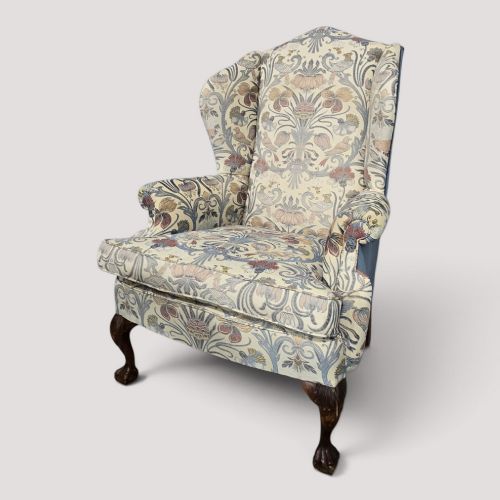
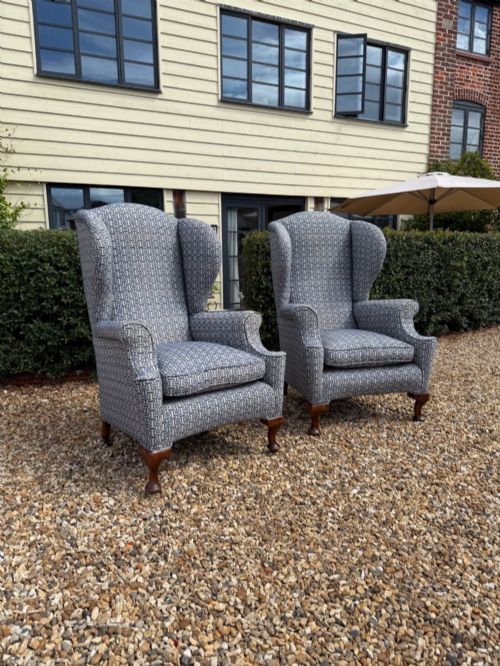
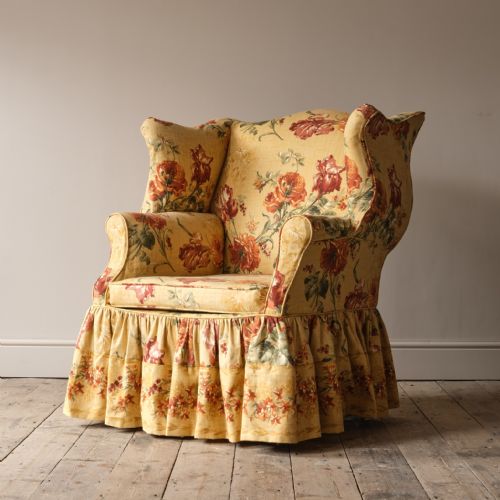
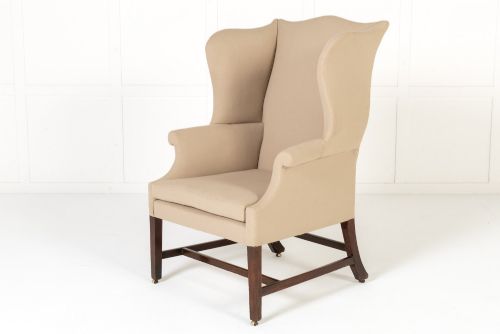
Large wing chairs are substantial upholstered armchairs designed to shield the sitter from draughts while keeping body heat near the hearth. When you search for large wing chairs, you encounter substantial seating options spanning the eighteenth century through to the early twentieth century.
The pieces listed here encompass periods such as the eighteenth century, Georgian era, and the nineteenth century, alongside later revivals from 1910 and 1930. Forms include barrel back armchair designs, salon chairs, and grand wingback armchairs.
Materials and frameworks vary from mahogany and walnut timber to carved wood, upholstered in leather, fabric, linen, and brass details. You are most likely to meet mahogany and walnut frames paired with leather or fabric upholstery on this page.
How they were made
Makers constructed the structural frames of large wing chairs using solid timbers such as mahogany, walnut, and general wood. These sturdy wooden skeletons provided the necessary rigidity to support deep upholstery and heavy use over generations.
Upholstery techniques involved durable fabrics, linen, and leather secured over internal padding, occasionally accented with brass elements. Skilled craftspeople also applied French carved details to walnut frames on specific continental and domestic iterations.
Large Wing Chairs Retail Price Guide 2026
Typical asking prices for large wing chairs among the pieces listed under this phrase on Sellingantiques today, from the lower quarter to the upper quarter. They describe what is for sale here now, not the wider market.
Listings feature frames in mahogany, walnut, and wood, paired with leather, linen, and fabric upholstery across the eighteenth and nineteenth centuries.
What varies in quality
Quality in large wing chairs separates pieces by the crispness of the timber carving and the integrity of the original frame construction. Finer examples display master joinery in mahogany or walnut, whereas lesser pieces rely on simpler framing and heavier secondary woods.
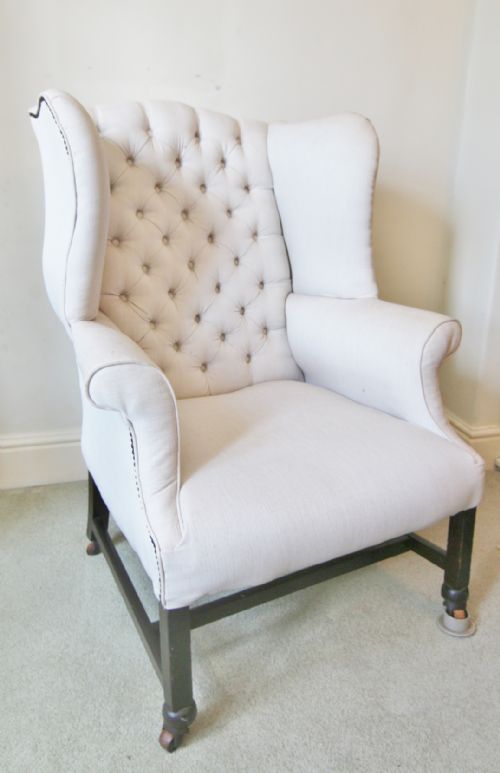
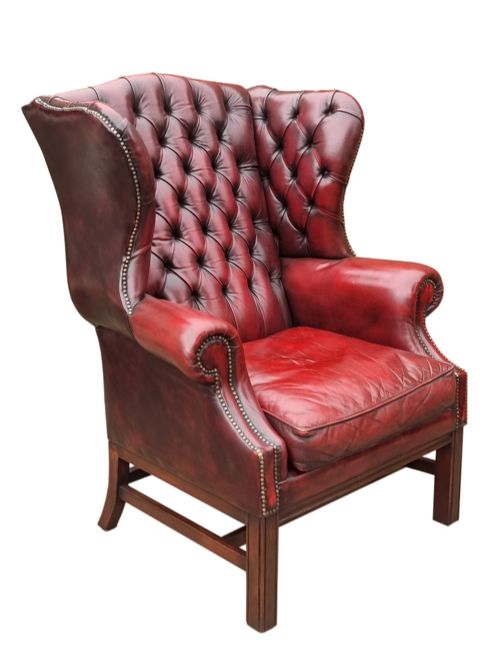
The choice of covering material and the execution of button backs or leather upholstery dictate the visual hierarchy. Superior specimens retain well-proportioned wings and harmonious lines that reflect their specific period, from George III to Victorian revivals.
The Large Wing Chairs Glossary
- Wingback
- An armchair featuring projecting side panels designed to trap heat from a fireplace and block side draughts. These protective wings are the defining characteristic of the form.
- Mahogany
- A durable, reddish-brown tropical hardwood favoured by cabinetmakers during the eighteenth and nineteenth centuries for its rich grain and strength. It provides a stable frame for large seating.
- Walnut
- A dark, figured timber utilised extensively for furniture frames and decorative carved elements before mahogany rose to dominance. It offers a warm tone and distinct grain patterns.
- Bergere
- An enclosed upholstered armchair with wooden sides and back frame exposed, often associated with French styles. The arms and frame are typically carved from walnut.
- George III style
- A design aesthetic drawing upon the neoclassical and rococo influences of the mid to late eighteenth century. Pieces in this style exhibit classical proportions and refined woodwork.
Large Wing Chairs: Frequently Asked Questions
What is a large wing chair?
A large wing chair is a substantial upholstered armchair featuring protective side panels designed to block draughts. They provide deep seating and anchor a room with traditional presence.
Examples span from eighteenth-century Georgian origins to later nineteenth-century and revival pieces constructed in mahogany, walnut, and leather.
How do I identify an 18th century wing chair?
Eighteenth-century examples typically display robust mahogany or walnut frames with proportions characteristic of the Georgian period. Look closely at the leg joinery and timber quality.
Revival pieces from later centuries often imitate these classic lines, but period construction methods and timber ageing reveal true age.
What materials are used in these chairs?
Frames are built from solid timbers including mahogany, walnut, and general wood. Upholstery materials range from traditional leather and linen to various fabrics.
Brass details and intricate French carving also appear on specific chairs, depending on whether the piece is English or continental.
Where should I place a large wing chair?
These substantial chairs suit principal reception rooms, studies, or libraries where their scale and high backs create a focal point. Historically, they stood near fireplaces to trap heat.
Ensure adequate floor space around the chair so the prominent wings and arms do not crowd surrounding furniture.