

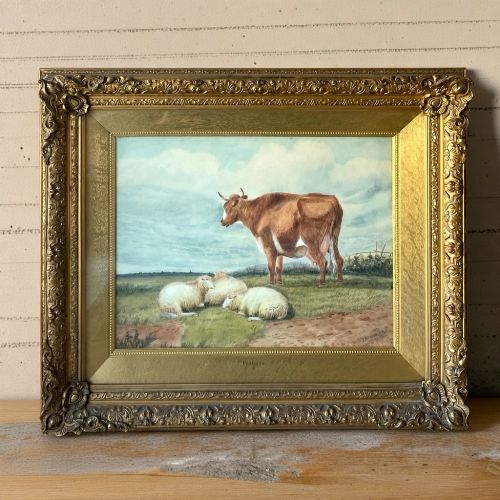
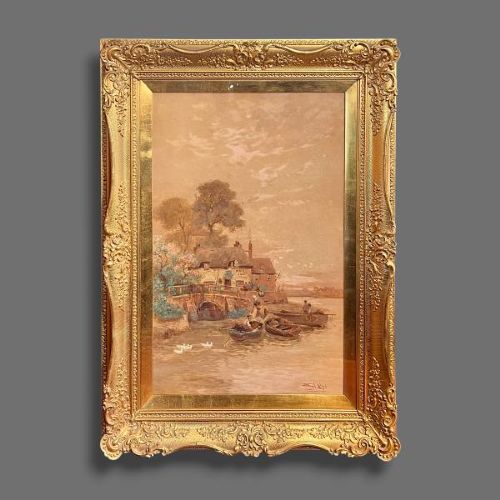
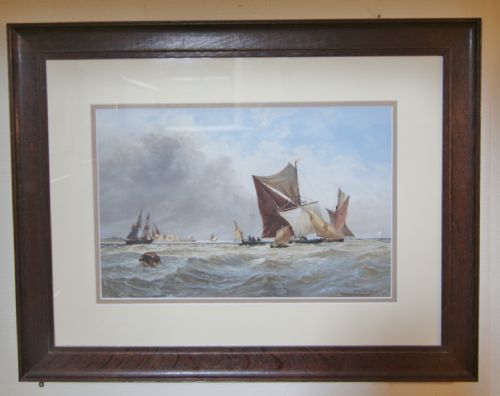
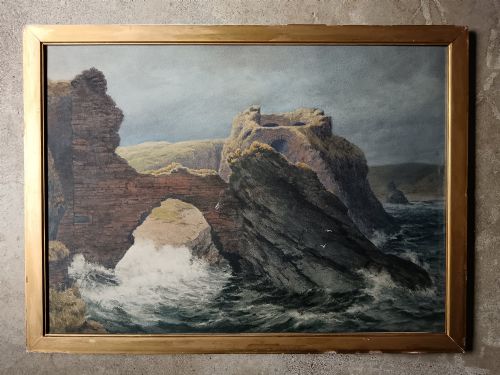


Large Watercolour Artwork
Large watercolour artwork brings expansive presence to a wall, offering delicate wash techniques captured on generous sheets of paper.
Large Watercolour Artwork
A large watercolour artwork commands attention through its generous scale, often depicting sweeping coastal views, architectural studies, or detailed rural scenes. When exploring this selection, buyers frequently encounter pieces originating from the nineteenth century up through the early decades of the twentieth century.
The subjects span traditional British landscapes, maritime scenes with fishing boats, botanical studies, and Chinese Qing Dynasty styles. Victorian and Edwardian examples predominate, showcasing skilled hand-painted execution on paper mounted behind glass within wooden or giltwood frames.
Materials and technique
These works rely on water-soluble pigments applied to paper sheets, occasionally supplemented with gouache for opaque highlights. Artists utilised controlled washes to build atmospheric skies, architectural precision, and textured terrain across expansive surfaces.
Framing protection is essential for works on paper, combining wood or giltwood mouldings with glass glazing to shield the fragile pigment layers from environmental damage and moisture.
Large Watercolour Artwork Retail Price Guide 2026
Typical asking prices for large watercolour artwork among the pieces listed under this phrase on Sellingantiques today, from the lower quarter to the upper quarter. They describe what is for sale here now, not the wider market.
Listings span periods from the Georgian era through the 1950s, featuring materials such as paper, watercolour pigment, gouache, glass, wood, and giltwood.
Defining quality
Quality rests in the confidence of the brushwork and the preservation of pigment vibrancy against fading from light exposure over time. Strong compositions demonstrate the artist's command over fluid washes and fine detail across a large sheet.
The integrity of the original paper support and the harmony of the period frame contribute significantly to the overall merit of the piece. Well-preserved works retain their tonal contrast and atmospheric depth without excessive discoloration.
Stuart Lloyd·TB Hardy·James Hayllas·John Moxon·David Cox Jnr·Martinetti·Frederick Williamson·Arturo Orselli·Hubert Coutts·Willie Stephenson·Frederick Tucker·Jane Utley·Harry Wanless·George De Paris·Herbert John Finn·Hirst Walker
The Large Watercolour Artwork Glossary
- Gouache
- An opaque water-based paint often used alongside watercolour pigment to add solid highlights and body to a painting. It provides greater coverage and opacity than standard transparent watercolours.
- Giltwood
- Wood that has been covered with a thin layer of gold leaf or gold paint. This finish frequently appears on nineteenth-century frames designed to complement the artwork.
- Topographical
- A style of painting focused on the accurate depiction of specific places, buildings, or landscapes. These works serve as visual records of towns, castles, and coastal harbours.
- Provenance
- The documented history of ownership surrounding a work of art. Clear provenance helps establish authenticity and traces the journey of the painting through time.
Large Watercolour Artwork: Frequently Asked Questions
How should I hang a large watercolour?
Position the artwork away from direct sunlight to prevent the pigments and paper support from fading over time. Ensure the wall fixings can securely support the combined weight of the heavy wooden frame and glass glazing.
Maintain stable indoor humidity levels to protect both the paper and the wooden framing components from warping or deterioration.
What subjects are common in these paintings?
Marine scenes featuring fishing boats and coastal harbours appear frequently alongside detailed British and Scottish landscapes. Architectural studies and botanical floral still lifes also feature among these larger compositions.
Many works document specific historical locations, offering a window into nineteenth and early twentieth-century environments.
How do I identify the period of the artwork?
Examine the framing style, paper characteristics, and any visible signatures or inscriptions left by the artist. Stylistic conventions in clothing, architecture, and landscape composition often point toward specific decades like the Victorian era.
Period documentation or labels on the reverse of the frame can also provide helpful clues regarding the date of creation.
Are these works painted on paper?
Watercolour pigments are traditionally applied to paper supports, which require protective framing behind glass to prevent surface damage. The paper weight and texture vary depending on the scale and period of the painting.
Additional media such as gouache are occasionally layered onto the paper to create opaque highlights.