



Large Walnut Wall Mirror
A large walnut wall mirror brings warmth and reflective depth to a room, drawing the eye with rich timber grain and substantial scale.
Large Walnut Wall Mirror
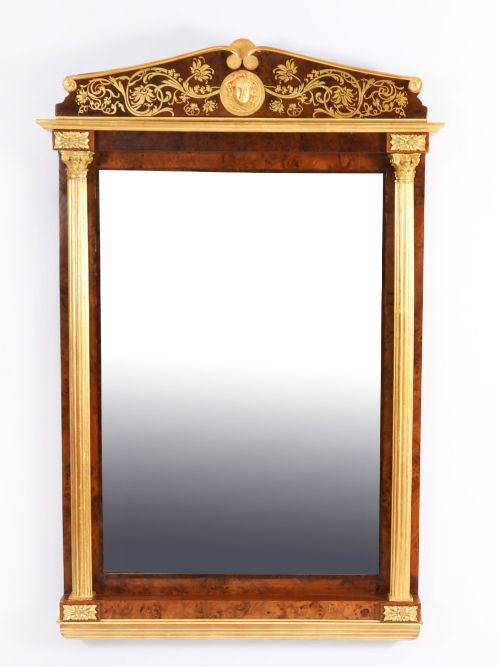
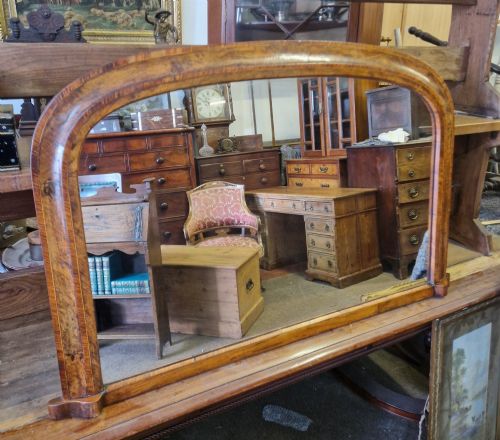
A large walnut wall mirror appears across several distinct periods, most frequently taking the form of an overmantel mirror designed to sit above a fireplace. These pieces span eighteenth-century Georgian and George II designs through to nineteenth-century Victorian examples and early twentieth-century interpretations.
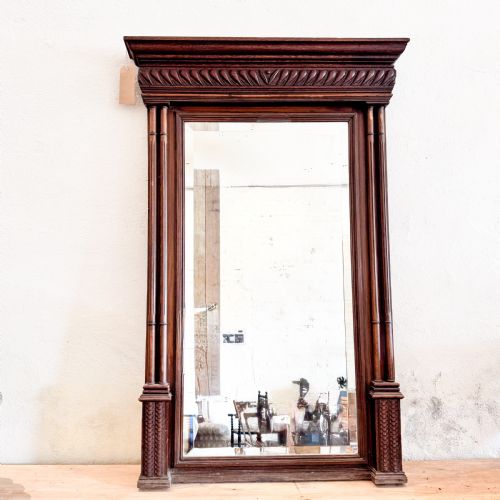
The selection ranges from country house wall mirrors and French trumeau designs to fret-cut pier glasses and architectural overmantels. Walnut timbers dominate the construction, often enhanced by gilt accents, inlay, or burr figures.
Materials and construction
Frames combine solid walnut and burr walnut veneers applied to secondary woods such as oak, utilising traditional joinery and carved wooden ornament. Artisans frequently integrated parcel gilt highlights, brass detailing, and ebonised touches to accentuate the carved mouldings and fretwork.
Mirror glass is set within these robust wooden frames, sometimes accompanied by painted panels or gilded gesso enrichments. The combination of dense walnut and reflective glass creates substantial pieces requiring secure wall fixings.
Large Walnut Wall Mirror Retail Price Guide 2026
Typical asking prices for large walnut wall mirror among the pieces listed under this phrase on Sellingantiques today, from the lower quarter to the upper quarter. They describe what is for sale here now, not the wider market.
Listings combine walnut with giltwood, brass detailing, and oak, spanning eighteenth-century Georgian forms to twentieth-century French styles.
Judging quality
The distinction between standard examples and superior pieces rests on the depth of the carving and the choice of timber figure. Exceptional items display finely figured burr walnut veneers, crisp hand-carved detail, and balanced proportions akin to eighteenth-century masterworks.
Subtlety in the application of parcel gilding and the integrity of the original mirror glass further elevate a piece. Lesser examples rely on heavier machine moulding or simpler construction without the refined detailing found in grander country house or period-style mirrors.
The Large Walnut Wall Mirror Glossary
- Overmantel mirror
- A large horizontal looking glass designed specifically to hang on the wall above a fireplace mantelpiece.
- Burr walnut
- A prized timber veneer showing swirling, knotty grain patterns harvested from tree growths, highly valued for decorative furniture fronts and frames.
- Parcel gilt
- Portions of a wooden frame highlighted with gold leaf, contrasting against the dark natural tone of the walnut.
- Fret mirror
- A wall glass featuring intricate fretwork cut in thin timber, often associated with eighteenth-century Georgian pier glasses.
- Trumeau mirror
- A tall decorative wall glass, frequently French in origin, incorporating a painted or carved panel above the reflective plate.
Large Walnut Wall Mirror: Frequently Asked Questions
Where should I hang a large overmantel mirror?
These mirrors traditionally anchor a room by hanging directly above a fireplace mantelpiece, reflecting light and surrounding space across the interior.
They also function effectively on principal living room or hallway walls when given sufficient clearance and secure structural support.
How do I identify a Georgian style mirror?
Georgian and George II style mirrors often feature architectural elements, fretwork frames, and parcel gilt enrichment inspired by designers such as William Kent.
They lean towards classical symmetry and refined proportions compared to heavily carved Victorian or French chateau designs.
What is the difference between walnut and burr walnut?
Standard walnut displays a straight, rich grain with deep brown tones, whereas burr walnut comes from irregular tree growths filled with intricate, swirling patterns.
Burr veneer was typically reserved for the most decorative surfaces of high-status mirrors.
Are these mirrors heavy to hang?
Due to their solid timber frames, substantial walnut construction, and large glass plates, these pieces possess considerable weight.
Professional installation using heavy-duty wall fixings suited to the specific wall type is essential for safety.