




Large Victorian Chest Drawers
When you search for large victorian chest drawers, you encounter substantial timber storage pieces spanning the nineteenth century.
Large Victorian Chest Drawers
Large victorian chest drawers emerge from nineteenth-century workshops in several distinct regional and domestic forms. The inventory includes classic mahogany and walnut case pieces alongside robust pine storage units and multi-drawer shop fittings.
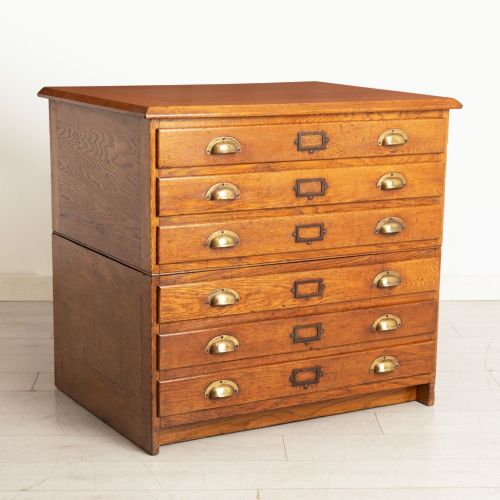
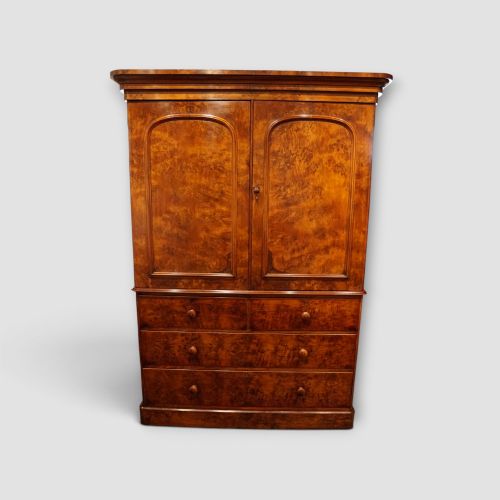
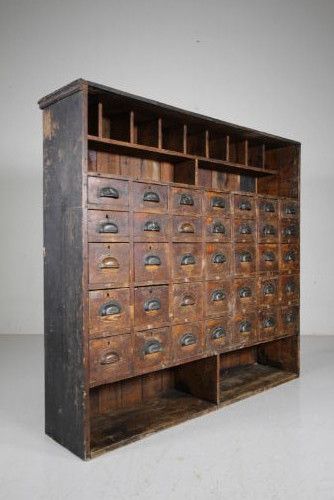
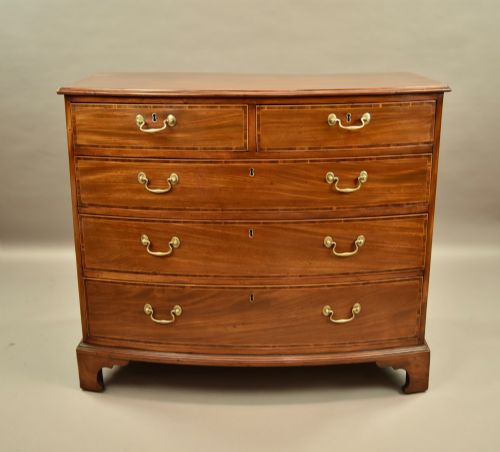
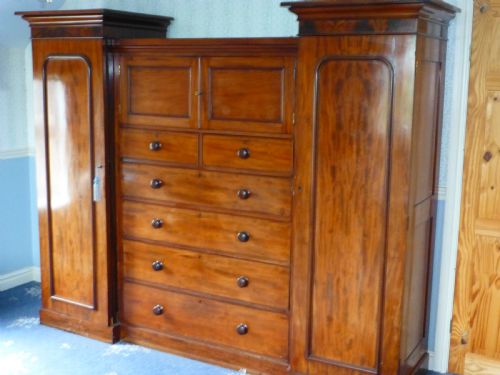
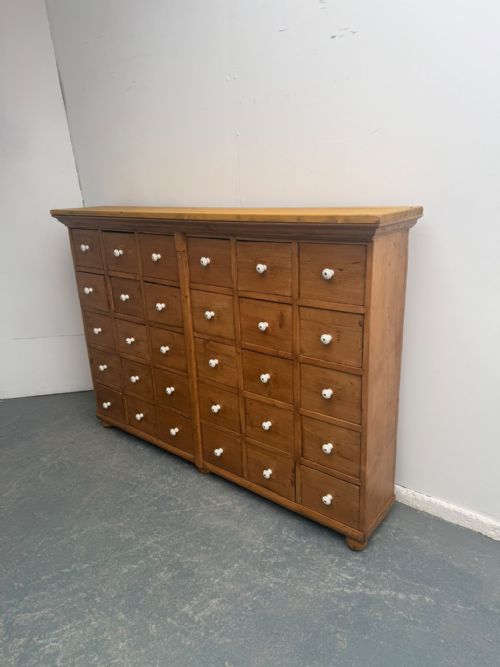
Domestic pieces range from bowfront and Scotch chests to tallboys and linen presses. Utility versions appear as massive pine storage units, while commercial examples take the form of extensive banks of drawers intended for chemist shops and trade use.
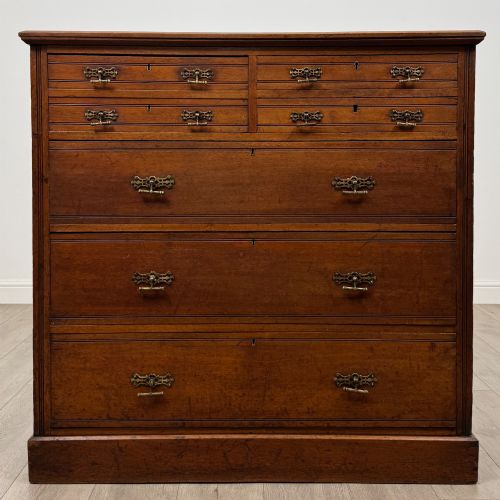
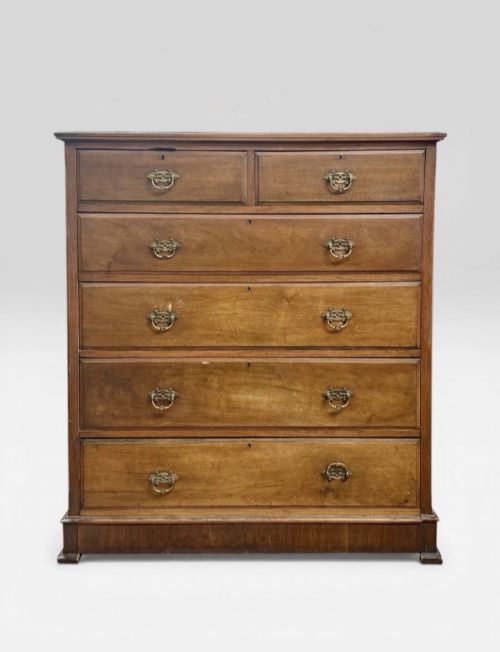
Proportions are generous, often featuring multiple drawer tiers arranged as two short drawers over three or four long ones. Specialised storage surfaces incorporate secretaire drawers and upper cupboard sections.
Materials and Construction
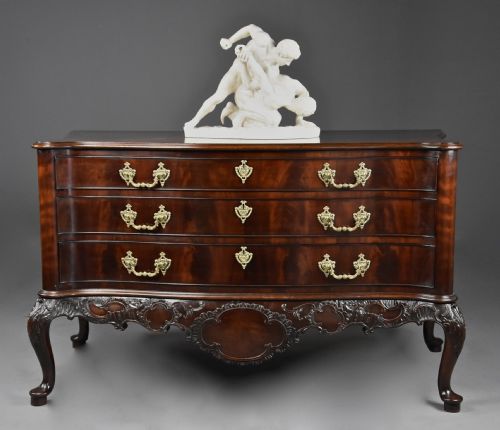
Cabinet makers built these pieces using solid timbers alongside decorative veneers. Mahogany and walnut provide the primary formal cabinet woods, frequently enhanced by flame mahogany veneer, burr walnut, and satinbirch surfaces.
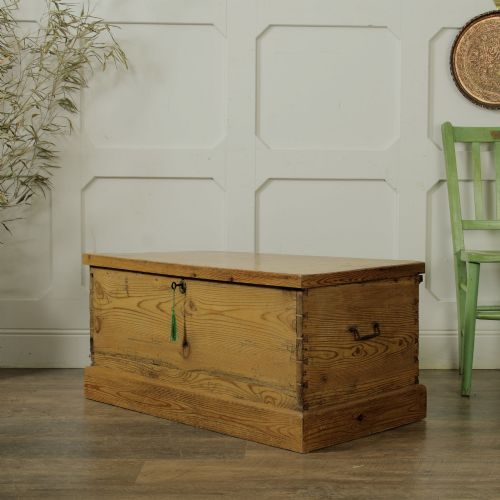
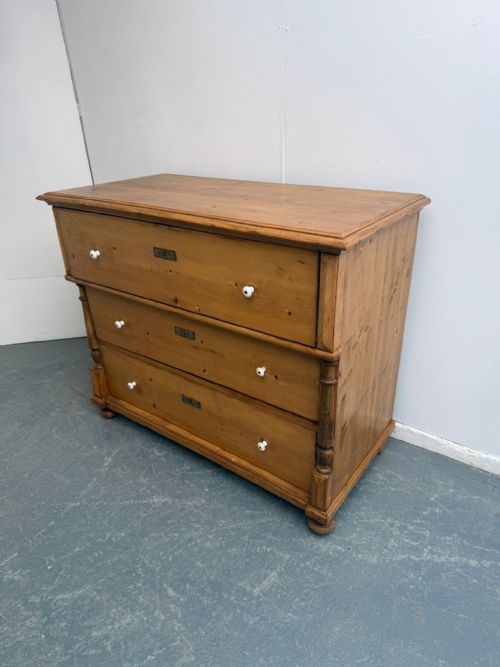
Pine serves extensively for country house utility pieces, commercial shop fittings, and internal drawer construction. Brass hardware, iron fittings, and glass elements appear across handles, escutcheons, and specialised cabinet doors.
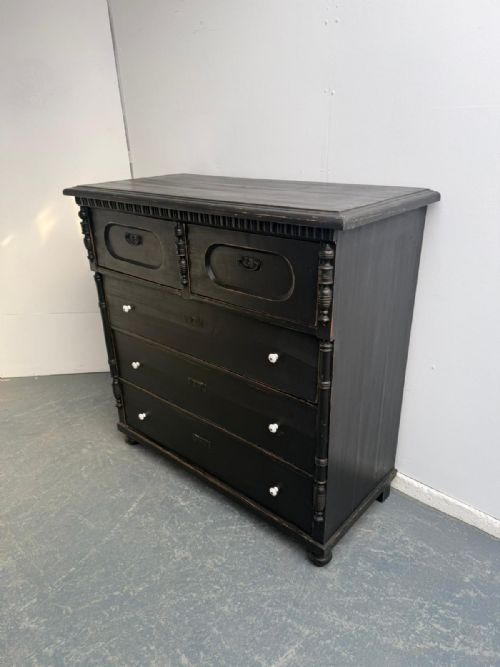
Joinery methods encompass traditional drawer framing, secret compartments, and turned bobbin details. Surfaces receive wax finishes, traditional paint applications, or retain their original polished patination.
Secret compartments hide silently behind unassuming drawer fronts, waiting for generations of owners to rediscover forgotten treasures.
Evaluating the Range
Construction standards separate standard utility items from high-grade cabinet work. Timber selection dictates overall merit, with figured grains, flame mahogany, and burr walnut commanding distinct attention compared to plain pine carcases.
Maker attribution elevates certain examples, particularly documented pieces by established nineteenth-century cabinet makers. The presence of sophisticated details like secret drawers, serpentine fronts, or original painted surfaces alters the standing of individual pieces.
Jas Shoolbred·Gillows
The Large Victorian Chest Drawers Glossary
- Scotch chest
- A substantial nineteenth-century chest of drawers originating from Scotland, typically featuring a deep central top drawer flanked by smaller side drawers above regular tiers.
- Bowfront
- A curved cabinet front that swells outward in a convex arc, softening the linear geometry of case furniture.
- Wellington chest
- A tall, slender chest of seven drawers secured by a hinged vertical locking side bar that fastens with a key.
- Linen press
- A tall storage piece combining upper cupboard doors enclosing sliding trays with lower drawer tiers for folded textiles.
- Bank of drawers
- A multi-drawer commercial or workshop fitting containing numerous small compartments designed for systematic storage.
Large Victorian Chest Drawers: Frequently Asked Questions
How do I distinguish pine from mahogany pieces?
Mahogany items display a dense, reddish-brown grain suitable for formal interiors and display spaces.
Pine versions exhibit a softer, lighter yellow hue that frequently carries historical paint layers or wax finishes.
What is a Scotch chest?
A Scotch chest is a regional nineteenth-century form characterised by generous proportions and a deep cushion top drawer.
These pieces often incorporate flame mahogany or walnut veneers alongside tiger wood handles.
Where were multi-drawer units used?
Multi-drawer banks and shop fittings served commercial purposes in chemist shops and trade establishments.
They provided systematic storage for dry goods, medicines, and merchandise before domestic adaptation.
How do I care for a waxed surface?
Waxed timber requires periodic application of quality beeswax to nourish the wood and maintain its sheen.
Keep these storage pieces away from direct heat sources and sudden humidity shifts to protect the historical finish.