

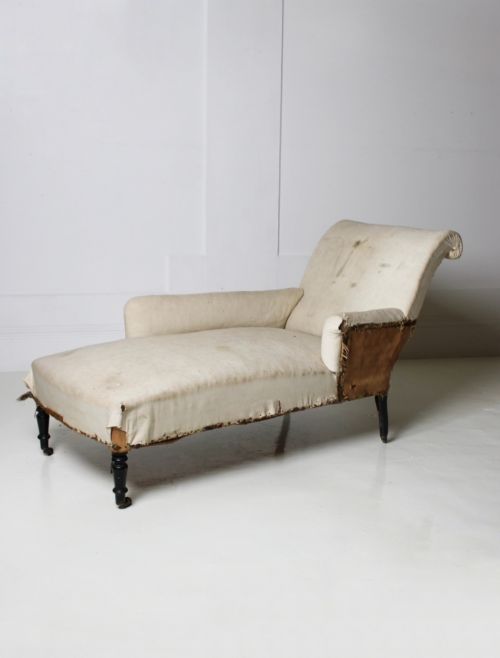
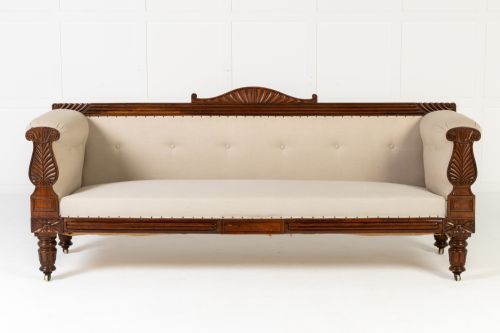


Large Upholstered Couch
A large upholstered couch brings undeniable presence to a room, offering generous proportions and deep seating rooted in centuries of craftsmanship.
Large Upholstered Couch
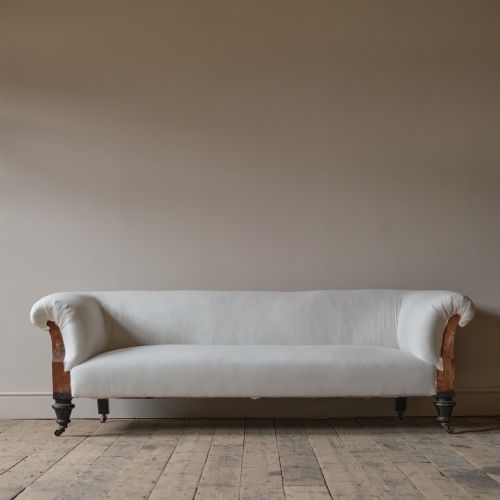
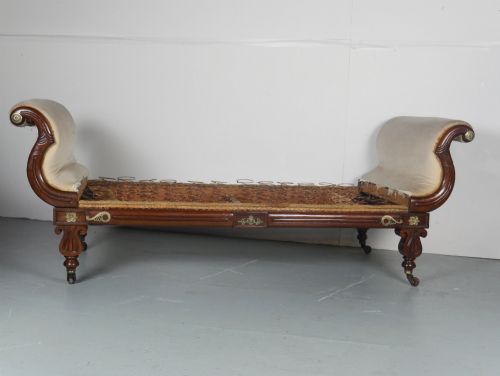
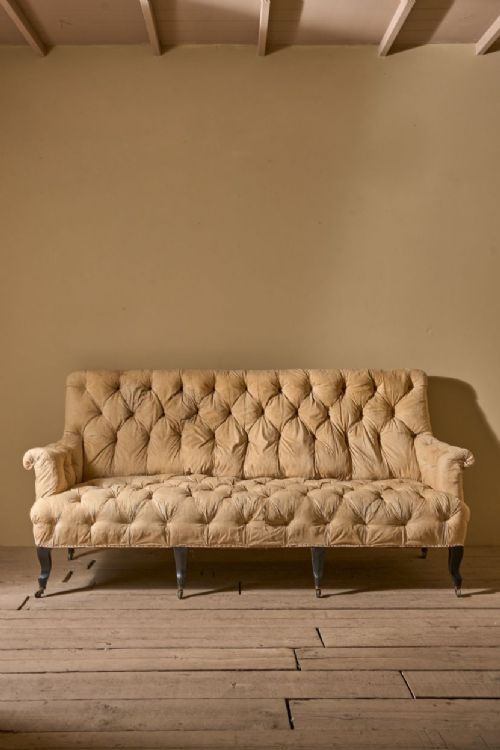
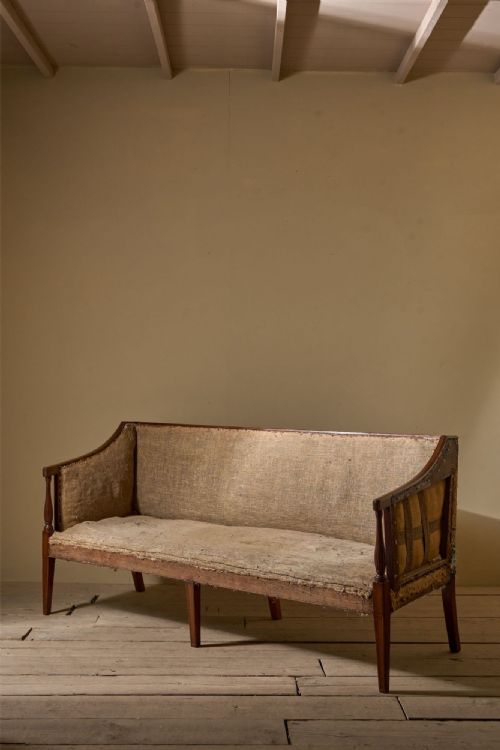
A large upholstered couch encompasses substantial seating forms from the eighteenth, nineteenth, and early twentieth centuries, including grand country house sofas, deep-seated Chesterfields, and sprawling salon settees. When searching for a large upholstered couch, buyers encounter robust wooden frames wrapped in generous padding, designed for expansive reception rooms and drawing rooms.
The pieces listed here span distinct eras such as the Georgian, Regency, William IV, Victorian, and Edwardian periods, alongside continental Louis XV and XVI styles. English country house pieces and buttoned Napoleon III designs appear frequently, reflecting domestic comfort and formal entertaining.
Makers and makers' marks occasionally surface, connecting individual items to workshops like Miles & Edwards, Howard & Sons, and William Birch. These examples range from show-frame mahogany settees to giltwood frames awaiting or retaining period fabric.
How they were made
Frames rely on dense timbers such as mahogany, rosewood, walnut, and general hardwood, carved or polished to reveal structural integrity beneath the upholstery. Giltwood frames add a layer of surface brilliance, particularly on French salon pieces and Regency gilt frames.
Large Upholstered Couch Retail Price Guide 2026
Typical asking prices for large upholstered couch among the pieces listed under this phrase on Sellingantiques today, from the lower quarter to the upper quarter. They describe what is for sale here now, not the wider market.
Listings span the eighteenth century through to the 1930s, featuring mahogany, giltwood, velvet, and hessian.
What varies in quality
The distinction between tiers rests upon the rigour of the underlying timber frame and the authenticity of its construction. Heavy mahogany and rosewood chassis with intricate hand-carving command greater regard than simpler pine or mixed-wood carcases.
Proportion and decorative restraint dictate the aesthetic hierarchy. Pieces retaining original ticking, such as those by Howard & Sons, demonstrate maker integrity, whereas examples sold for upholstery invite a blank slate for restoration.
Miles & Edwards·Howard & Sons·William Birch
The Large Upholstered Couch Glossary
- Show frame
- A wooden structural skeleton left visible around the upholstered portions of a settee or sofa, typical of William IV and Victorian drawing room seating.
- Ticking
- A tightly woven cotton or linen fabric traditionally used as the inner lining to contain horsehair and stuffing materials.
- Giltwood
- Timber treated with gold leaf or gesso finish, frequently utilised on French salon pieces and Regency decorative frames.
- Hessian
- A coarse woven fabric, often made from jute fibres, employed as foundation webbing and backing inside traditional upholstery layers.
- Rococo Revival
- A nineteenth-century design movement favouring asymmetrical scrollwork, naturalistic floral carving, and exuberant curves.
Large Upholstered Couch: Frequently Asked Questions
How do I identify a Regency sofa?
Regency sofas display neoclassical influences, clean architectural lines, and rich timbers such as mahogany and rosewood. Gilt brass mounts and sabre legs frequently appear on these early nineteenth-century examples.
Proportions are grand, reflecting the formal entertaining spaces of the Regency era.
Why buy a sofa for upholstery?
Purchasing a sofa listed for upholstery allows the owner to select custom fabric suited to their specific interior scheme. It ensures the internal webbing and padding receive modern restoration while preserving the antique wooden frame.
This approach combines historic framing with bespoke contemporary textile finishes.
What is a show frame settee?
A show frame settee exposes polished wood around the perimeter of the backrest and armrests, rather than covering the entire structure in fabric. This construction technique highlights the carved mahogany or walnut woodwork.
Master carvers shaped these exposed areas to display decorative motifs typical of Victorian and William IV designs.