

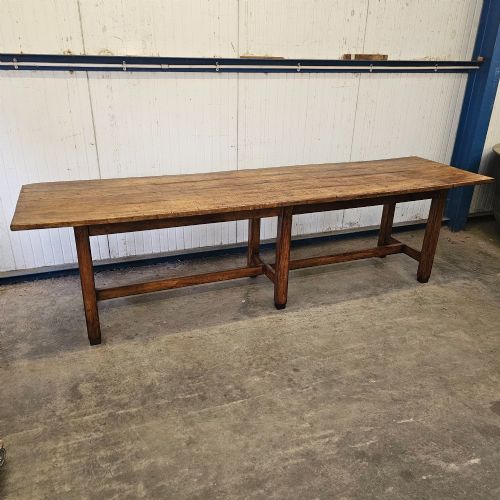
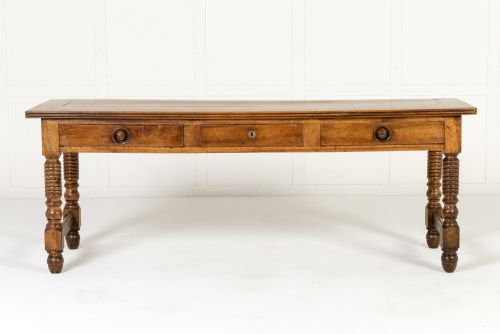
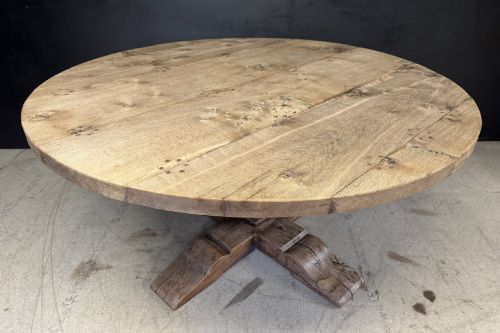
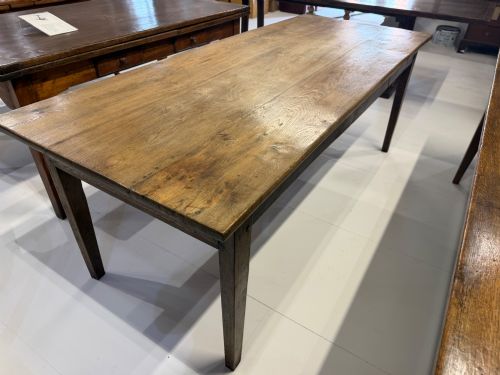

Large Timber Table
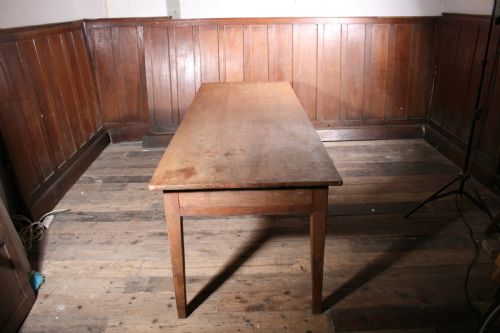
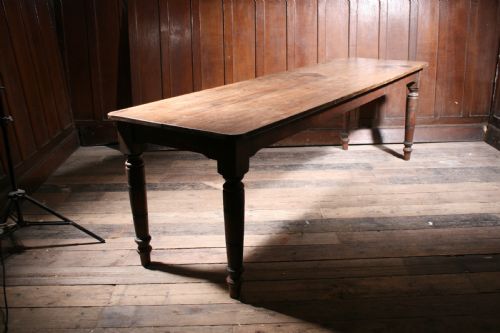
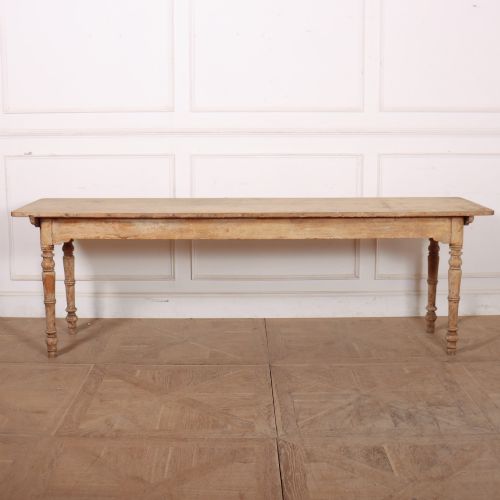
A large timber table anchors a room through plain utility and honest construction, bringing generous surface area for gathering or work.
Large Timber Table
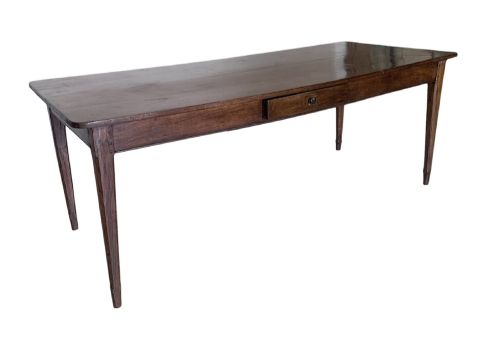
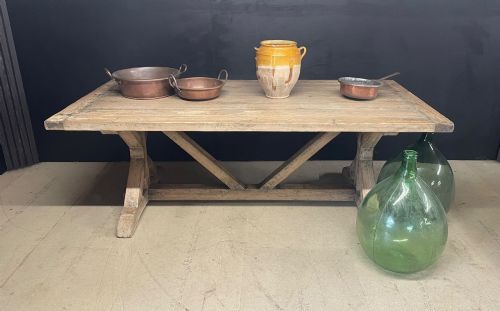
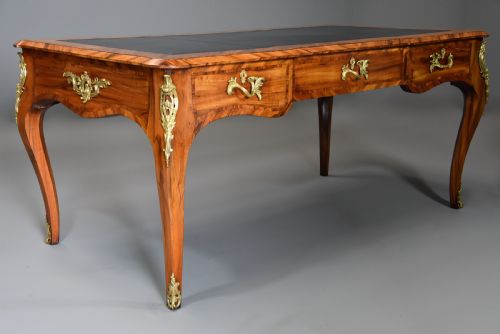
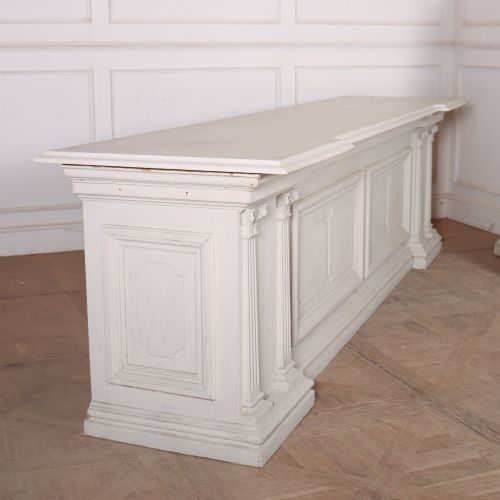
A large timber table provides a substantial platform found across domestic and commercial settings, appearing most frequently in forms designed for dining, writing, or serving. The pieces gathered under the search phrase large timber table span several centuries, with nineteenth-century examples dominating alongside pieces from the early twentieth century.
The selection ranges from robust farmhouse boards and scrubbed pine kitchen surfaces to refined walnut refectory tables and mahogany dining designs. Buyers encounter everything from twin plank kitchen boards to French provincial serving tables, each built to accommodate daily demands.
Origins stretch across English, French, Italian, and Hungarian workshops, showing regional variations in timber choice and base construction. Oak, pine, elm, and walnut form the core of these offerings, supplemented by occasional painted finishes.
How they were made
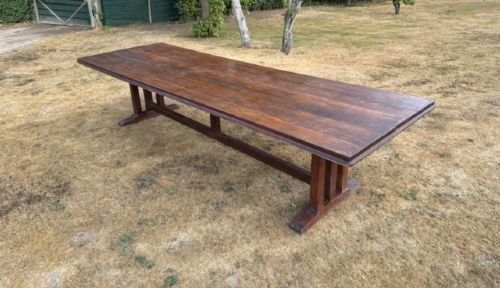
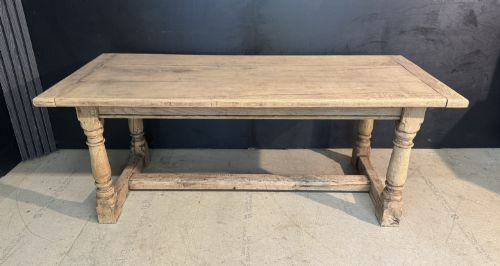
Makers relied on solid hardwoods and softwoods such as oak, mahogany, walnut, pine, and elm, selecting materials based on structural needs and regional availability. Thick tops required sound joining techniques, often utilising heavy planks secured to sturdy trestle bases, square section supports, or elaborate refectory frames.
Surface treatments varied from scrubbed natural timber and bleached oak to layered paintwork and polished mahogany. Joinery prioritized strength, employing pegged tenons, dovetails, and robust stretchers to support heavy daily use over generations.
Large Timber Table Retail Price Guide 2026
Typical asking prices for large timber table among the pieces listed under this phrase on Sellingantiques today, from the lower quarter to the upper quarter. They describe what is for sale here now, not the wider market.
Listings feature eighteenth, nineteenth, and early twentieth-century periods, utilising oak, pine, mahogany, elm, walnut, and painted timber.
What varies in quality
Quality rests in the integrity of the timber selection and the proportional balance between the heavy top and its support structure. Superior examples display dense, well-seasoned grain patterns and original construction details that remain tight and stable without excessive modern intervention.
The distinction between standard utility items and finer workshop production lies in the refinement of the edges, the crispness of any turned or carved supports, and the preservation of original surfaces like scrubbed pine or polished mahogany.
Gillows Lancaster
The Large Timber Table Glossary
- Refectory table
- A long, narrow dining table traditionally used in monasteries and large halls, characterised by substantial length and structural stretchers.
- Potboard serving table
- A form featuring a low slatted shelf beneath the main surface, originally designed for storing heavy pots and serving dishes.
- Scrubbed pine
- A finish achieved through repeated washing and scrubbing of softwood boards, leaving a pale, clean, matt surface favoured in country kitchens.
- Twin plank table
- A large surface constructed from two wide boards joined lengthwise, often seen on substantial farmhouse and kitchen tables.
- Partners writing desk
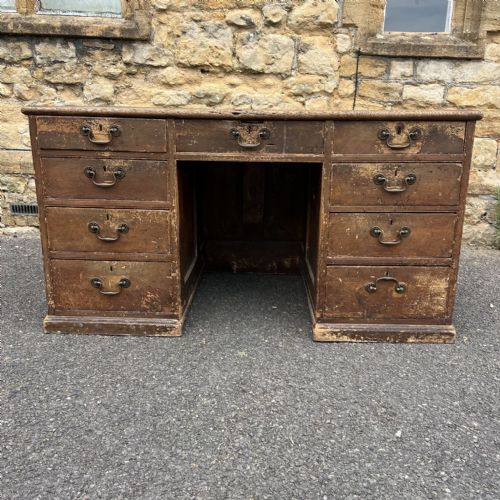
- A double-sided desk designed for two people to work opposite one another, typically fitted with drawers and pedestals.
Large Timber Table: Frequently Asked Questions
How do I clean a large timber table?
Maintain timber surfaces by wiping them down with a damp cloth and drying them immediately to prevent moisture rings or warping. Avoid harsh chemical cleaners that strip natural oils or damage historic patination.
Wax finishes benefit from occasional gentle application using a neutral beeswax to nourish the wood and maintain a soft sheen. Unfinished scrubbed pine responds well to traditional scrubbing with warm soapy water along the grain.
What is the difference between a farmhouse table and a refectory table?
Farmhouse tables generally display a more rustic, utilitarian character with thick pine, oak, or elm tops and straightforward square or turned supports. They often show the marks of daily food preparation and country domestic life.
Refectory tables typically present a longer, narrower profile with formal architectural styling, often executed in walnut or oak with substantial stretcher bases. They derive from institutional dining traditions rather than simple rural kitchens.
Are these tables suitable for everyday family dining?
These pieces were originally built for heavy daily use, making them durable candidates for modern family life. Solid timber construction withstands regular gathering, eating, and working without losing structural integrity.
Existing marks, dents, and stains accumulated over decades or centuries mean that new daily use simply adds to the history of the piece. Using heat mats and coasters helps protect historic polished or painted surfaces from sudden damage.
How can I tell the period of a timber table?
Dating relies on examining the timber species, tool marks left during manufacture, and the assembly methods used beneath the top. Nineteenth-century examples often display hand-sawn board marks and traditional peg joinery, while earlier pieces show distinct pegged tenon configurations.
Hardware components like screws, handles, and drawer construction further anchor a piece to a specific decade or century. Comparing the leg profile and stretcher design to documented regional styles helps confirm the era.