


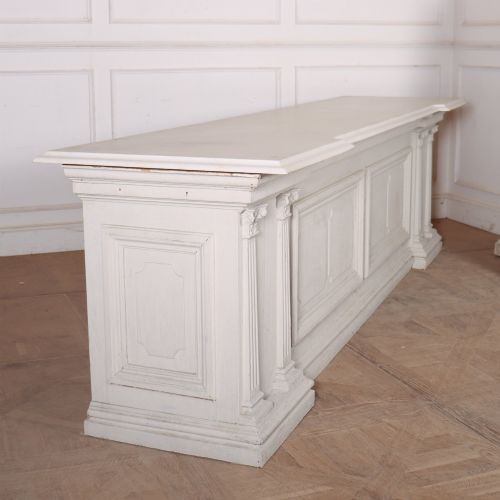


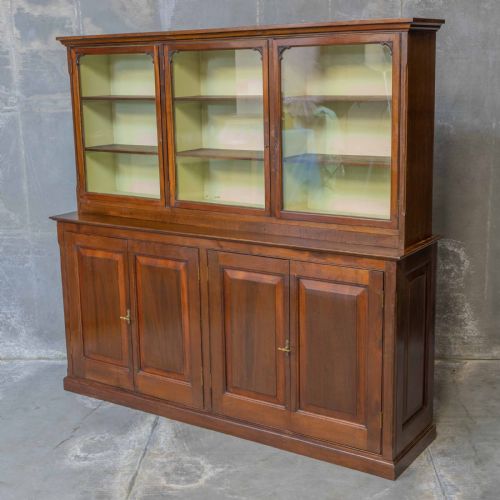
Large Timber Counter
A large timber counter anchors a room with substantial presence, offering generous workspace and deep character earned from decades of trade.
Large Timber Counter
A large timber counter encompasses substantial shop fittings, drapers tables, and banks of drawers originating from the nineteenth century and the Edwardian era. These pieces arrive in various styles, including Victorian mercantile, French provincial, and neoclassical designs.
Buyers most frequently encounter substantial shop counters and drapers tables constructed from pine, walnut, and mahogany. These items range from glazed display cabinets to extensive banks of twelve drawers intended for commercial storage.
Originating largely from English and French workshops, these substantial fixtures serve domestic kitchens, retail spaces, and studios with equal utility. Each specimen reflects the commercial demands of its period through functional drawer arrangements and robust proportions.
Materials and construction
Makers utilised dense hardwoods such as mahogany and walnut alongside versatile softwoods like pine to build heavy commercial frames. Brass hardware and glass panels frequently complement these timber bodies, particularly on display cabinets and cabinet drawers.
Traditional joinery underpins the stability of these large pieces, accommodating heavy daily use in nineteenth-century shops. Painted finishes also appear, showing layers of historical pigment over pine and mixed timber structures.
Large Timber Counter Retail Price Guide 2026
Typical asking prices for large timber counter among the pieces listed under this phrase on Sellingantiques today, from the lower quarter to the upper quarter. They describe what is for sale here now, not the wider market.
Some counters still retain the microscopic traces of haberdashery dust tucked deep inside twelfth-tier drawers from the eighteen-nineties.
Assessing quality and proportion
Superior examples demonstrate refined stylistic details, such as neoclassical lines or French provincial proportions, rather than purely utilitarian construction. The choice of timber also elevates a piece, with figured mahogany and rich walnut commanding greater visual weight than standard pine.
Intact original hardware, such as brass pulls and glass display components, distinguishes finer architectural fittings from heavily altered or restored equivalents. The integrity of internal drawer construction ultimately dictates the enduring utility of these heavy fixtures.
The Large Timber Counter Glossary
- Haberdashery drawers
- Multiple shallow drawers originally designed for sorting ribbons, threads, and small textiles in nineteenth-century shops. These units often feature glazed fronts or numerous small brass pulls.
- Drapers table
- A long, sturdy table utilised in fabric retail for measuring and cutting cloth. They frequently incorporate lower tiers or integrated drawer banks for additional storage.
- Shop fitting
- Custom furniture and architectural elements built specifically for commercial retail environments. These pieces prioritise robust construction to withstand heavy public use.
- Neoclassical
- A decorative style drawing inspiration from classical antiquity, characterised by symmetrical proportions and restrained ornamentation. It appears across various nineteenth-century case furniture.
Large Timber Counter: Frequently Asked Questions
How do I choose the right size?
Measure your floor space carefully and account for the substantial depth and length typical of nineteenth-century shop fixtures. Leave ample clearance around the piece for movement and drawer access.
Consider the primary function of the room to determine whether a glazed display cabinet or a deep bank of drawers suits your storage requirements best.
Are these counters suitable for kitchens?
Many buyers repurpose large shop counters and drapers tables as kitchen islands or prep surfaces due to their generous working area. The durable timber construction handles daily domestic tasks effectively.
Ensure the working height aligns with modern kitchen ergonomics before installation, as historical commercial counters can vary in elevation.
How do I maintain the timber surface?
Protect the historical wood finish by applying natural waxes periodically and avoiding excessive moisture. Use coasters and mats to prevent staining on antique timber tops.
Keep these heavy pieces away from direct heat sources and dramatic humidity fluctuations to prevent timber movement and cracking.
Can I date a counter by its wood?
Pine and painted surfaces often point towards French provincial or regional mercantile workshops, while mahogany and walnut frequently indicate formal English or Victorian cabinetmaking. Wood choice alone provides broad clues rather than a definitive timeline.
Examine construction methods and hardware alongside the timber to gain a clearer understanding of the manufacturing period.