







Large Timber Bench
A large timber bench grounds a room with immediate architectural presence, offering honest utility shaped by centuries of regional craftsmanship.
Large Timber Bench
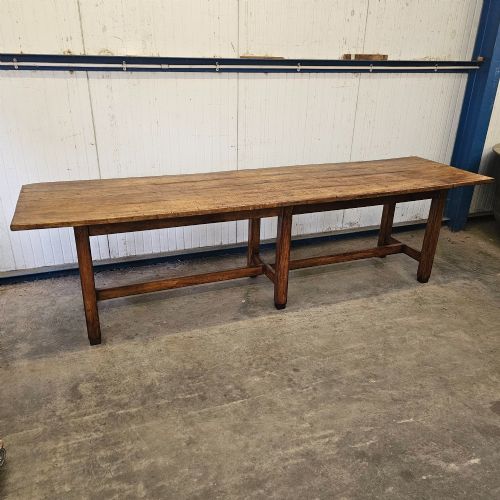
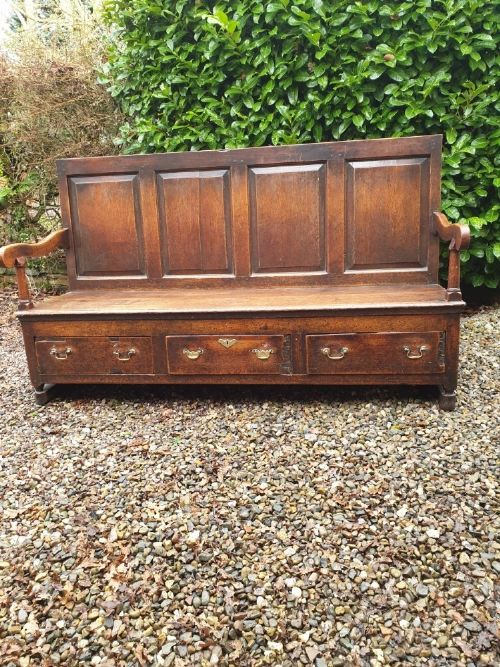
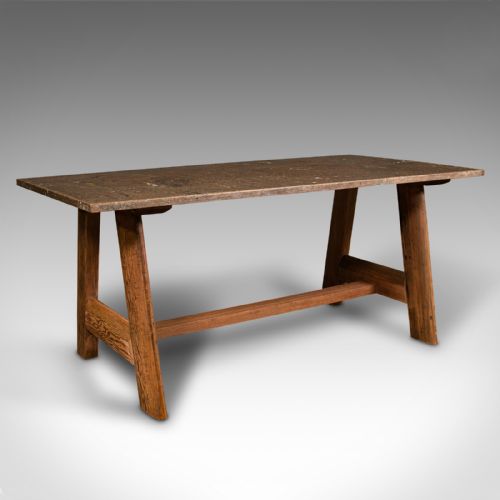
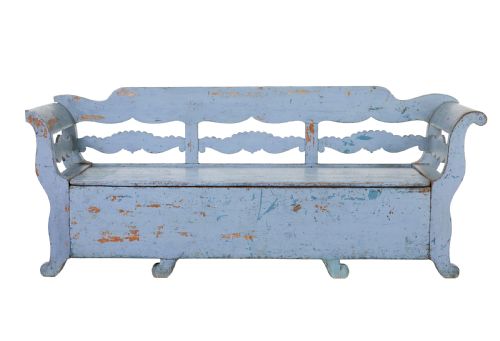
A large timber bench spans utilitarian origins, encompassing country house oak settles, painted Scandinavian seating, and French community hall tables adapted for long seating. These substantial pieces emerge primarily from the eighteenth and nineteenth centuries, carrying the marks of domestic, ecclesiastical, and institutional use.
The varieties on this page range from rustic painted pine and beech country designs to carved mahogany hall seats and architectural oak settles. Each version reflects the specific regional timber resources and daily demands of its period, from Edwardian artist studios to Georgian country houses.
Buyers encounter forms that merge seating with storage or display, such as high-backed settles with integrated boxes alongside long dining benches meant for communal gathering. These survivors retain their original structural integrity while showing the pleasing patination of extended daily wear.
Materials and construction
Construction relies upon native hardwoods and softwoods such as oak, pine, beech, and mahogany, chosen for structural stability and local availability. Master joiners utilised traditional mortise and tenon joinery alongside pegged joints to ensure these substantial lengths could withstand continuous weight and movement.
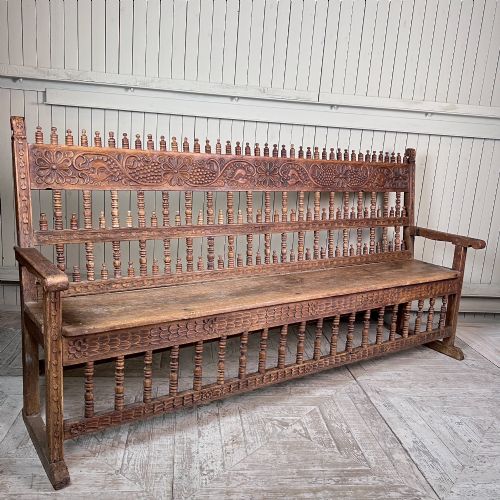
Surface treatments vary from untreated scrubbed timber and polished mahogany to historic painted finishes in Swedish and French country traditions. Brass hardware occasionally appears on functional components, while hand-carving defines the decorative vocabulary of Spanish colonial and Carolean style examples.
Large Timber Bench Retail Price Guide 2026
Typical asking prices for large timber bench among the pieces listed under this phrase on Sellingantiques today, from the lower quarter to the upper quarter. They describe what is for sale here now, not the wider market.
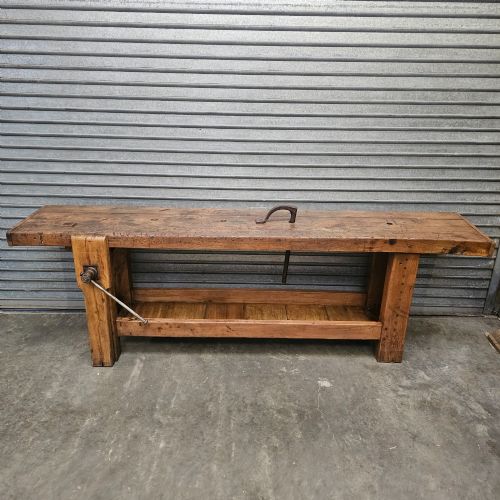
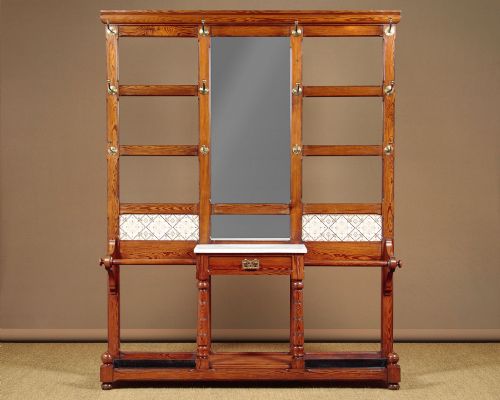
The inventory includes specialised forms like hallstands, settle benches, workbench adaptations, and low hall seat stools.
Distinctions in quality
Quality rests in the integrity of the primary timber frame, the retention of original surface patination, and the honesty of any structural repairs over time. Pieces retaining their initial unpainted or historic painted finishes alongside untouched joinery stand apart from those heavily altered or stripped.
The sophistication of regional carving and the proportional balance across extended lengths dictate the distinction between vernacular utility and high-style country house furniture. Superior examples maintain rigid structural joints without excessive timber shrinkage or inappropriate modern replacement parts.
The Large Timber Bench Glossary
- Settle
- A wooden bench with a high back, solid arms, and often a storage box beneath the seat, designed to block draughts in period interiors. These substantial seats formed the social centre of the early domestic room.
- Patina
- The deep surface sheen and mellowing of colour acquired by timber through decades of handling, polishing, and environmental exposure. This gradual ageing process distinguishes authentic period surfaces from modern reproductions.
- Trestle
- A structural support consisting of a horizontal beam fixed to two splayed legs, commonly used to hold long bench or table tops. This ancient engineering method provides maximum legroom and uncompromised weight distribution.
- Carolean Style
- An English furniture design movement spanning the mid to late seventeenth century, characterised by rich carved detail, bold turnings, and high-status hardwoods like walnut. Pieces in this style emphasise formal symmetry and display architectural influences.
Large Timber Bench: Frequently Asked Questions
Where should I place a large timber bench?
These substantial seats suit long hallways, generous boot rooms, or large dining spaces where their length can be fully appreciated. They also anchor open-plan living areas when positioned against a principal wall.
Ensure adequate floor space is measured before placement, accounting for the depth of the seat and the clearance needed for daily movement around the room.
How do I clean and maintain antique timber?
Dust the timber regularly with a soft, dry cloth to prevent grit accumulation in carved details and joins. Avoid modern silicone sprays or harsh chemical polishes that can degrade historic wax and oil finishes.
Feed dry hardwoods periodically with traditional beeswax to nourish the grain and preserve the surface patination built up over centuries.
Can these benches be used for daily seating?
Most historic benches are structurally robust and built to withstand active daily use, having survived generations of domestic service. Solid joinery and dense native timbers provide a sturdy platform for everyday seating.
Protect vulnerable antique joints by placing felt pads under feet if the bench rests on hard stone or uneven flagged flooring.
How do I identify the period of a timber bench?
Examine the tool marks, joint construction methods, and timber species, as eighteenth-century examples often display hand-sawn board marks and pegged tenons. Regional styles and historic paint layers also offer strong clues to a piece's geographic origin and decade of manufacture.
Compare the wear patterns around footrests and seat edges to verify that the timber has aged naturally through consistent historical use.