




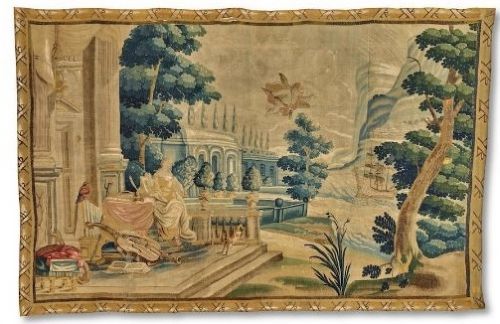


Large Textile Art
Large textile art brings historical depth and monumental scale to an interior, spanning centuries of woven and embroidered mastery.
Large Textile Art
Large textile art covers substantial wall hangings, panels, and paintings on fabric originating from diverse global traditions. Buyers seeking large textile art will find substantial woven tapestries, embroidered panels, and painted cloths designed for significant architectural spaces.
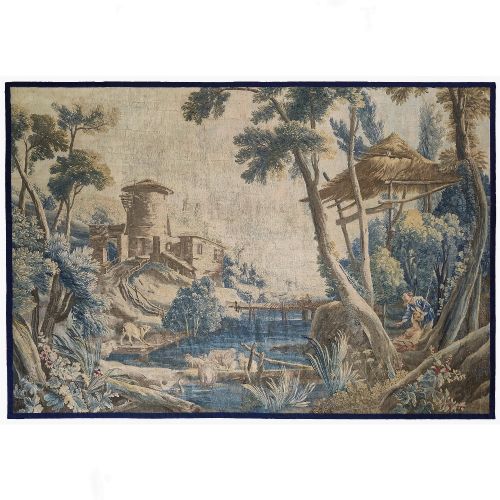
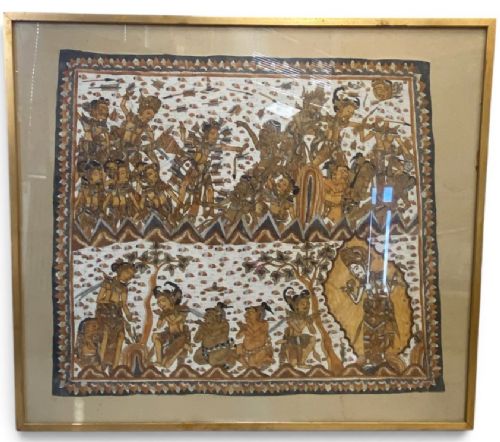
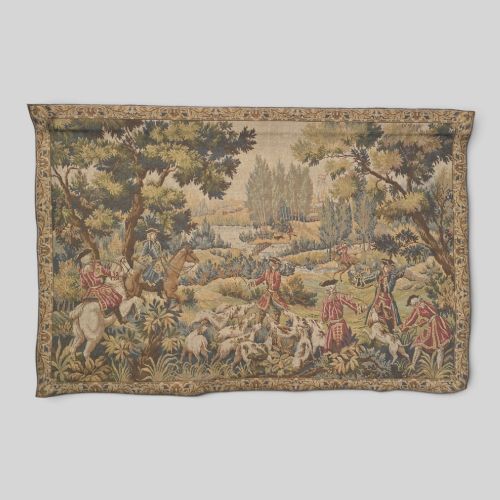
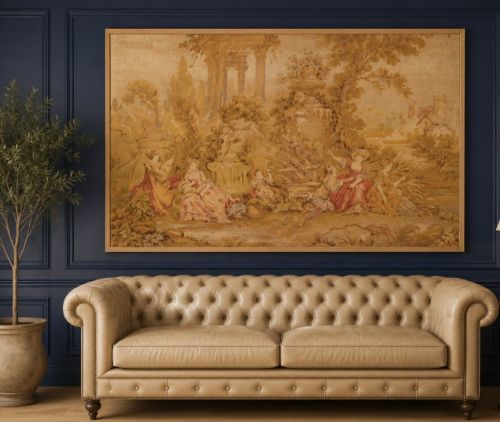
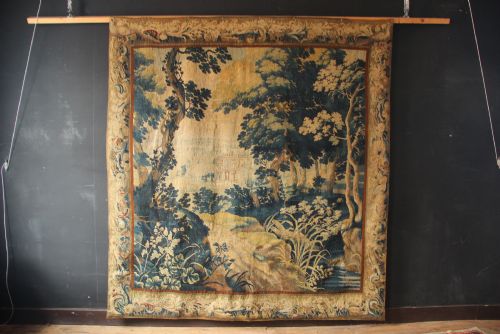
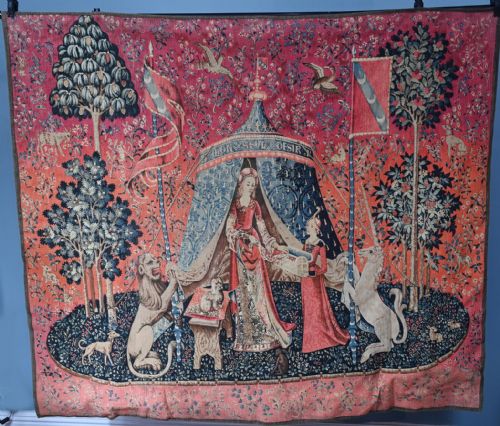
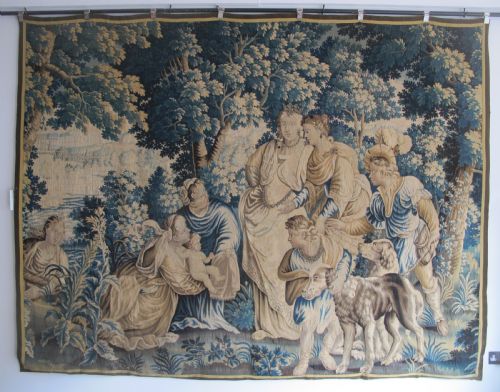
The selection ranges from sixteenth-century Flemish verdure scenes to nineteenth-century needlework samplers and twentieth-century ikat panels. French pastoral and Baroque compositions appear frequently alongside Asian and Central Asian tribal works.
These pieces function primarily as architectural decoration, traditionally used to insulate stone walls and soften large rooms. Their substantial dimensions require considered wall space and appropriate hanging support.
Materials and construction methods
The works rely upon natural fibres such as wool, silk, cotton, and linen, sometimes enhanced with metal threads. Artisans combined these materials using techniques like high-warp weaving, crewelwork embroidery, and hand-painted application.
Flemish and French workshops utilised complex looms to interlace wool and silk threads, producing dense pictorial surfaces. Central Asian and Indian examples employ vibrant resist-dyeing, block-printing, and intricate needlework directly onto cotton or silk grounds.
Large Textile Art Retail Price Guide 2026
Typical asking prices for large textile art among the pieces listed under this phrase on Sellingantiques today, from the lower quarter to the upper quarter. They describe what is for sale here now, not the wider market.
The inventory includes European woven tapestries alongside Asian ikat panels, painted temple cloths, and Victorian needlework samplers.
Determinants of quality in textile works
Quality rests upon the density of the weave, the complexity of the design, and the survival of the original fibres. Superior pieces exhibit fine pictorial detail, harmonious colour palettes, and skilful rendering of perspective or motif.
The integrity of the structural support and the preservation of natural dyes further distinguish finer examples from simpler decorative items. Master workshops achieved greater nuance in shading and composition, elevating the textile from a functional furnishing to a pictorial triumph.
The Large Textile Art Glossary
- Verdure
- A type of tapestry featuring a dominant landscape of trees, foliage, and plants, often populated by birds or animals. These scenes typically utilise rich greens and blues that have mellowed over centuries.
- Ikat
- A dyeing technique where yarns are pattern-dyed before being woven into textiles. This method creates characteristic blurred or feathered edges along the pattern boundaries.
- Crewelwork
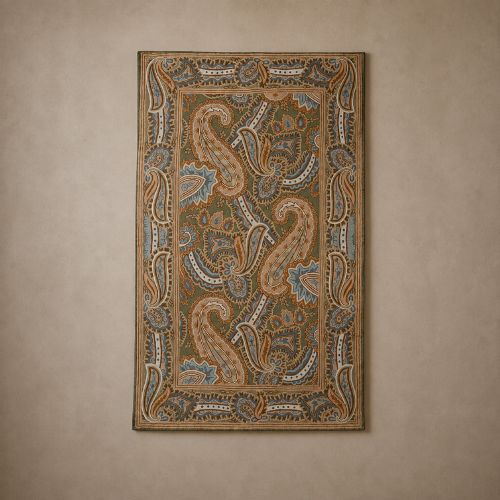
- Embroidery executed with wool yarn on a plain-weave cotton or linen ground. It permits heavy texture and a wide variety of traditional stitch types.
- Sampler
- A piece of needlework produced by an embroiderer to demonstrate proficiency in various stitches and patterns. Historical examples frequently record the maker's name and age.
- Suzani
- A type of embroidered tribal textile originating from Tajikistan, Uzbekistan, and other Central Asian nations. They are traditionally worked with silk thread on a cotton foundation in large floral designs.
Large Textile Art: Frequently Asked Questions
How do I hang a heavy textile safely?
Large textiles require weight-distributing support systems rather than simple hooks, typically utilising a stitched-on linen sleeve paired with a concealed wooden batten or metal rod. This method prevents undue stress on individual warp and weft threads across the span of the piece.
Professional conservators recommend avoiding direct sunlight and maintaining stable humidity levels to protect natural wool and silk fibres from degradation over time.
How are Flemish and French tapestries told apart?
Flemish tapestries from earlier periods frequently emphasise dense woodland verdure, mythological narratives, and robust figures rendered in deep, earthy tones. French productions, particularly later Aubusson or pastoral pieces, often lean towards lighter, more refined decorative schemes influenced by Baroque and Rococo aesthetics.
Examining the border design, palette, and thematic subject matter provides clear indicators of regional origin and workshop traditions.
What is the difference between a tapestry and a needlework panel?
Tapestries are woven on a loom where the design is built directly into the fabric structure by interlacing warp and weft threads simultaneously. Needlework panels, conversely, are created by stitching yarns onto an existing woven ground fabric using a needle.
This fundamental structural distinction separates true loom-woven works from embroidered textiles like samplers and crewelwork panels.
How should antique textiles be cleaned?
Routine maintenance should be restricted to gentle surface dusting with a soft brush or low-suction vacuum applied through a protective mesh screen. Professional textile conservators must handle any washing, wet-cleaning, or structural repairs to prevent irreversible fibre damage.
Harsh detergents and domestic cleaning methods will strip natural oils from wool and silk, causing rapid degradation.