



Large Stone Ring
A large stone ring brings undeniable presence to the hand, combining substantial gemstones with striking precious metals.
Large Stone Ring
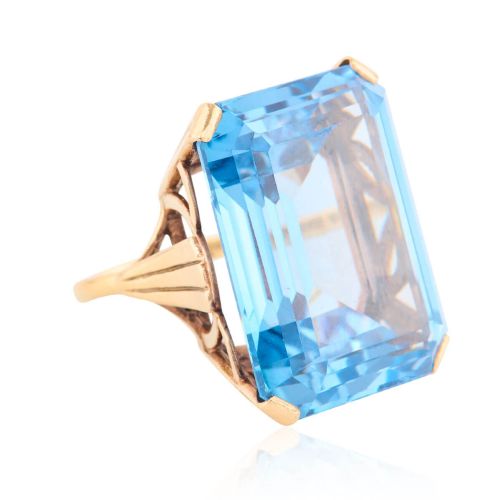
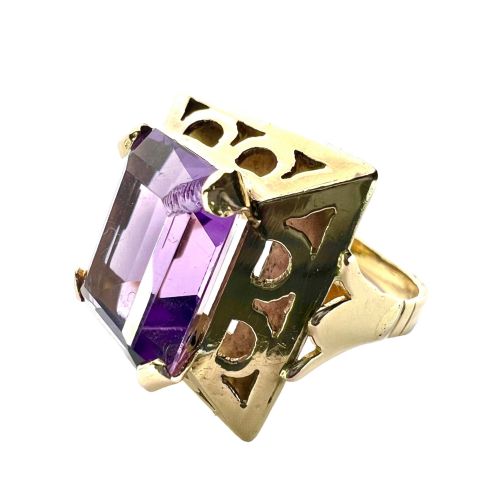
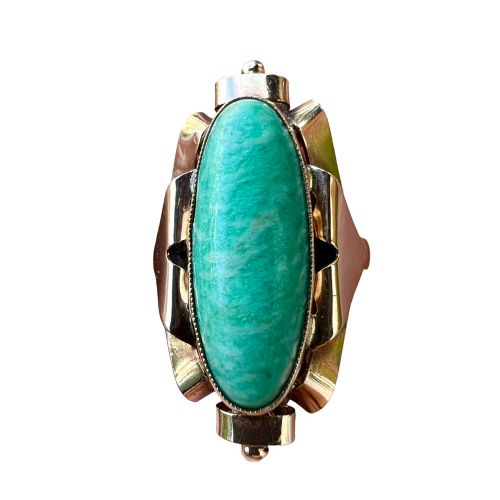
A large stone ring encompasses bold cocktail jewellery, dress rings, and solitaire pieces designed to showcase prominent central gems. When exploring a large stone ring on this page, the pieces you meet span the Victorian era, the Art Deco period, the 1940s, and the 1950s up to the 1960s. These rings command attention through sheer scale, utilising sizeable coloured stones and diamonds set within gold or platinum.
The selections you encounter frequently display significant gemstones such as amethyst, aquamarine, emerald, ruby, sapphire, and paste. These stones are mounted in various configurations, ranging from clean solitaires and oval clusters to three stone half hoops and square cocktail designs. The forms reflect the stylistic shifts of their respective decades, moving from ornate nineteenth-century carvings to geometric twenties lines and robust mid-century mountings.
Materials and construction methods
The metals utilised across these pieces include nine-carat gold, fourteen-carat gold, eighteen-carat gold, eighteen-carat yellow gold, and platinum. These durable alloys provide the necessary structural strength to support substantial stones securely while maintaining the aesthetic integrity of the period. Goldsmiths matched the metal weight to the proportions of the gem, ensuring each ring remained balanced on the hand.
Gemstones are secured via traditional setting techniques appropriate to their eras, including claw settings for solitaires and cluster arrangements that maximise light entry. The incorporation of diamonds often accents a central coloured stone, heightening visual contrast. Craftsmanship relies on precise metalwork to house stones of considerable carat weight safely.
Large Stone Ring Retail Price Guide 2026
Typical asking prices for large stone ring among the pieces listed under this phrase on Sellingantiques today, from the lower quarter to the upper quarter. They describe what is for sale here now, not the wider market.
Some past stones reach nearly thirty-eight carats, proving that past owners certainly appreciated grand gestures.
Distinctions in quality and execution
Quality in these pieces rests upon the natural clarity, depth of colour, and cut of the central gemstone. Superior examples feature stones with vibrant saturation and expert facet placement that maximises brilliance, whereas lesser pieces may show inclusions that dull the appearance or uneven colour distribution.
The standard of metalwork and setting integrity also dictates overall excellence. Finer rings demonstrate robust prongs, crisp gallery work, and substantial metal thickness that resists wear, distinguishing them from simpler or more fragile productions.
The Large Stone Ring Glossary
- Solitaire
- A ring featuring a single prominent gemstone, most commonly a diamond. This setting style places total visual emphasis on the properties of one central stone.
- Cocktail Ring
- A large, showy ring designed to be noticed during evening gatherings. These pieces typically incorporate oversized gems and bold decorative mounts.
- Cluster Ring
- A design where a central stone is surrounded by a group of smaller gems, usually diamonds. This arrangement increases the overall visual footprint on the finger.
- Paste
- Hand-cut glass used as a gemstone substitute in historic jewellery. High quality paste exhibits convincing depth and sparkle.
- Carat
- The unit of weight used for gemstones. Higher carat numbers indicate heavier and generally larger stones.
Large Stone Ring: Frequently Asked Questions
How do I style a large stone ring?
Wear a prominent ring on its own to let the scale and gemstone take centre stage without competing accessories.
Pair it with simple clothing so the colours and metalwork of the period piece stand out clearly.
Can I wear these rings every day?
Many sturdy gold and platinum mountings suit daily wear, provided you take care during manual tasks.
Softer stones or antique paste require more gentle handling to prevent surface scratches over time.
How do I identify the period of my ring?
Examine the overall design style, such as geometric Art Deco lines or flowing Victorian carved half hoops.
Metal hallmarks and the specific cut of the gemstones often provide further clues to the decade of manufacture.
What is the difference between a dress ring and a cocktail ring?
Dress rings cover a broad category of decorative finger ornaments worn for specific occasions or daily elegance.
Cocktail rings specifically denote the larger, louder statement pieces popular from the mid-twentieth century onwards.