



Large Stone Planters
Large stone planters anchor a garden with weight and permanence, offering deep vessels for substantial planting.
Large Stone Planters
When you search for large stone planters, you encounter substantial garden vessels designed to hold weighty planting schemes. These pieces bring architectural structure to terraces, lawns, and courtyards through solid mass and enduring materials.
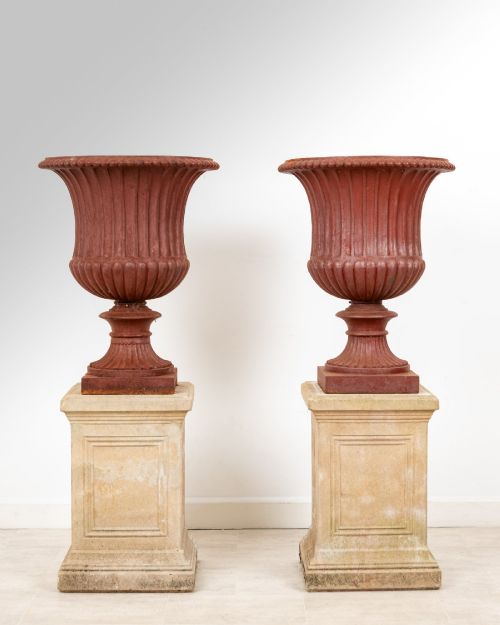
The selections on this page lean heavily towards the nineteenth and eighteenth centuries, alongside early twentieth-century examples. You meet rectangular troughs, classical campana shapes, and multi-sided garden urns raised on pedestals or plinths.
Many items appear as pairs, which suits formal garden layouts where symmetry is paramount. Others survive as singular statements, weathered by decades of exposure into quiet integration with outdoor planting.
How they were made
Masons carved earlier items directly from blocks of sandstone and marble using hand chisels. This direct reduction method left crisp tool marks on eighteenth-century troughs and urns.
Large Stone Planters Retail Price Guide 2026
Typical asking prices for large stone planters among the pieces listed under this phrase on Sellingantiques today, from the lower quarter to the upper quarter. They describe what is for sale here now, not the wider market.
Listings span periods from the eighteenth century through the 1930s, incorporating sandstone, marble, cast iron, and reconstituted stone.
What varies in quality
Quality rests primarily in the harmony of proportion and the integrity of the material. A well-proportioned campana urn or square trough commands space with balanced contours rather than excessive bulk.
The depth and crispness of carved detail distinguish superior hand-worked pieces from utilitarian moulded alternatives. Surface weathering also plays a role, as genuine age softens edges organically without compromising structural soundness.
The Large Stone Planters Glossary
- Campana urn
- A bell-shaped garden vessel with an everted rim and a pedestal base. This classical form originates from ancient metal and stone prototypes.
- Plinth
- A heavy rectangular block or pedestal that elevates an urn or planter. It protects the base from damp ground and improves visibility.
- Reconstituted stone
- A composite material made from crushed stone aggregate bound with cement. It allows durable garden ornaments to be cast in traditional moulds.
- Pancheon
- A wide, shallow circular vessel traditionally used in dairies or gardens. In stone or earthenware, these make robust planters.
- Neoclassical
- A style drawing inspiration from the classical art and architecture of ancient Greece and Rome. It favours symmetry, restraint, and formal decorative motifs.
Large Stone Planters: Frequently Asked Questions
Are large stone planters frost-proof?
Most solid stone and well-cured cast stone vessels withstand winter freezes effectively. Dense materials absorb minimal moisture, reducing the risk of cracking during cold snaps.
Ensuring proper drainage through the base prevents water accumulation and subsequent ice expansion. Elevating planters on feet or pot glost further protects the stone.
How heavy are these planters?
These vessels possess substantial weight due to their size and dense materials. Sandstone, marble, and cast concrete objects often require mechanical lifting equipment for safe placement.
This heft keeps them stable in exposed garden locations against high winds. Plan your final garden layout carefully before positioning them.
How do I clean weathered stone?
Gentle brushing with water and a soft bristle brush removes loose dirt and debris. Avoid aggressive pressure washing or harsh chemical cleaners that strip away protective patina.
Allowing lichens and mosses to remain often enhances the historic character of older garden stone. Gentle maintenance preserves both the surface texture and the material.