
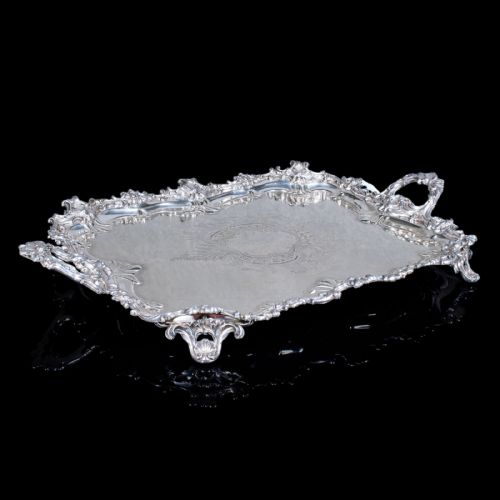
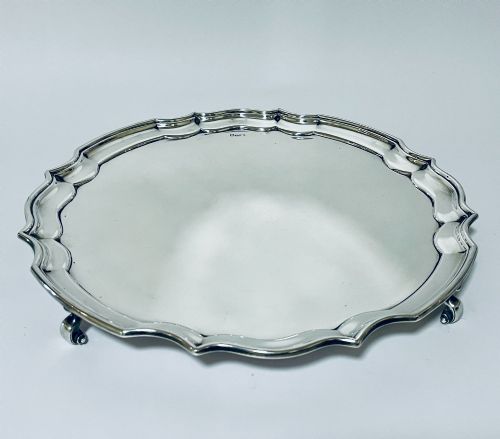


Large Silver Serving Platter
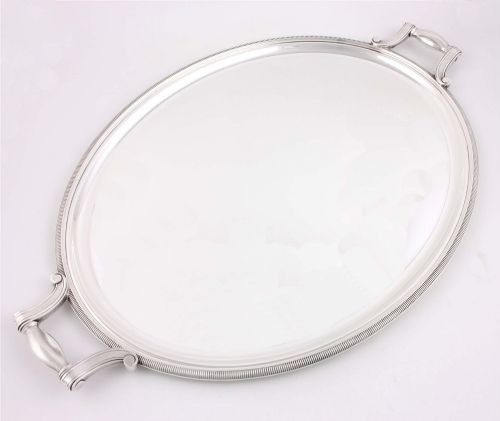
A large silver serving platter commands the centre of a dining table or sideboard, designed to carry heavy joints of meat, afternoon tea, or drinks with weight and balance.
Large Silver Serving Platter
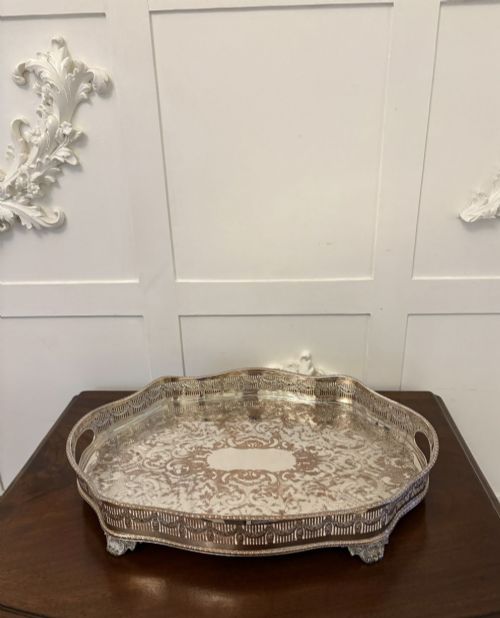
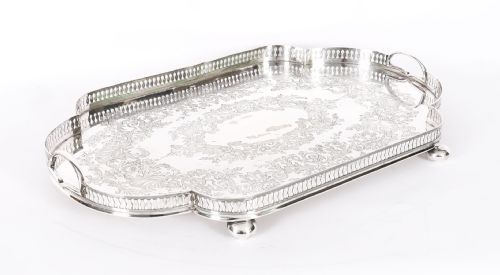
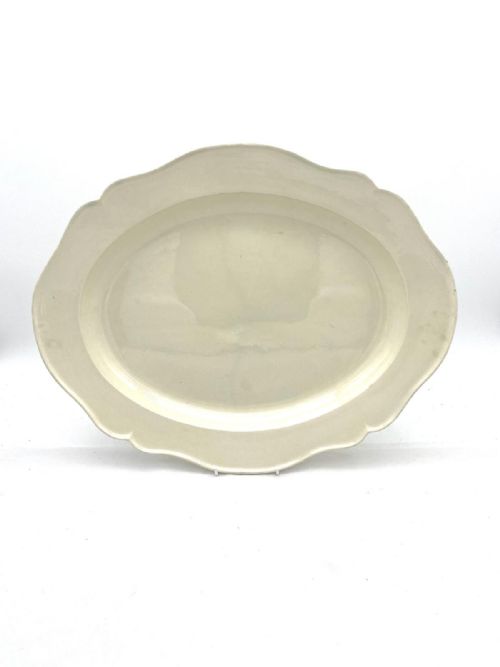
A large silver serving platter encompasses substantial trays, chargers, meat dishes, and gallery trays originating from Victorian, Edwardian, and twentieth-century workshops.
Buyers meet silver-plated and sterling silver examples most frequently on this page, shaped in circular, oval, octagonal, and rectangular forms.
English, French, and German makers produced these pieces for presentation, tea service, and formal dining across the nineteenth and twentieth centuries.
Materials and Techniques
Makers utilised solid sterling silver, 950 solid silver, and silver plate over copper, nickel silver, or electroplated nickel silver as primary metal foundations.
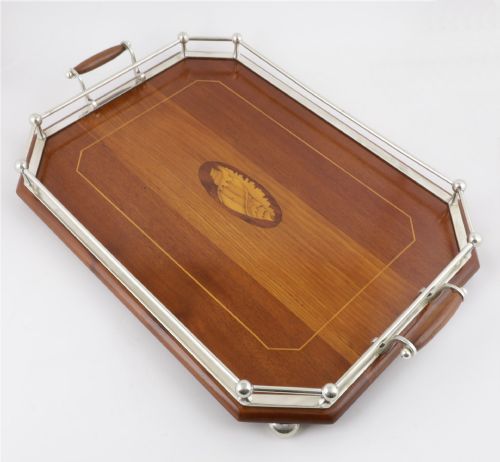
Construction techniques include electroplating, Old Sheffield plating, hand hammering, and metal spinning, paired with applied cast borders and wooden inserts.
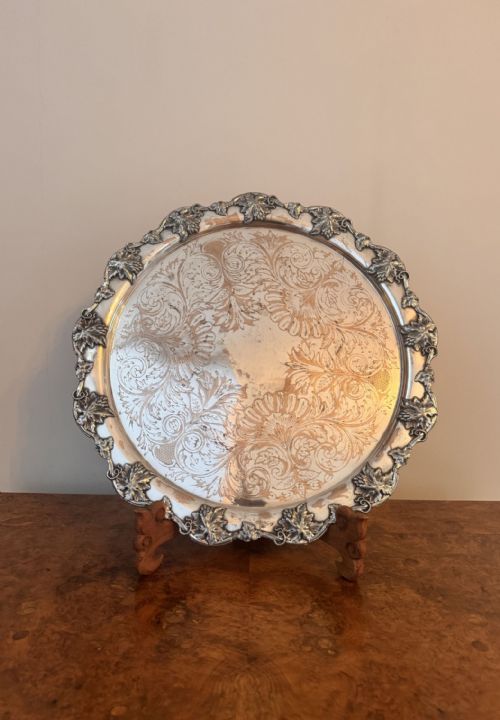
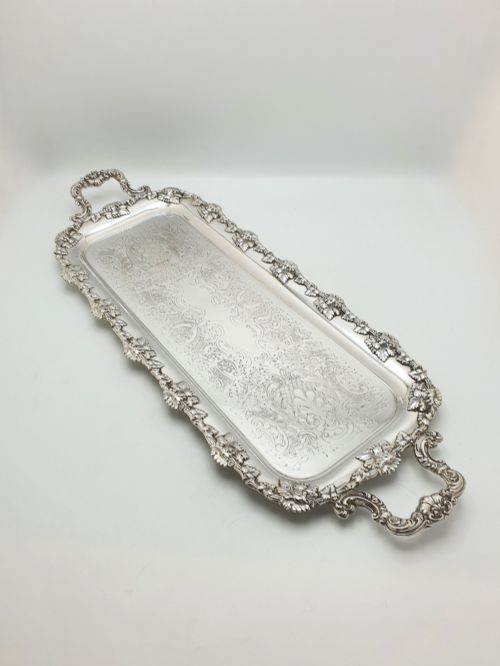
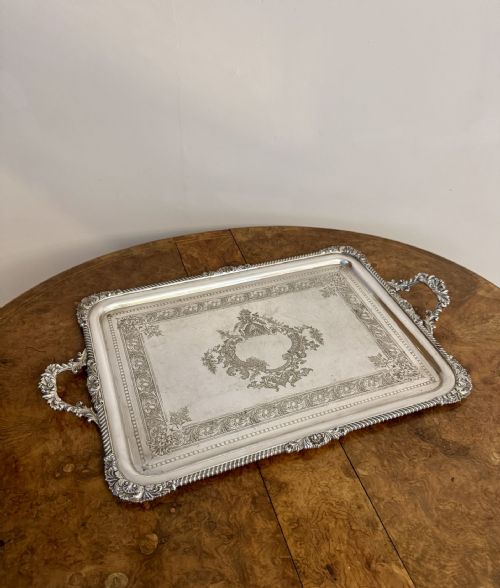
Surface decoration relies on engine turning, floral and grapevine engraving, shell inlay, and pierced gallery rails soldered to the base.
Several trays include hidden wooden bases and grapevine borders, ensuring heavy cocktail decanters travel safely from sideboard to parlour.
Design and Execution
Quality rests in the crispness of chased and engraved motifs, the weight of the base metal, and the structural integrity of applied handles and feet.
Superior examples display balanced proportions, clean soldering joints, and substantial silver deposition that resists wear across generations of use.
Maker attribution and firm reputation elevate a piece, separating standard commercial production from workshop commissions and signed presentation items.
James Deakin·Christofle·Harrison Bros·Mappin & Webb·Elkington & Co·Hukin & Heath·Puiforcat·Atkin Brothers
The Large Silver Serving Platter Glossary
- Gallery tray
- A tray featuring a pierced metal gallery or pierced balustrade border around the perimeter. This architectural rim kept decanters and glasses secure during transit.
- Old Sheffield plate
- A composite material made by fusing a thin sheet of silver to a thicker copper core. Makers produced this technique primarily before the invention of electroplating.
- EPNS
- Electroplated Nickel Silver. This acronym indicates a base of nickel alloy coated with a layer of silver via an electrolytic process.
- Salver
- A flat metal plate or tray used for serving food or drinks, or for presenting letters and cards. They frequently stand upon small feet.
- Charger
- A large decorative or service plate placed beneath other courses during formal meals. They appear in metal, pewter, and ceramic forms across earlier periods.
Large Silver Serving Platter: Frequently Asked Questions
How do I clean a silver plated platter?
Wash the platter gently in warm, soapy water using a soft cloth, avoiding abrasive pads that strip the thin silver layer. Dry thoroughly with a lint-free cloth to prevent water spots.
Apply a specialist silver polish only when necessary, working in straight lines rather than circles. Rinse and buff to restore the original shine without damaging engraved details.
Can I use these platters for food?
Silver-plated and solid silver platters serve cold meats, canapés, and drinks safely during meals. Ensure the silver surface remains intact before direct food contact.
Acidic foods and prolonged contact with certain dressings can tarnish the metal quickly. Wash the platter promptly after dining to protect the surface finish.
How do I tell solid silver from silver plate?
Examine the piece for official hallmarks, which indicate sterling silver standards such as the lion passant in British items. Unmarked items often require professional testing.
Inspect high-wear areas like edges and feet for signs of the base metal showing through the silver layer. Copper or grey nickel showing underneath confirms silver plate.
What is the difference between a tray and a salver?
Salvers traditionally feature a flat circular surface raised upon small feet, designed for presenting calling cards, wine, or small items. They tend to be formal presentation pieces.
Trays encompass a broader range of shapes including oval and rectangular formats with integrated handles. They prioritize carrying capacity for tea services and drinks over formal presentation.