



Large Satinwood Mirror
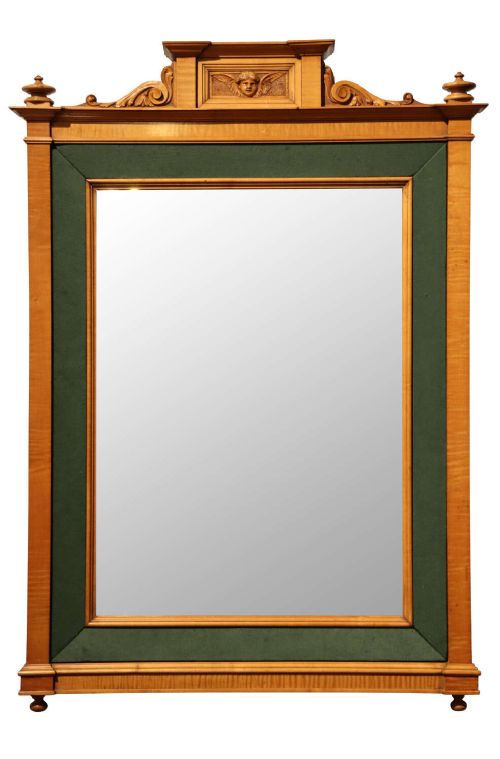
A large satinwood mirror brings warmth and reflective light to a room, catching the eye with its pale, figured grain.
Large Satinwood Mirror
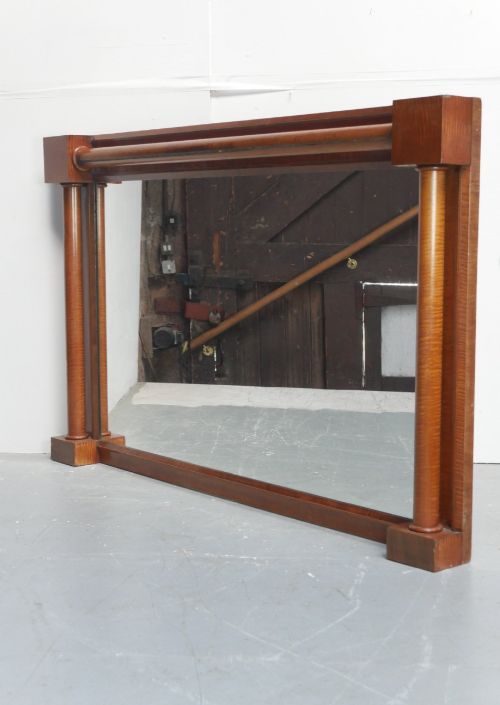
When you search for a large satinwood mirror, you encounter imposing pieces designed to anchor a room, often taking the form of overmantel or wall mirrors from the Victorian and Edwardian eras. These items utilise the striking pale timber to brighten interiors, frequently incorporating detailed stringing, crossbanding, or painted flourishes characteristic of the Sheraton Revival style.
The selections available range from tall cheval mirrors meant for dressing rooms to architectural overmantels built to sit above a fireplace. While some examples rely purely on the natural shimmer of the timber, others combine the satinwood with contrasting woods like mahogany or rosewood to create geometric borders and panels.
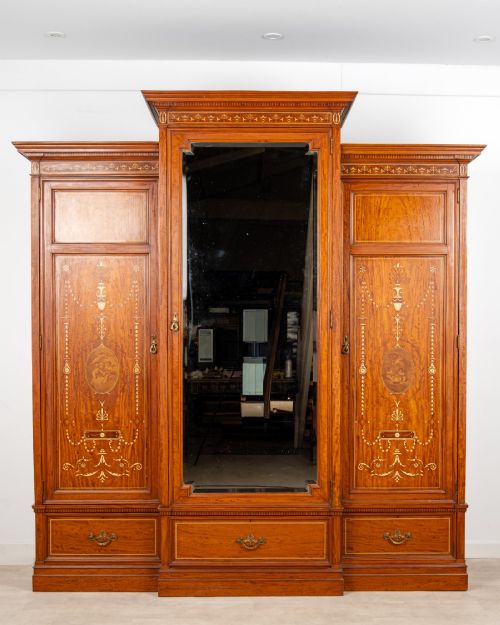
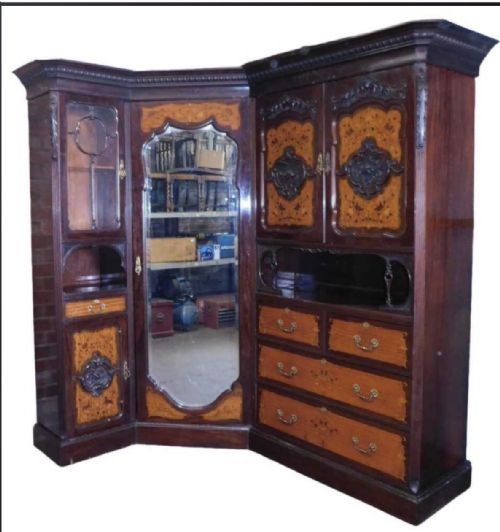
Makers of these furnishings often worked within late nineteenth and early twentieth-century traditions, producing grand wardrobes and armoires alongside the mirrors, meaning many surviving wall and overmantel pieces share design motifs with larger bedroom suites of the period.
How they were made
Craftsmen built these frames using dense foundation timbers such as mahogany or oak, applying thin veneers of figured satinwood across the visible surfaces to achieve a luminous, reflective grain pattern. Marquetry and inlay techniques introduced contrasting lines of dark wood, framing the central glass with geometric precision.
Glass plates in these periods were hand-beveled or set flat within rebate joints, secured at the back with tongue-and-groove pine or cedar boarding. Brass fixings and hanging loops were screwed directly into the structural framework to support the considerable weight of the glass and timber.
Large Satinwood Mirror Retail Price Guide 2026
Typical asking prices for large satinwood mirror among the pieces listed under this phrase on Sellingantiques today, from the lower quarter to the upper quarter. They describe what is for sale here now, not the wider market.
The listings span the Victorian, Edwardian, and Georgian eras, uniting satinwood, mahogany, rosewood, and oak across wall, overmantel, and freestanding forms.
What varies in quality
The fineness of the timber veneer dictates much of the visual merit, with highly figured, chatoyant satinwood commanding attention over plainer, flatter cuts of wood. Master cabinetmakers selected veneers that caught the light from multiple angles, creating a shimmering depth across the surface.
Detailing in the marquetry and the crispness of any carved crests or painted motifs separate standard production items from exceptional workshop commissions. Intricate stringing executed in contrasting timber without gaps denotes a higher standard of joinery.
Maples and Co
The Large Satinwood Mirror Glossary
- Satinwood
- A hard, durable timber known for its yellowish colour and lustrous, reflective grain. It was frequently used as a veneer on high-end furniture from the Georgian period onwards.
- Overmantel mirror
- A large mirror designed specifically to hang on the wall directly above a fireplace mantelpiece. These pieces often feature wide frames intended to balance the proportions of the hearth below.
- Cheval mirror
- A full-length freestanding mirror mounted on a vertical swivel frame between two supportive pillars. This allows the glass to tilt at various angles for dressing.
- Stringing
- Thin lines of contrasting wood inlaid into channels cut into the primary surface of the furniture. This technique creates delicate borders and geometric panels.
- Sheraton Revival
- A late nineteenth-century design movement inspired by the neoclassical furniture of George Sheraton. It is characterised by restrained classical motifs, painted decorations, and satinwood veneers.
Large Satinwood Mirror: Frequently Asked Questions
How do I clean the wooden frame?
Dust the satinwood gently with a dry, soft cloth to prevent abrasive particles from scratching the polished surface. Avoid using modern chemical sprays or wet cloths, which can lift the delicate veneer over time.
Apply a micro-crystalline wax sparingly once or twice a year if the timber appears dry, buffing it gently with a clean cloth to maintain the natural sheen.
Can these hang on modern walls?
Many of these pieces possess significant weight due to the solid wood construction and thick glass plates. Securing them safely requires locating wall studs or using heavy-duty proprietary fixings suited to your specific wall type.
Check that the original hanging loops and wooden framing on the reverse remain structurally sound before mounting the piece at eye level.
How do I date the mirror?
Examine the construction methods on the reverse of the frame, including the type of screws, backing boards, and assembly joints used. Machine-cut screws and modern adhesives point to later repairs, whereas hand-cut elements suggest nineteenth-century origins.
Compare the decorative style, such as painted swags or Edwardian Sheraton Revival motifs, with known design books and prevailing fashions of the period.
Where should I place it?
Position the glass opposite a window to maximise the natural light reflected into darker corners of the room. Placing an overmantel version above a fireplace anchors the proportions of the mantel and draws the eye upward.
Keep the timber away from direct sunlight and strong heat sources like radiators to prevent the satinwood veneer from drying out and cracking.