
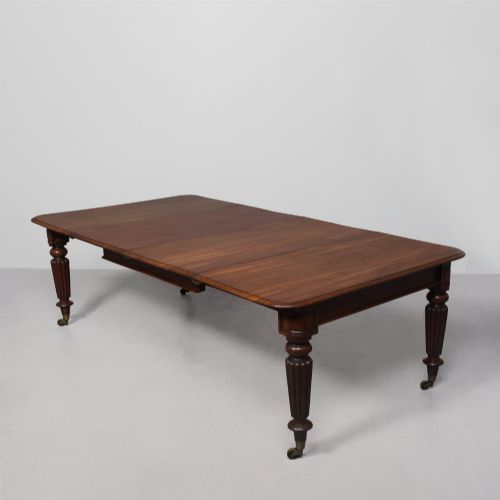
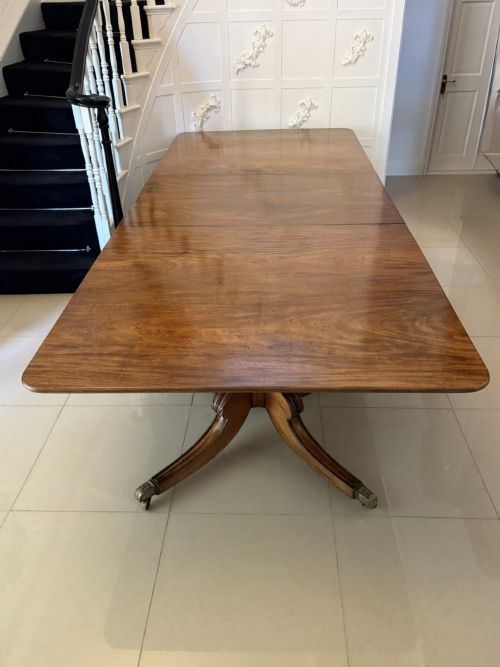
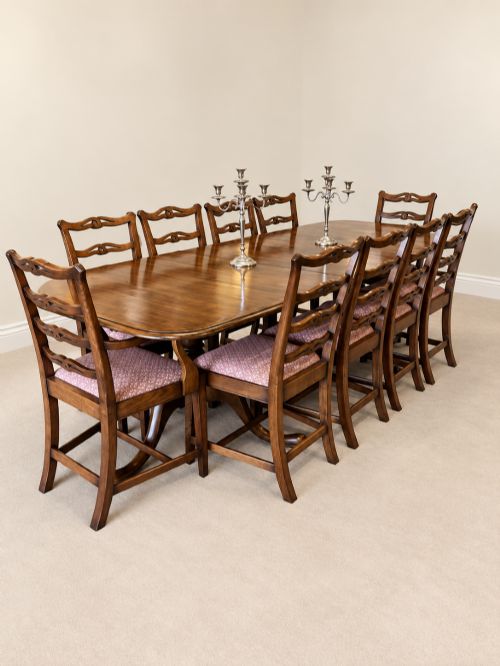
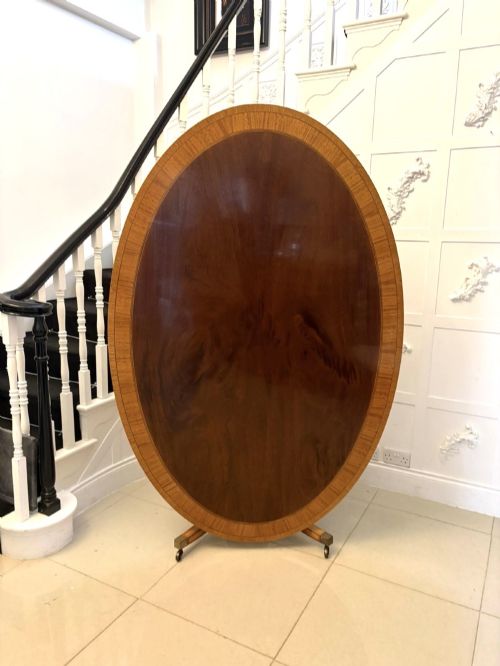
Large Regency Dining Table
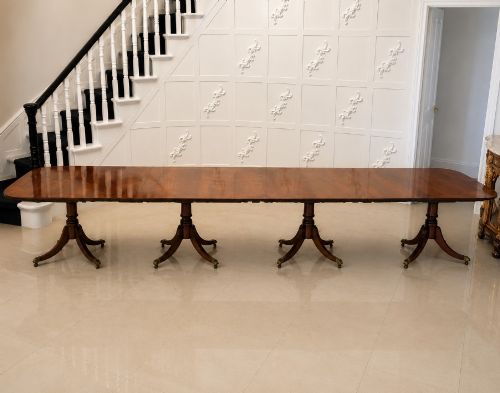
A large regency dining table brings substantial presence to a room, offering multiple pedestals and removable leaves for grand entertaining.
Large Regency Dining Table
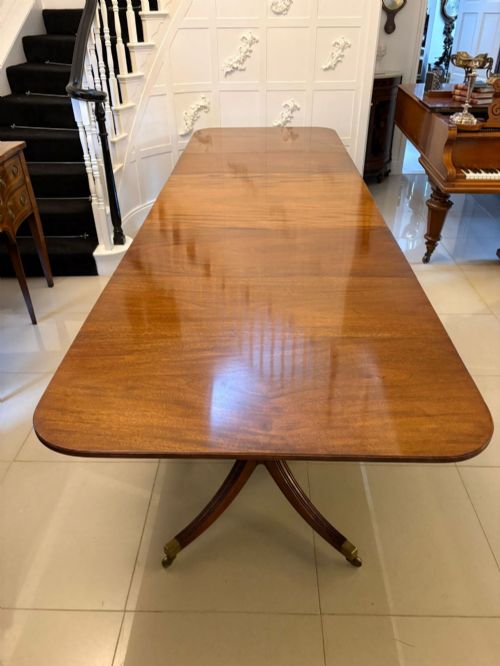
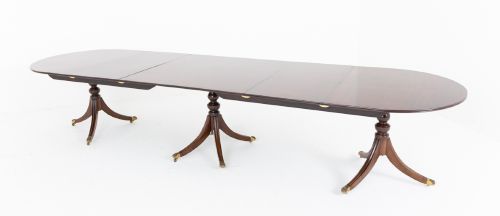
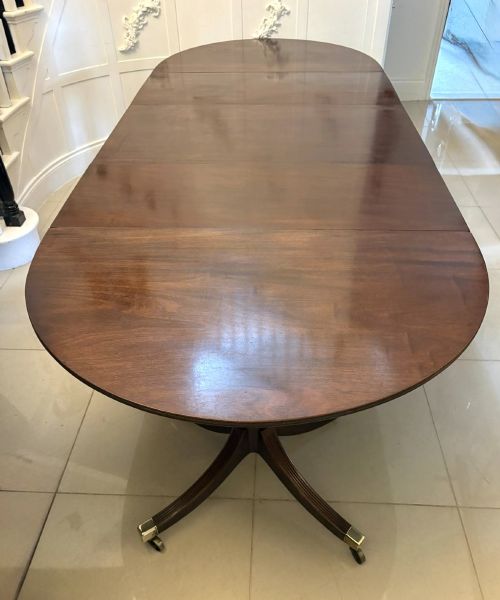
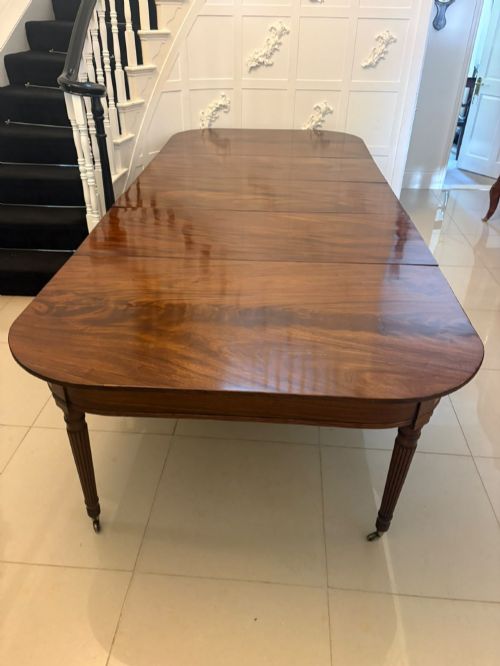
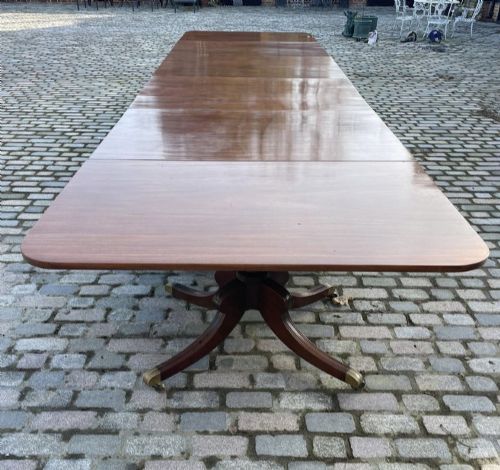
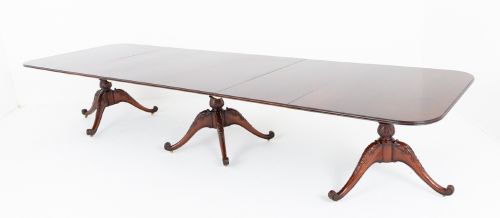
A large regency dining table is defined by its substantial length and multiple pedestals, designed to accommodate large groups for dining.
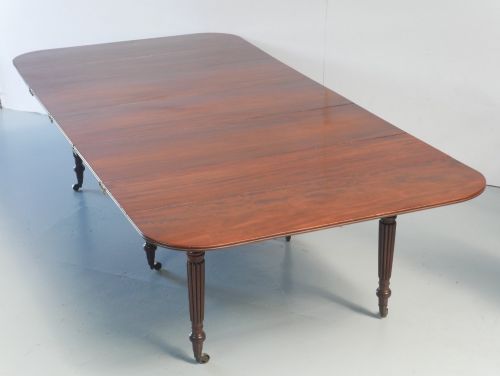
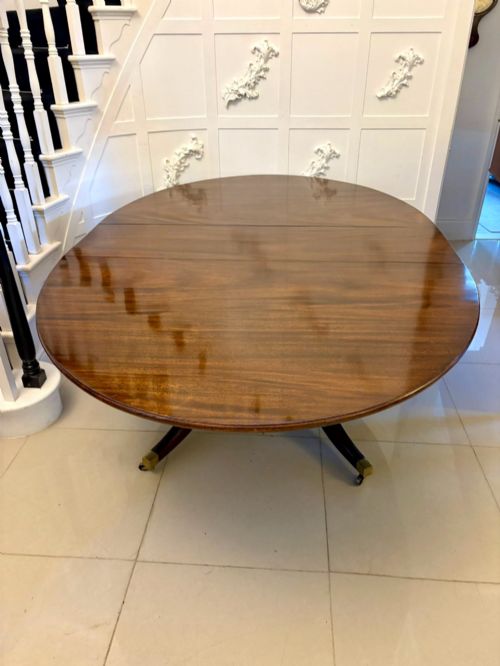
The versions met most frequently on this page span the 19th century and later revival periods, predominantly constructed from figured mahogany with extending leaves.
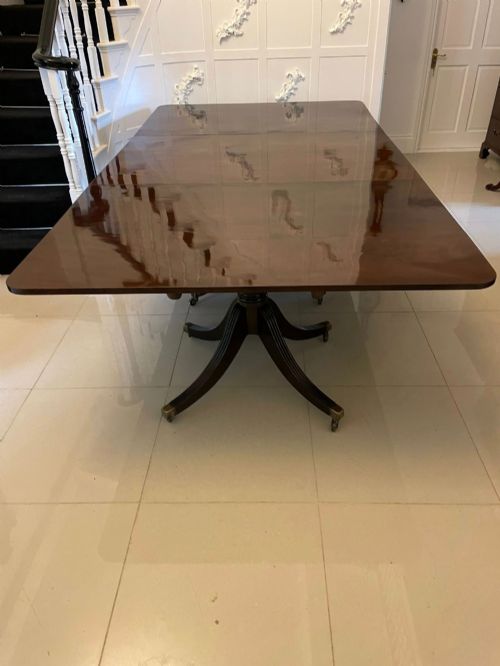
These tables take the form of twin-pillar, triple-pillar, and four-pillar configurations, sometimes accented with satinwood crossbanding or brass castors.
How they were made
Makers utilised solid mahogany and figured mahogany veneers over secondary timbers, often incorporating brass mechanisms for the extending leaves and brass castors on the pillar legs.
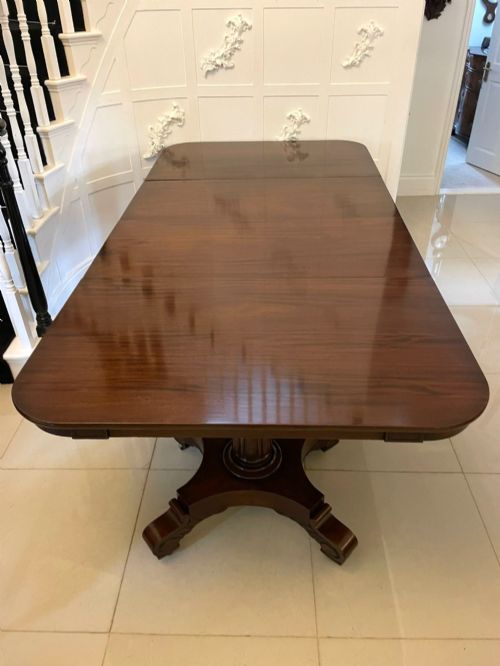
Construction relied on sturdy multi-pillar underframes supporting long tops, allowing sections to be separated or joined with original leaves depending on the required length.
Listings feature mahogany, satinwood, oak, and brass materials spanning the Georgian, Regency, William IV, and twentieth-century revival periods.
What varies in quality
Quality rests in the depth of figure in the mahogany, the crispness of the pedestal turnings, and the integration of original leaves that match the grain of the main top.
Finer examples display careful timber selection, balanced proportions across multiple pedestals, and robust internal mechanisms that operate smoothly during extension.
Gillows·Roberts Cadman·William and Gibton
The Large Regency Dining Table Glossary
- Pedestal
- A central column support resting on splayed legs, usually terminating in brass castors. Multiple pedestals sustain the weight of an extending dining table.
- Crossbanding
- A border strip of veneer laid around the perimeter of the table top, often in contrasting timbers such as satinwood to frame the mahogany centre.
- D-End
- A table section with one curved semicircular end resembling the letter D. These sections often combine with central leaves to form a large dining surface.
- Extending
- A table design incorporating removable leaves and mechanical slides to alter the overall length. This allows the surface to expand for large gatherings.
Large Regency Dining Table: Frequently Asked Questions
How many people can sit at a large regency dining table?
Seating capacity depends on the length and number of pedestals, with many examples comfortably accommodating ten to twenty-four diners.
Longer four-pillar versions and those with multiple leaves provide the extended surface area necessary for large groups.
How do extending leaves work on these tables?
Extending leaves are inserted into the centre of the table when the pedestals are pulled apart. Wooden alignment pins and brass clips secure the leaves in place.
Original leaves matching the grain of the main top maintain visual continuity across the extended surface.
What is the difference between original regency and revival tables?
Original tables date from the early nineteenth century and reflect the period construction methods and timber ageing of that era.
Revival versions, produced around the early twentieth century, replicate the earlier aesthetic using traditional forms and mahogany materials.
How should I care for a mahogany dining surface?
Mahogany requires regular dusting with a soft cloth and occasional treatment with appropriate traditional waxes to nourish the timber. Protecting the surface from excessive moisture and direct heat preserves the finish.
Lifting rather than dragging the table prevents strain on the pedestal joints and brass castors.