



Large Porcelain Lamps
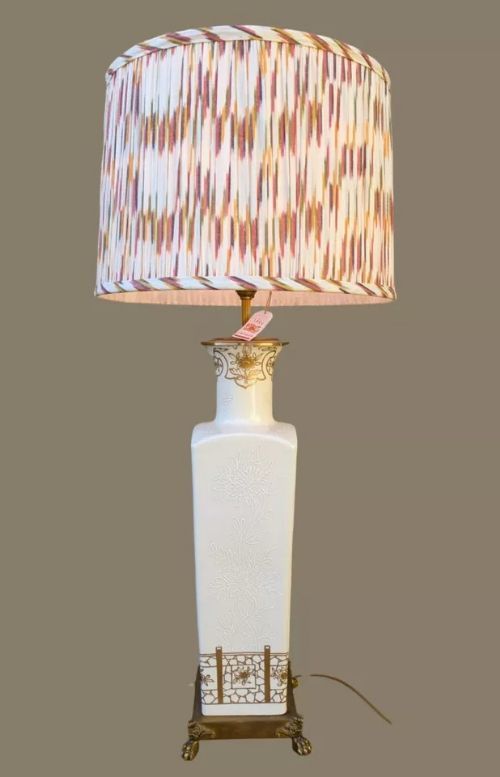
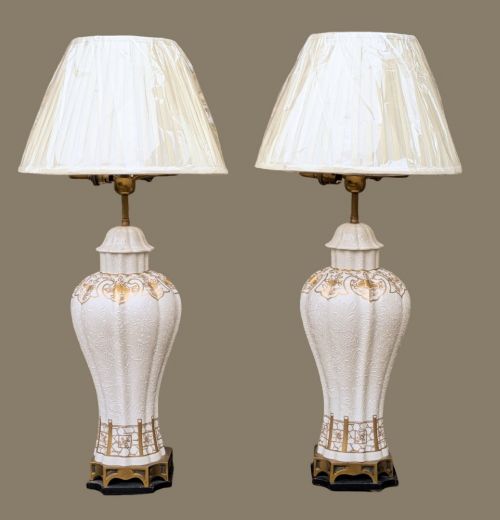
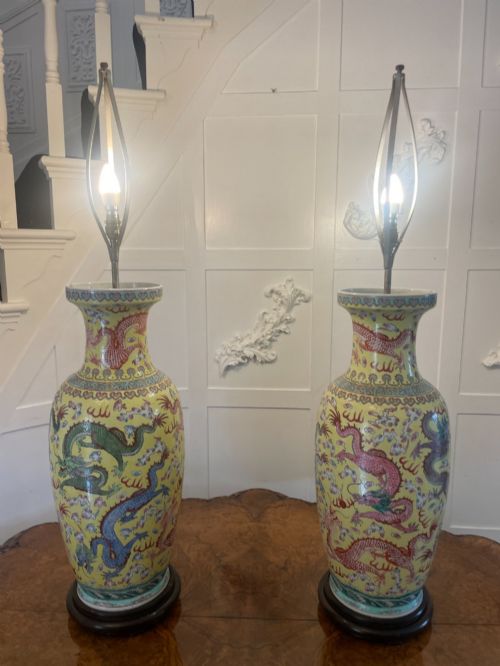
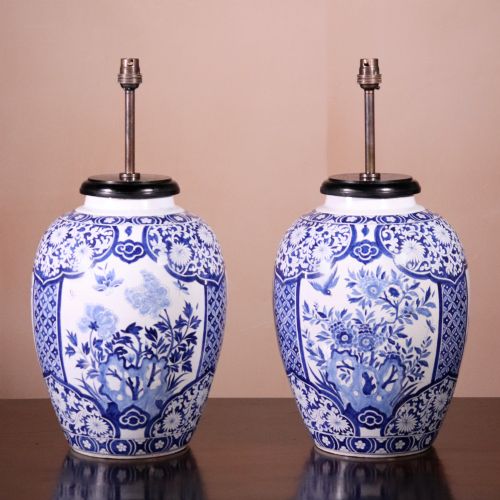
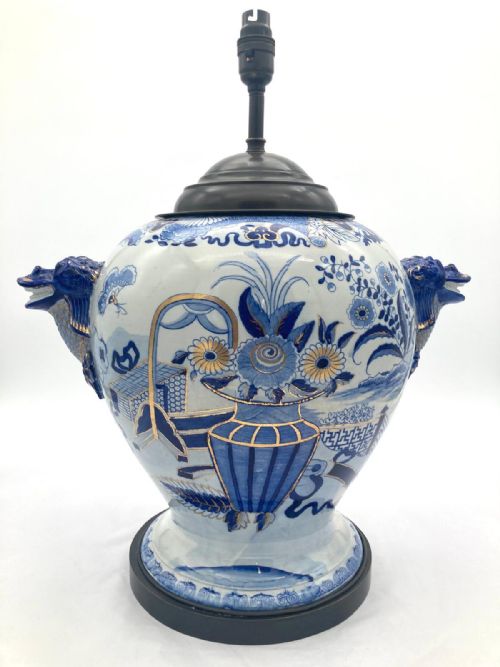
These large porcelain lamps bring substantial height and hand-painted detail to a room, turning converted antique vases and oil fonts into functional lighting.
Large Porcelain Lamps
Large porcelain lamps on this page typically take the form of substantial table lamps and converted oil lamps, drawing heavily from nineteenth-century Chinese export wares and European imitation styles. Buyers seeking this category encounter numerous pairs and single statement pieces featuring rich cobalt blue, celadon, or multi-coloured enamel palettes.
The selection ranges from Regency ironstone and Victorian china bodies mounted in ormolu to Japanese Satsuma, Imari, and Arita vessels adapted for electricity. French Paris porcelain and Sevres-style bodies also appear, often finished with elaborate handles, gilt bronze mounts, and substantial fabric shades.
Many of these objects began life as decorative vases, spill vases, or oil reservoirs before receiving professional electrical conversion. This dual heritage means buyers acquire both a functioning light source and a historic ceramic artefact with distinct regional provenance.
Materials and conversion techniques
The foundational bodies are shaped from hard-paste and soft-paste porcelain, ironstone, or ceramic, often potted with thick walls to support considerable height. Potters applied underglaze blue, enamel colours, and gilt highlights by hand before firing the clay in kilns.
Conversion from vessels to lamps involved securing brass, gilt bronze, and ormolu mounts to the base and neck, frequently drilling the ceramic base to route internal wiring safely. Silk, fabric, and matching textile shades complete the assembly, paired with wooden or metal mounting stands.
Large Porcelain Lamps Retail Price Guide 2026
Typical asking prices for large porcelain lamps among the pieces listed under this phrase on Sellingantiques today, from the lower quarter to the upper quarter. They describe what is for sale here now, not the wider market.
Many of these towering porcelain lamps spent decades illuminating Victorian parlours after retiring from their original duties as flower vases.
Evaluating quality and execution
Quality rests primarily in the crispness of the hand-painted ceramic decoration and the weight and finish of the metal mounts. Finer pieces display meticulously rendered figures, flora, and geometric borders, whereas lesser examples show hurried brushwork and muted enamel definition.
The integration of the conversion work also distinguishes the range. Superior pieces feature custom-fitted brass and gilt bronze hardware that complements the ceramic contours without straining the antique body, while simpler conversions rely on standard commercial fittings.
Hicks and Meigh·Sevres
The Large Porcelain Lamps Glossary
- Ormolu
- Gilt bronze mounts applied to furniture and ceramics. This decorative technique adds structural support and visual ornamentation to the porcelain body.
- Famille Rose
- A palette of opaque enamel colours dominated by pink, introduced to Chinese porcelain during the Qing dynasty. It allowed artists to achieve subtle tonal gradations in floral and figural scenes.
- Imari
- A style of Japanese porcelain featuring underglaze blue and overglaze iron red, gold, and green. These pieces were widely exported to Europe from the port of Imari.
- Celadon
- A pale green glaze resembling jade, achieved through iron oxide in the reduction kiln firing. It has a smooth, glassy texture that highlights carved or moulded ceramic details.
- Ironstone
- A heavy, durable type of ceramic patented in the nineteenth century. It served as a robust, opaque alternative to porcelain for large decorative vessels.
Large Porcelain Lamps: Frequently Asked Questions
How do I wire an antique lamp safely?
Most converted lamps on this page have already undergone professional electrical conversion to meet modern standards. It remains wise to have a qualified electrician inspect the internal cord and bulb holder before daily use.
Ensure the brass or ormolu fittings are securely anchored to the ceramic body without putting pressure on the porcelain. Using low-heat LED bulbs will also protect vintage fabric shades and delicate overglaze enamels from thermal stress.
Can I replace the lampshade safely?
Replacing the shade is straightforward provided you match the fitter type and proportion to the height of the porcelain body. Large statement vases require wide, substantial shades to balance their visual weight.
Pay attention to the drop and the harp size so the bulb sits centrally within the fabric. Silk and lined cotton shades work particularly well with nineteenth-century gilt bronze and brass mounts.
How do I clean porcelain lamp bases?
Dust the porcelain and metal mounts gently with a dry, soft microfibre cloth on a regular basis. Avoid harsh chemical cleaners or abrasive pads that can strip overglaze enamel or damage gilt highlights.
For stubborn marks on the ceramic, use a slightly damp cloth with mild soap, drying the surface immediately. Take extra care around drilled areas and electrical entry points to prevent moisture ingress.
What is Chinese export porcelain?
Chinese export porcelain refers to ceramics manufactured in China specifically for European and American markets from the sixteenth through the nineteenth centuries. These wares often combined traditional Asian forms and motifs with shapes requested by Western buyers.
Over time, European households converted many of these decorative vases and jars into lighting fixtures. Today, they form a major component of antique ceramic lighting categories.