
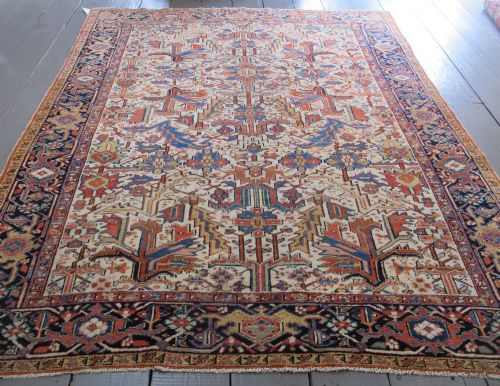
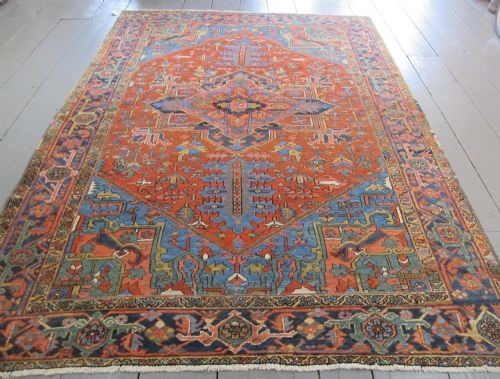
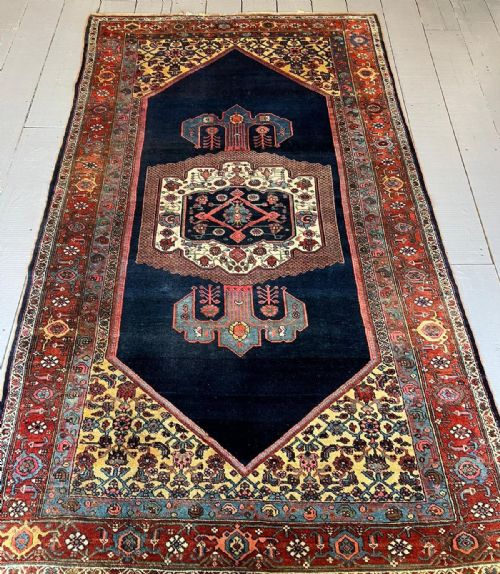


Large Persia Area Rug
A large persia area rug anchors a room with dense botanical patterns, deep indigo dyes, and a commanding floor presence.
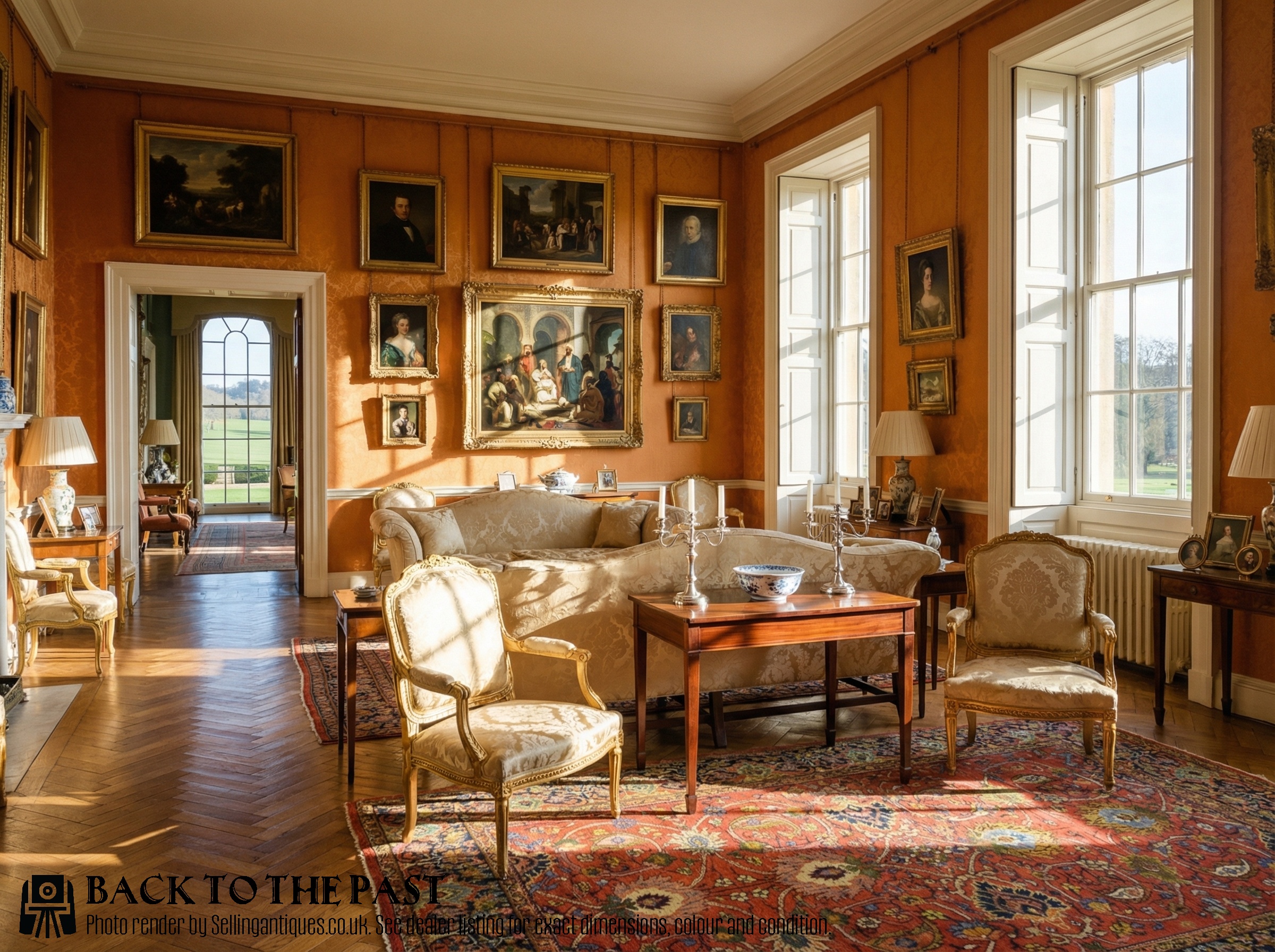
Large Persia Area Rug
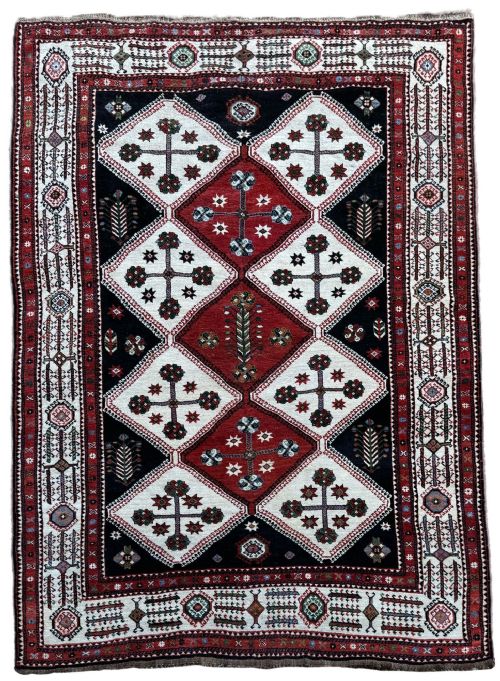
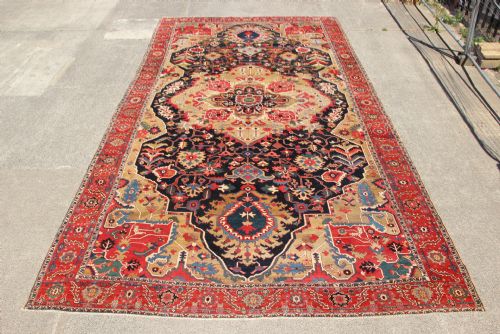
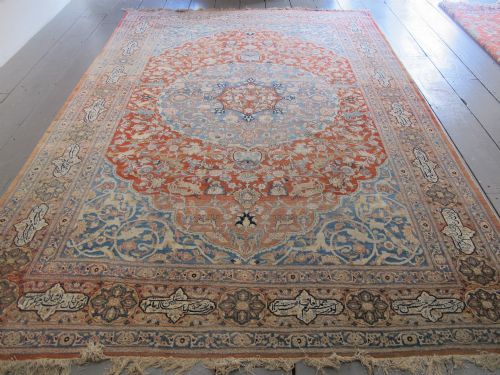
A large persia area rug is a substantial hand-knotted floor covering originating from workshops, villages, and tribal confederations across Persia during the nineteenth and early twentieth centuries. These pieces span regional styles such as Heriz, Tabriz, Mahal, and Ziegler, each bringing distinct medallion layouts or all-over Herati designs to large domestic spaces.
Buyers seeking this phrase most frequently encounter room-sized carpets dating from the 1880s to the 1930s, constructed in formats suited to country houses and grand drawing rooms. The selection heavily represents North-West Persian village weaving alongside commercial city workshop productions from centres like Isfahan and Tabriz.
How they were made
Weavers constructed these large carpets using hand-knotted wool piles set upon sturdy cotton foundations, though certain nomadic pieces integrated wool warps for added flexibility. Natural dyes extracted from madder root, indigo, and walnut shells provided the rich palette seen across the surviving nineteenth-century examples.
The tension of the hand-knotting determined the structural integrity, with village pieces like Bidjar and Heriz employing heavy packing to create rigid, durable textiles. City workshops such as Tabriz and Isfahan utilised finer knot counts to execute intricate curved floral motifs and detailed medallion frameworks.
Listings span production dates from the late 19th century through the 1930s, uniting nomadic village weaves with grand city workshop carpets.
What varies in quality
The sophistication of the design execution and the depth of the palette separate standard room-sized examples from the finest workshop productions. Master weavers achieved superior precision in symmetrical borders and balanced medallion geometry, while lesser pieces exhibit minor irregularities in proportion and field symmetry.
Material selection and dye saturation further define the hierarchy, as saturated natural indigo and vibrant madder reds retain their vibrancy across generations. Even wear and careful historical maintenance preserve the structural integrity of the cotton foundations, distinguishing well-preserved carpets from those with extensive ground restoration.
Haji Jalili·Benlian
The Large Persia Area Rug Glossary
- Medallion
- A large central ornamental design motif placed symmetrically in the middle of the carpet field. It usually takes a circular, oval, or lobed geometric shape.
- Herati
- A repeating pattern composed of a central rosette enclosed by a diamond lattice and flanked by curved serrated leaves. This motif appears frequently in Persian village and workshop weaving.
- Warps
- The vertical foundational threads stretched taut on the loom before knotting begins. Cotton and wool serve as the primary materials for these structural elements.
- Kelleh
- A long, narrow format of Persian carpet traditionally used in reception rooms alongside larger central carpets. These pieces maintain proportional length while fitting narrower architectural spaces.
- Ground
- The main background colour field of the carpet surrounding the central medallion and secondary motifs. It often displays ivory, deep blue, or red dye tones.
Large Persia Area Rug: Frequently Asked Questions
How do I style a large persian rug?
Position the rug as the central focal point of a living room or dining area, allowing surrounding floorboards or neutral carpets to frame the borders. Keep surrounding furniture low to ensure the central medallion and field patterns remain fully visible.
Layering smaller tribal rugs over large room-sized carpets is historically common, but these substantial Persian pieces usually carry enough visual weight to stand entirely on their own.
How are different regional Persian rug styles told apart?
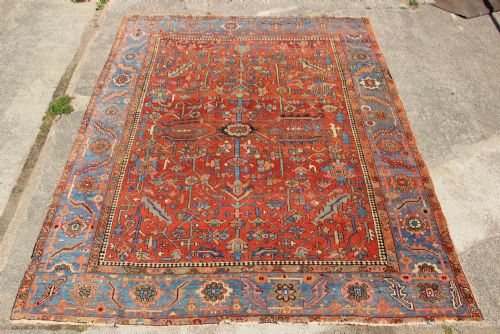
Examine the geometry of the central design and the character of the secondary motifs. Heriz carpets display bold, geometric medallions with angular corners, whereas Tabriz pieces favour finely curved floral sprays and delicate borders.
Village weaves such as Bakhtiari or Kurdish rugs present robust tribal elements and repeating garden compartments, separating them from commercial city workshop productions.
What underlay should I use for antique Persian rugs?
Choose a breathable, natural rubber or felt underlay that prevents slipping while allowing air circulation beneath the dense wool pile. Avoid synthetic plastic meshes that trap moisture against the cotton foundations.
A quality underlay also cushions the hand-knotted wool against hard subfloors, reducing pile compression and extending the lifespan of nineteenth-century textiles.
How do I clean an antique Persian carpet?
Vacuum gently using suction-only attachments without rotating brush bars, moving strictly in the direction of the nap to protect delicate wool fibres. Professional conservation washing remains essential for deep cleaning to prevent dye migration across natural madder and indigo colours.
Keep these carpets out of direct, prolonged sunlight to preserve the organic dyes, rotating the room-sized rug periodically to ensure even wear across high-traffic areas.