
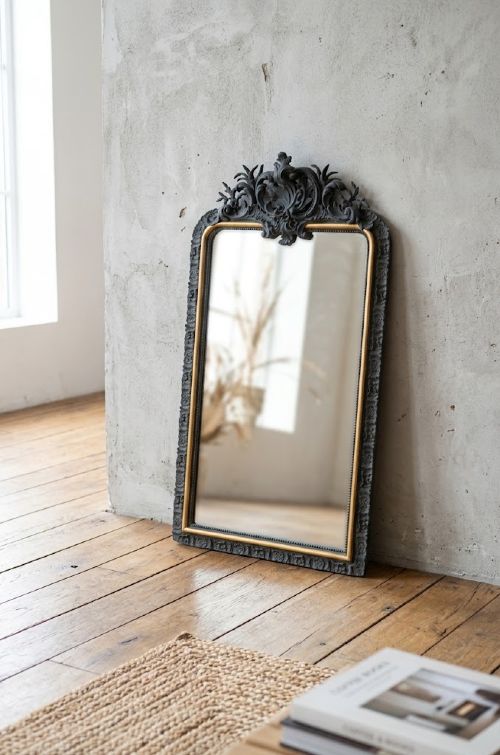
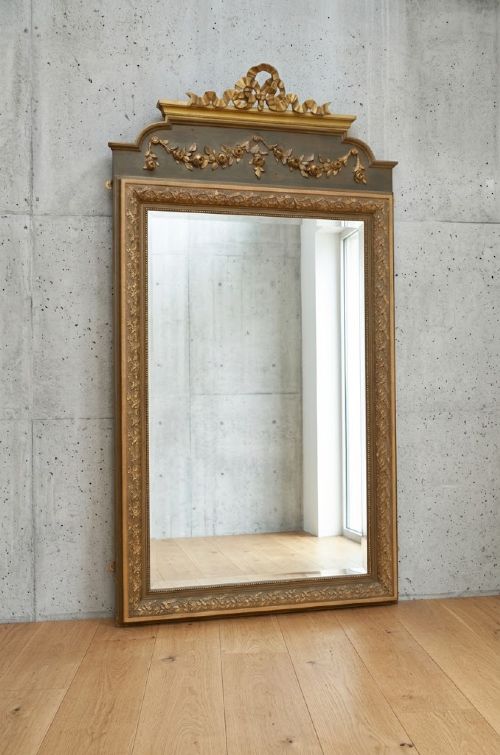
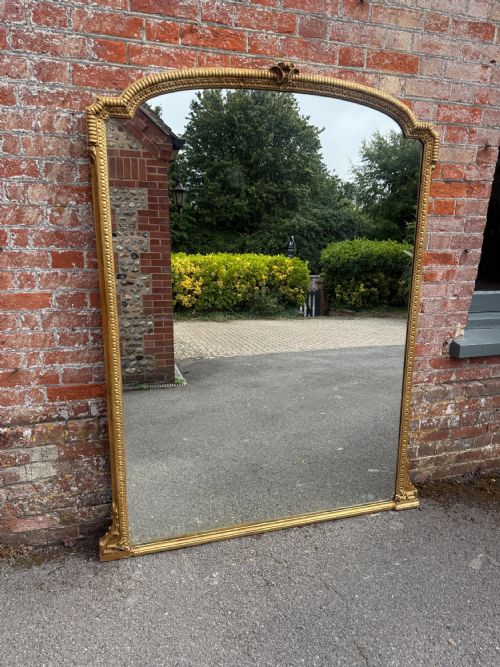
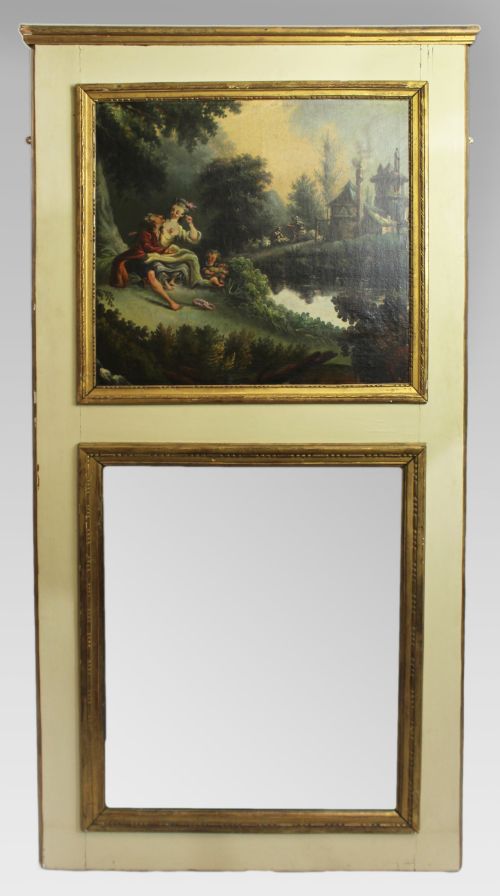
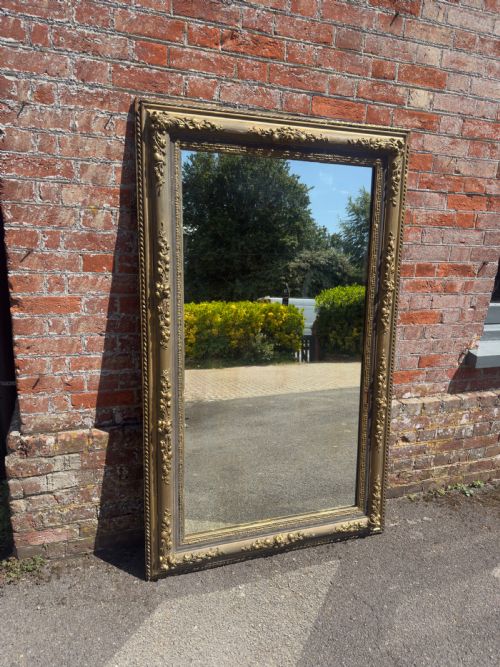
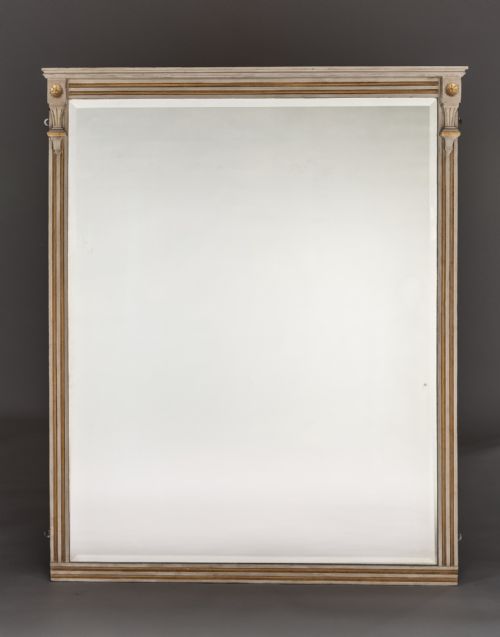
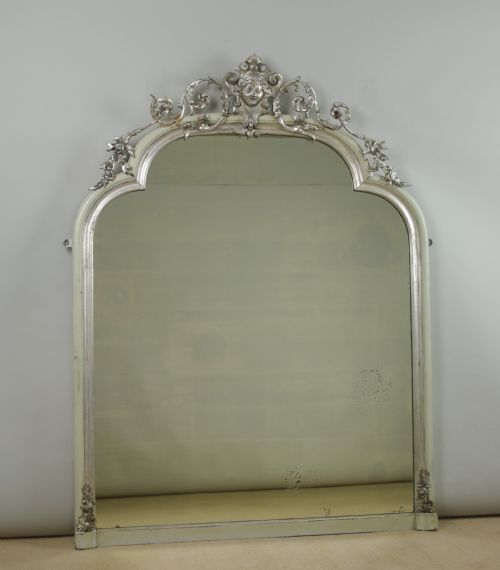
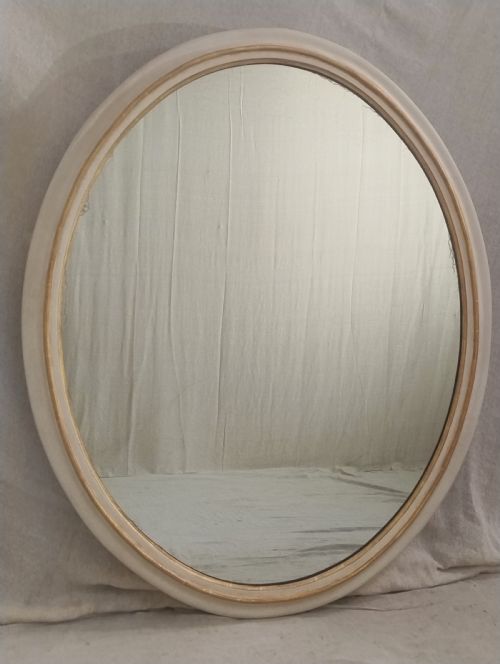


Large Painted Overmantel Mirror
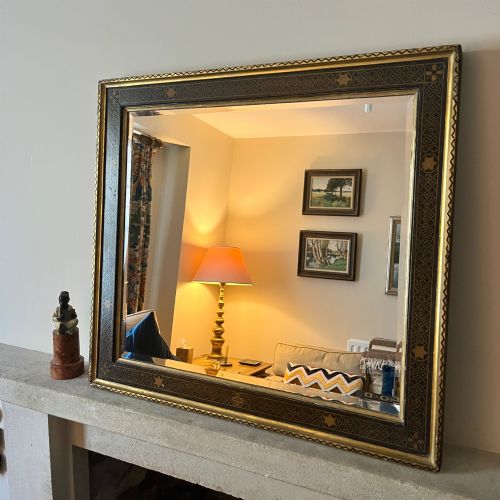
A large painted overmantel mirror brings architectural scale and light to a room, anchoring a fireplace with period presence.
Large Painted Overmantel Mirror
A large painted overmantel mirror is a substantial wall-hanging glass designed specifically to sit above a mantelpiece, often stretching wide to echo the proportions of the hearth below. These grand pieces originate predominantly from the nineteenth century, encompassing Regency, Victorian, and French neoclassical aesthetic movements.
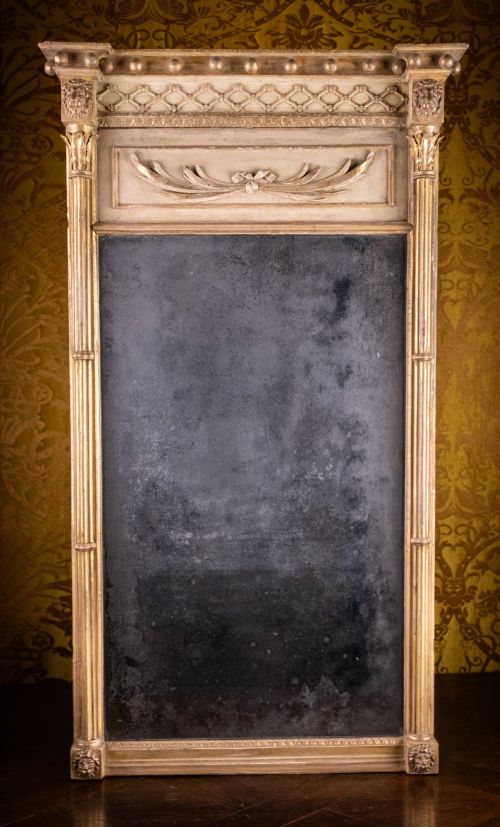
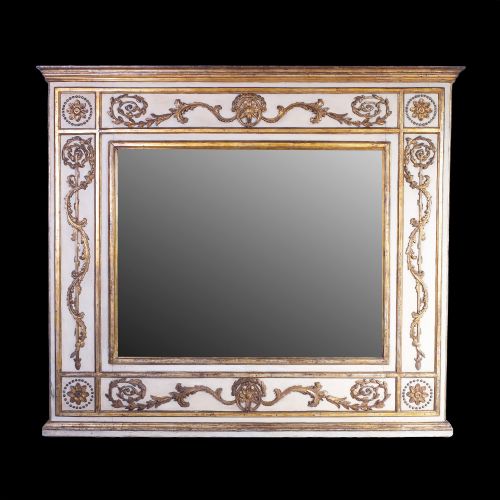
The selections available here range from tall French trumeau mirrors inset with pastoral oil paintings to English arched-top and shaped-frame designs decorated with gesso and gold leaf. Many examples combine painted surfaces with parcel-gilt detailing, highlighting carved wooden motifs like lion masks or ribbon crests.
Buyers will encounter both English and continental origins, with French chateau styles and Victorian interpretations forming the bulk of the domestic and salon mirrors recorded in our inventory.
What Varies in Quality
The depth and definition of the carved wooden ornament and moulded gesso dictate much of the visual weight, with superior pieces showing crisp, hand-finished details rather than softened contours. The integrity of the original painted and gilt surfaces, and whether the gilding is genuine gold leaf or secondary metal, significantly alters the character of the piece.
Structural complexity also separates standard mirrors from exceptional works, visible in multi-plate constructions, triptych glass divisions, integrated oil paintings, and elaborate pediments featuring lion masks or ribbon crests.
Listings feature eighteenth to twentieth-century styles including Regency, Victorian, and Louis XVI, constructed from glass, gesso, wood, and paint.
The Large Painted Overmantel Mirror Glossary
- Overmantel mirror
- A large mirror specifically proportioned to hang on the wall directly above a fireplace mantel. These pieces reflect ambient light and visually expand the hearth space.
- Trumeau mirror
- A decorative wall mirror featuring an upper panel that contains a painting, carved relief, or silkwork rather than glass. They are frequently French in origin and follow neoclassical interior schemes.
- Gesso
- A plaster mixture applied to carved wooden frames to create a smooth surface for painting or gilding. It allows for intricate moulded details and relief work.
- Parcel-gilt
- A decoration method where only specific portions of a frame are highlighted with gold leaf while the remaining areas are painted. This technique creates contrast against ebonised or coloured wood backgrounds.
- Pier mirror
- A tall wall mirror traditionally hung on the narrow pier of wall space between two windows. They share similar decorative vocabularies with overmantel mirrors of the nineteenth century.
Large Painted Overmantel Mirror: Frequently Asked Questions
Where should I hang a large painted overmantel mirror?
These mirrors are traditionally positioned directly above a fireplace mantelpiece where their width balances the hearth structure below. They also function effectively on principal living room walls to amplify natural light.
Ensure the wall construction and fixings can support substantial weight, as carved wood and thick mirror glass create heavy assemblies.
How do I identify a Victorian overmantel mirror?
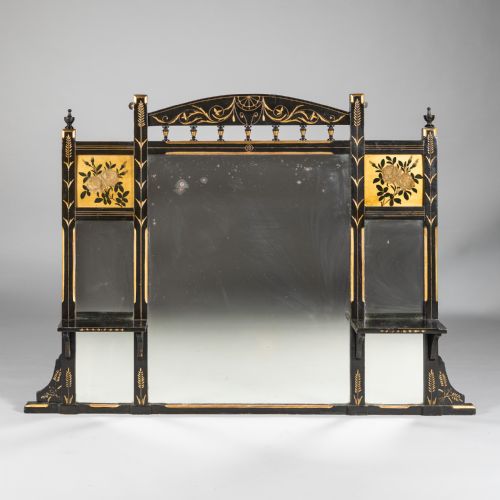
Victorian examples frequently display robust carved wood and gesso frames with arched or shaped tops, often combining ebonised finishes with parcel-gilt highlights. They reflect the eclectic revival styles popular during the nineteenth century.
Look for structural joinery and backing boards consistent with mid-to-late nineteenth-century cabinetmaking practices.
What is a trumeau mirror?
A trumeau mirror incorporates an integrated decorative panel above the glass plate, which frequently contains a pastoral oil painting or carved wood relief. This style originated in neoclassical French interiors to panel walls symmetrically.
They offer a combination of artwork and mirror glass within a single architectural frame.
How do I care for antique gilt and painted frames?
Dust the carved gesso and painted wooden surfaces gently with a soft, dry brush to prevent accumulation in the recesses of the moulding. Avoid liquid cleaners or moisture on gilt and painted areas to protect the original nineteenth-century finishes.
Clean the mirror glass sparingly using a cloth dampened slightly with distilled water, keeping moisture away from the frame joints and backing.