

Large Overmantel Glass
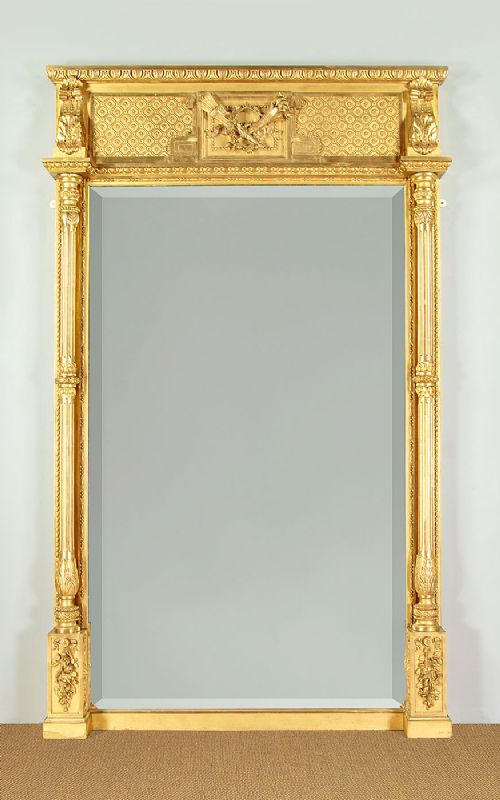
A large overmantel glass sits above the fireplace, catching the light and opening up the proportions of a principal room.
Large Overmantel Glass
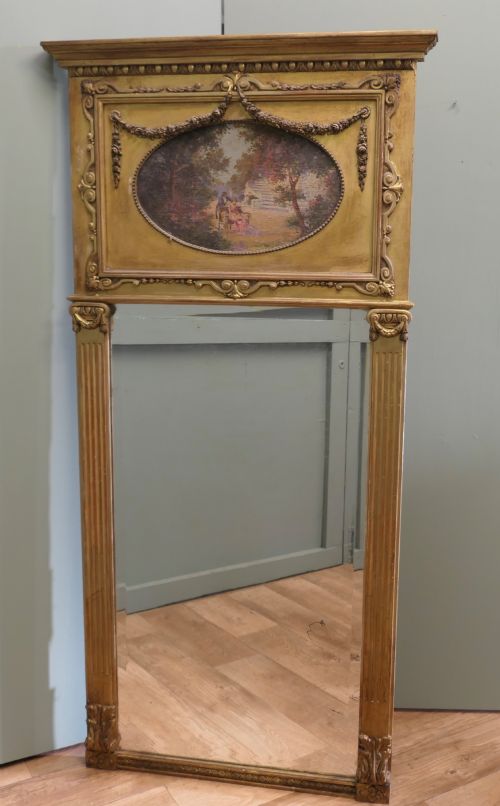
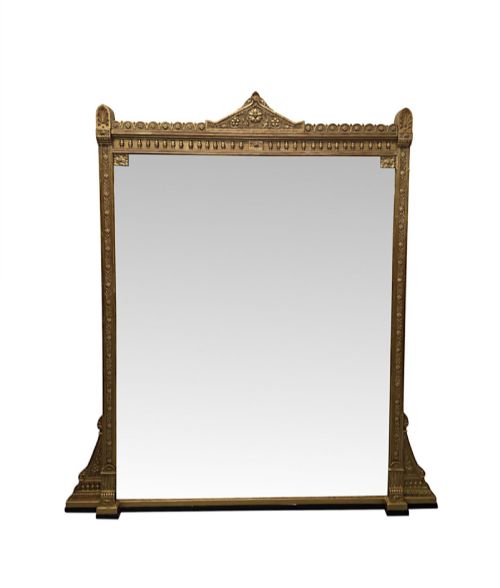
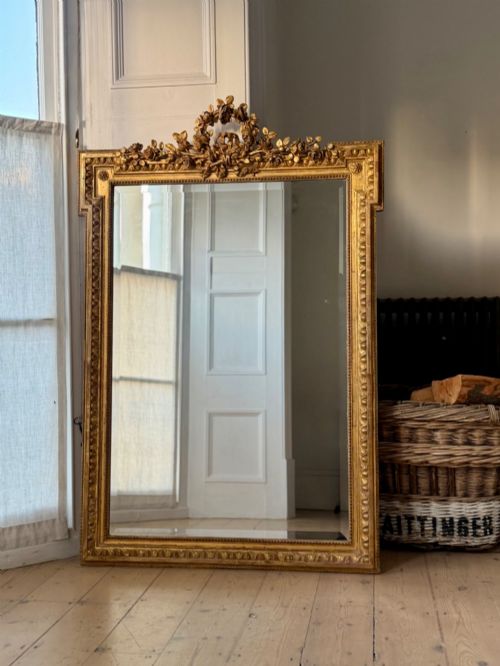
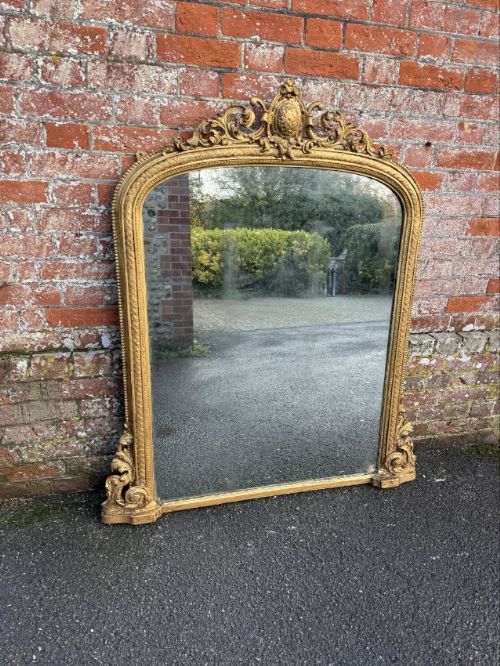
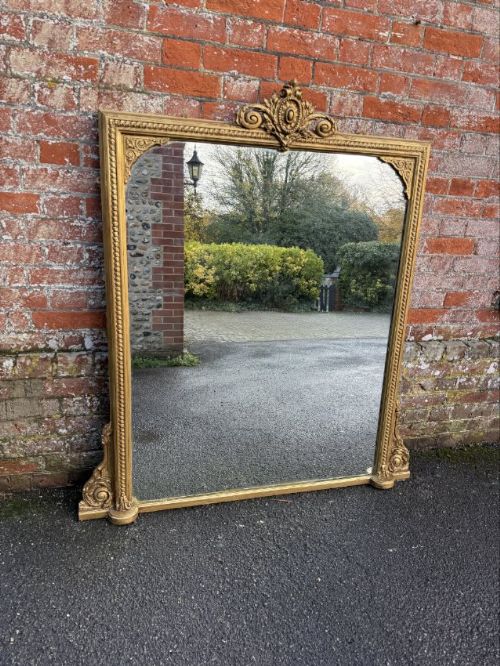
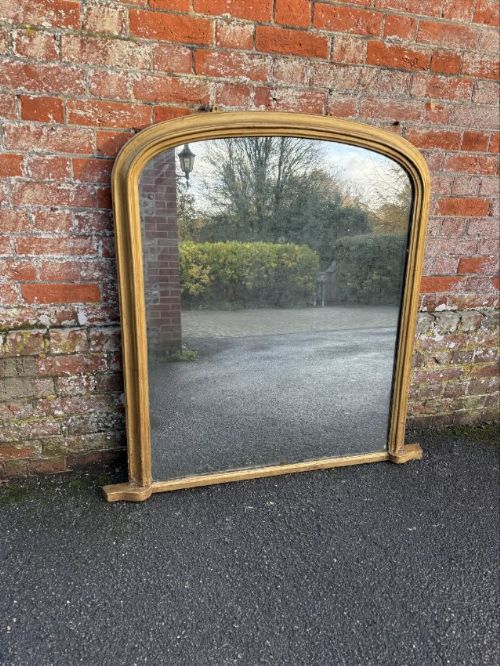
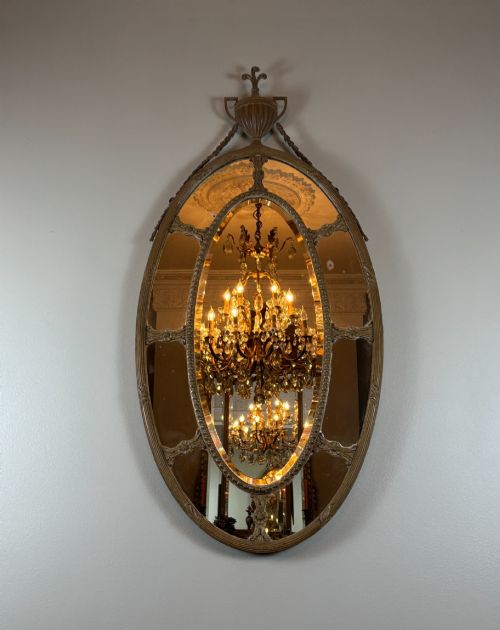
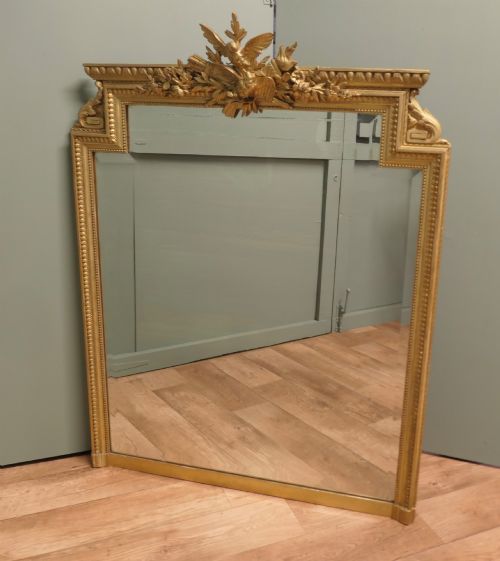
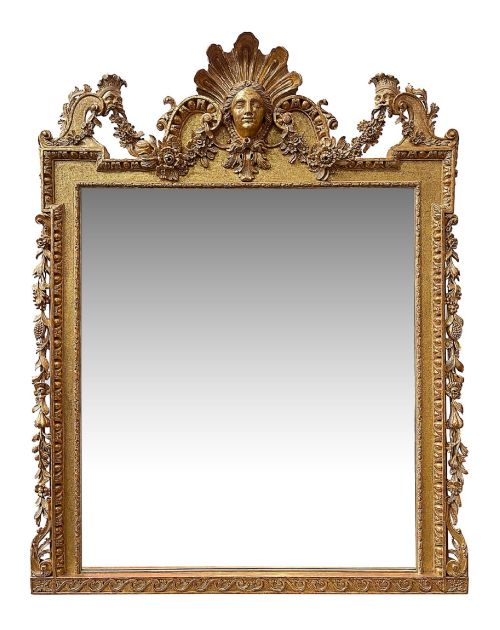
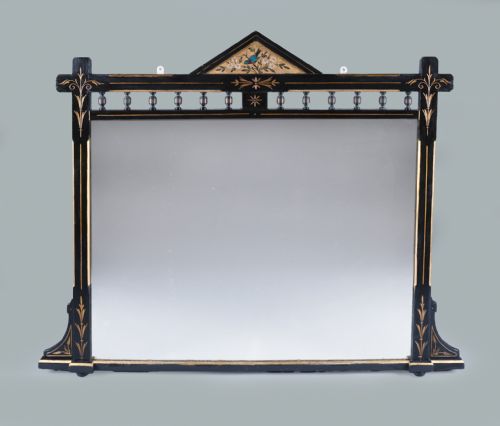
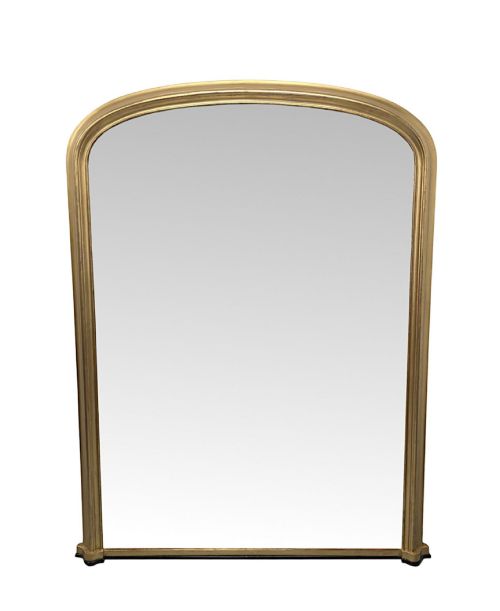
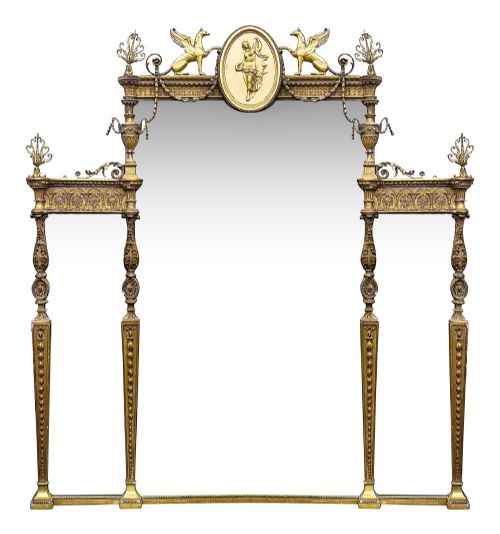
A large overmantel glass is designed specifically to be hung above a mantelpiece, often stretching wide to reflect the hearth and the room around it. The pieces found here span the eighteenth, nineteenth, and early twentieth centuries, encompassing English and French origins.
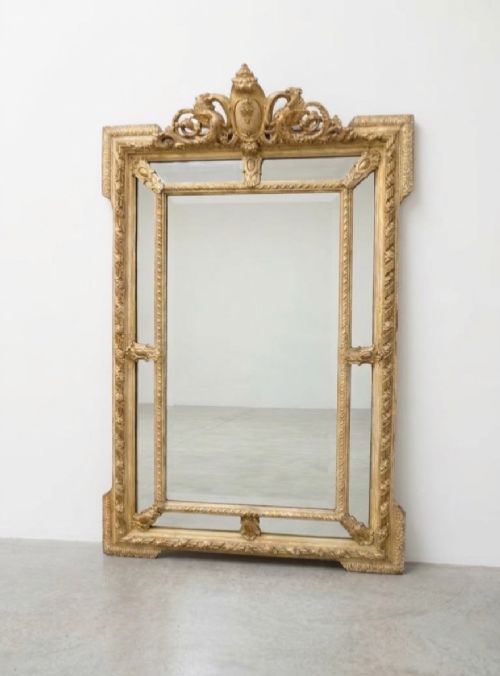
Most examples lean towards nineteenth-century French and English output, taking the form of overmantel mirrors, pier mirrors, and broader wall mirrors. These formats include architectural pediments, arched tops, and elaborate carved crests intended to dominate a chimney breast.
How they were made
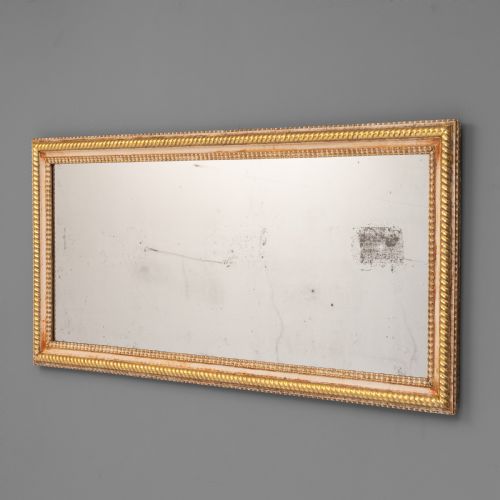
Makers shaped wooden frames from oak, mahogany, or softwoods, which were then layered with gesso to build up intricate relief ornaments like foliage, scrolls, and rope twists. Artisans applied gold leaf, silver gilt, or water gilding over the prepared surface to achieve a brilliant metallic sheen.
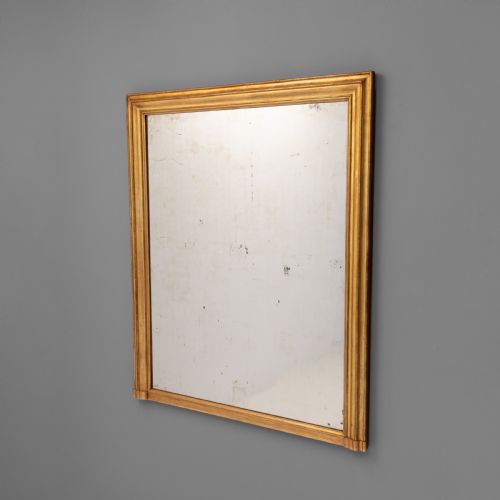
Early plates relied on mercury glass, which produces a distinctive deep and slightly mottled reflection, while later pieces integrated bevelled glass or standard mirror plates. Frames frequently incorporate composition ornament pressed into moulds for complex decorative borders.
Large Overmantel Glass Retail Price Guide 2026
Typical asking prices for large overmantel glass among the pieces listed under this phrase on Sellingantiques today, from the lower quarter to the upper quarter. They describe what is for sale here now, not the wider market.
Some frames wear their gold leaf so thinly that the red clay bole underneath peeks through like a polite blush.
What varies in quality
The standard of the carving and the crispness of the gesso application set superior frames apart from simpler production pieces. Deeply undercut wooden foliage and hand-tooled details demonstrate a higher grade of craftsmanship than moulded composition pressed in quantity.
The integrity of the mirror plate also dictates the tier of the piece, with original mercury glass showing a rich, foxed patina that differs substantially from later plain replacements. The weight and stability of the underlying timber frame ensure the glass remains safely supported over time.
Arsène Rochette of Versailles
The Large Overmantel Glass Glossary
- Overmantel mirror
- A glass specifically proportioned to hang on the wall above a fireplace mantel. These frames are usually wider than they are tall, or rise into high arched crests.
- Gesso
- A mixture of chalk, gypsum, and binder applied to wood frames to create a smooth surface for gilding or to be carved into relief ornament. It allows for sharp decorative details.
- Mercury glass
- An older type of mirror plate created by pouring a liquid mercury and tin amalgam behind glass. It is prized for its dark, atmospheric reflection and characteristic foxing.
- Pier mirror
- A tall glass made to fit the narrow wall space between windows or doors. They often incorporate painted panels or lower consoles.
- Water gilding
- A traditional technique where thin gold leaf is applied to a wet clay base called bole and burnished to a high shine. This method produces a bright, reflective metallic finish.
Large Overmantel Glass: Frequently Asked Questions
How do I hang a heavy overmantel glass?
These pieces require substantial wall fixings anchored directly into masonry or secure studs to bear the considerable weight of the wood and glass.
Professional mirror installers use heavy-duty steel brackets or mirror plates distributed across the frame to ensure safe weight distribution.
What is mercury glass?
Mercury glass is an older mirror type manufactured using a silvering method involving a tin and mercury amalgam behind the glass.
Over time, this backing degrades into foxed spots and dark patches, which collectors value for the authentic historical appearance.
Can I place these mirrors in a hallway?
While originally designed for reception rooms and above fireplaces, these large mirrors function effectively in hallways to bounce natural light into darker spaces.
Their substantial scale makes them well-suited as focal points on blank expanses of wall in high-ceilinged interiors.
How do I clean an antique mirror plate?
Antique glass requires gentle cleaning using a soft cloth and minimal moisture to avoid seeping behind the plate and damaging the historic silvering.
Harsh chemical cleaners should be avoided, particularly around the edges where the original backing is fragile.