



Large Oriental Lamp
A large oriental lamp brings depth and colour to a room through centuries of foreign craftsmanship and converted vessels.
Large Oriental Lamp
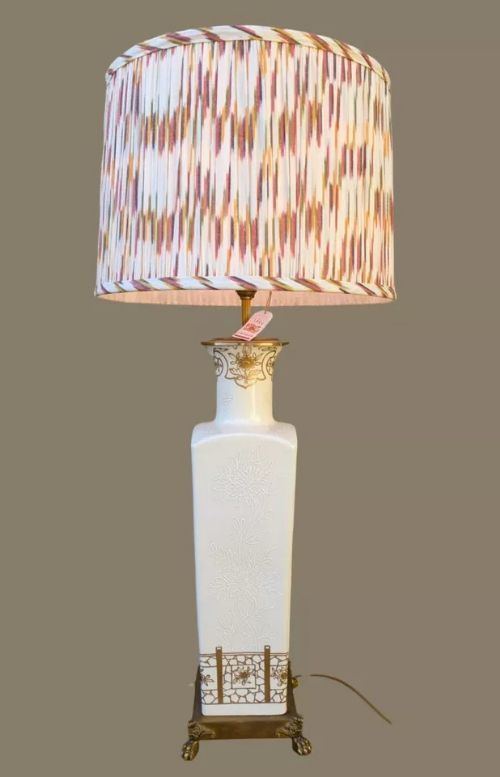
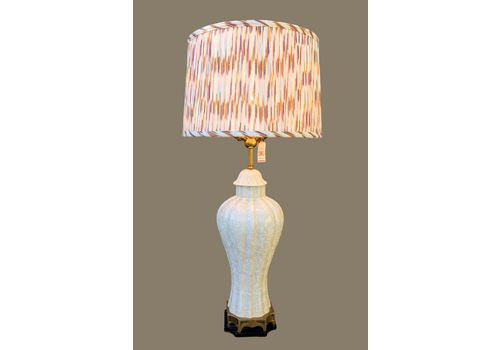
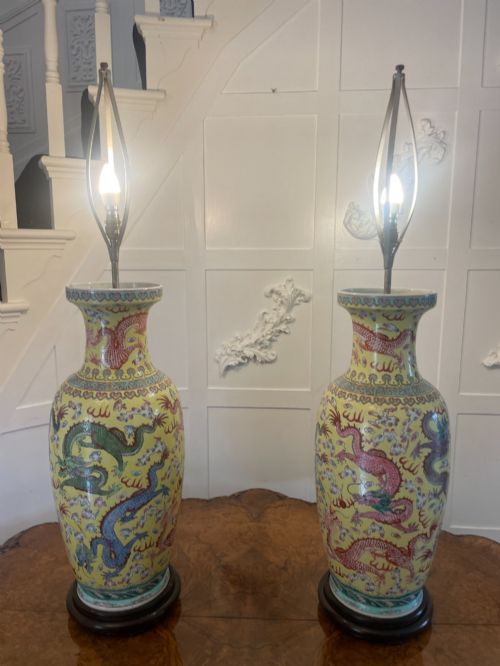
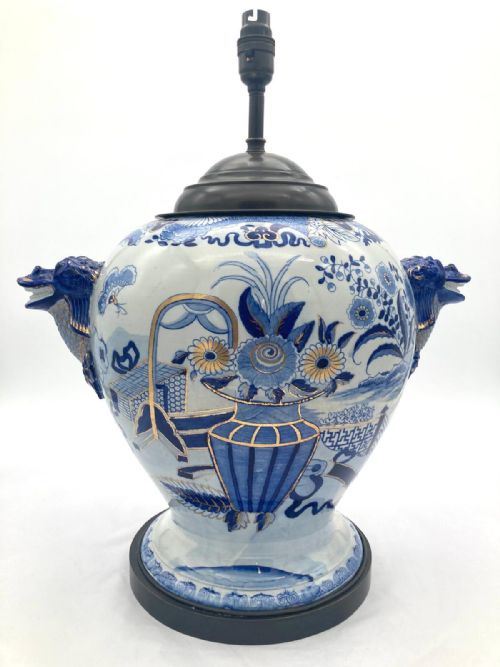
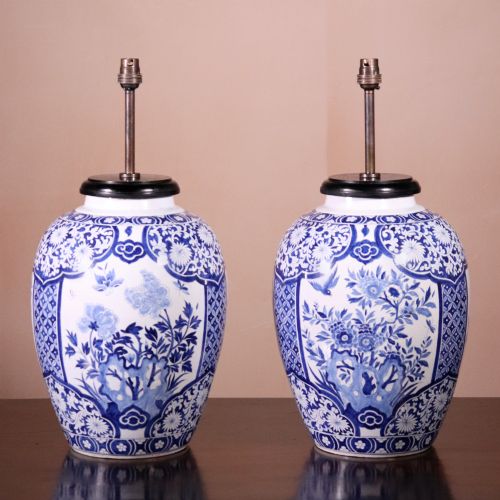
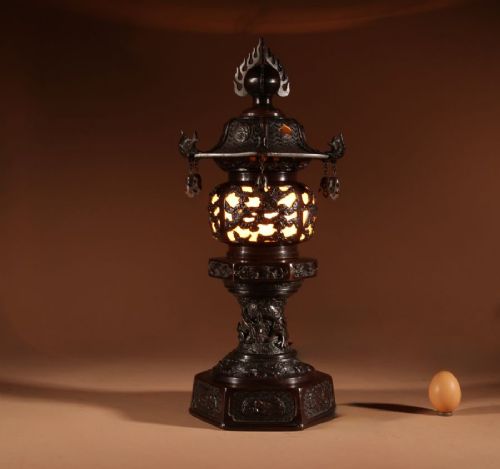
A large oriental lamp typically takes the form of an antique vase, jar, or lantern converted to provide electrical light. These pieces span Chinese porcelain, Japanese bronze, and carved wooden supports from the nineteenth and early twentieth centuries.
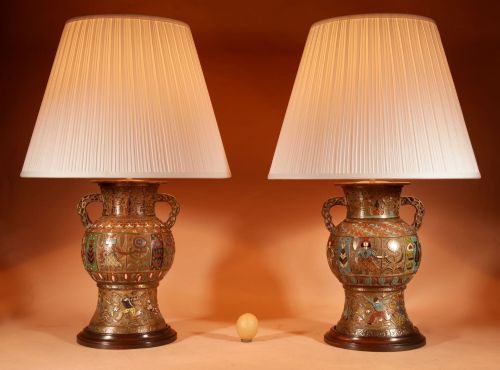
The selection on this page relies heavily on converted vessels, including blue and white jars, Satsuma vases, and champlevé bronze lanterns. Alongside these stand occasional side tables and torchiere pedestals that share the same aesthetic vocabulary.
Buyers encounter distinct regional traditions ranging from Qing dynasty ceramics to Meiji period bronzes and Kashmiri woodwork. Each piece reflects the specific decorative arts of its origin, adapted for modern interior placement.
Materials and construction
Makers utilised high-fired porcelain, heavy bronze, and carved hardwoods to construct the primary bodies of these items. Ceramic pieces often display underglaze blue or polychrome enamel painting, while metal versions incorporate champlevé enamel or gilt mounts.
Conversion into lighting involved drilling or mounting existing antique vessels with brass fittings and fabric flex. Artisans combined traditional Far Eastern manufacturing with period electrical adaptation to create these functional objects.
Large Oriental Lamp Retail Price Guide 2026
Typical asking prices for large oriental lamp among the pieces listed under this phrase on Sellingantiques today, from the lower quarter to the upper quarter. They describe what is for sale here now, not the wider market.
Materials span porcelain, bronze, brass, wood, fabric, and enamel across nineteenth and early twentieth-century dates.
What separates the best from the rest
Quality rests in the crispness of the hand-painted detail and the substantial weight of the bronze or porcelain body. Superior examples display finely executed enamel work, balanced proportions, and careful integration of metal mounts.
The integrity of the original vessel before conversion determines much of the overall merit. Pieces retaining intact glazes, unblemished patination, and harmonious mountings occupy the upper tier of the range.
The Large Oriental Lamp Glossary
- Chinoiserie
- European imitation or interpretation of Chinese and East Asian artistic traditions, popular in various periods of design. This style manifests in lacquerwork and decorative motifs.
- Satsuma
- A type of earthenware from Japan typically featuring a crackled ivory glaze decorated with intricate polychrome and gilt patterns. These wares were widely exported from the late nineteenth century onward.
- Champlevé
- An enamelling technique where troughs are carved into a metal surface and filled with vitreous paste before firing. This method appears on heavy Japanese bronze vessels.
- Imari
- Japanese porcelain characterised by a palette of underglaze blue, iron red, and gold, named after the port from which it was shipped. Such pieces are frequently adapted into lamps.
- Archaistic
- A style that consciously imitates the forms, patterns, or techniques of ancient artefacts. This approach links nineteenth-century production with much older traditions.
Large Oriental Lamp: Frequently Asked Questions
How do I choose the right size?
Consider the scale of your furniture and the height of the ceiling when selecting a large lamp. Massive bronze lanterns and towering vase lamps demand substantial clearance and strong support surfaces.
Measure the intended corner or table before committing to a piece over ninety centimetres tall. Ensure the shade proportions match the visual weight of the base.
Were these originally made as lamps?
Almost none of the ceramic or metal vessels were manufactured as lighting in their original historical context. Artisans converted vases, spill vases, and temple lanterns into lamps during later periods.
This conversion process typically involved mounting or drilling the antique body to accommodate electrical wiring and bulb fittings.
How do I identify Japanese Satsuma ware?
Satsuma ceramics are recognised by their distinctive creamy, crackle-glazed earthenware body. They are heavily decorated with detailed enamel paintings and raised gold highlights.
These pieces often depict figures, floral arrangements, or traditional landscapes from the Meiji period.
What is Chinese Canton porcelain?
Canton porcelain refers to wares decorated in the southern Chinese port city, often featuring vibrant green, pink, and gold palettes. Rose Medallion is a notable sub-category known for panelled compositions of birds and flowers.
These brightly coloured vases translate remarkably well into decorative lighting for nineteenth-century revival interiors.