



Large Metal Candlesticks
Large metal candlesticks stand as substantial focal points, bringing height and heavy, tactile presence to a room.
Large Metal Candlesticks
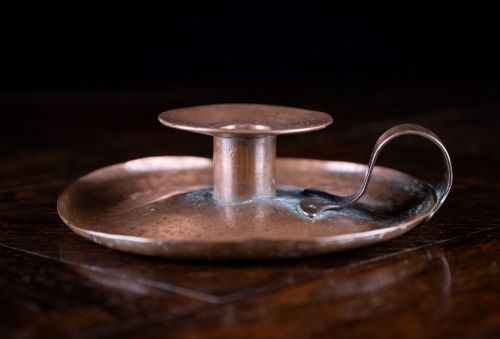
Large metal candlesticks encompass towering floor candelabra, multi-piece suites, and heavy table companions designed to illuminate large spaces. These pieces span from the eighteenth century through the Victorian era and into the twentieth century, taking forms such as pricket candlesticks, standard socket candlesticks, and converted table lamps.
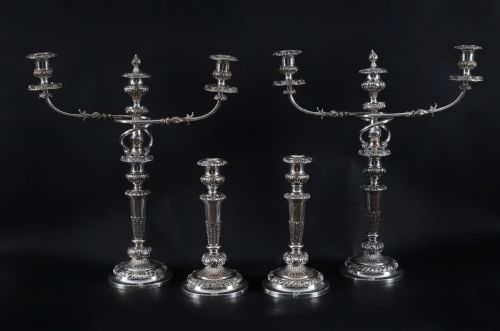
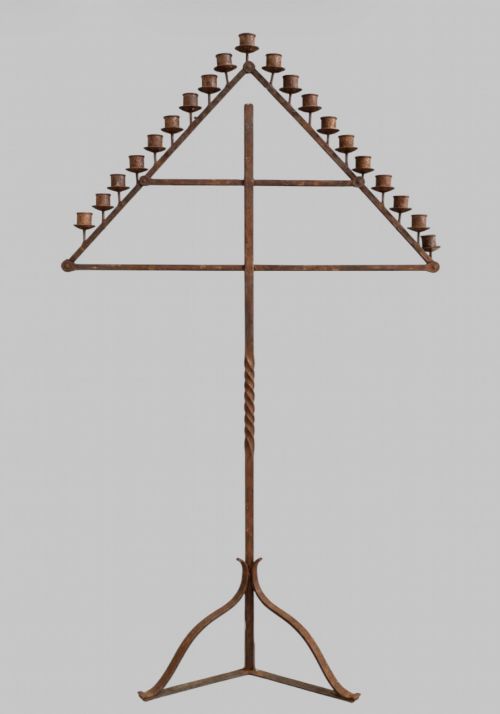
The versions most commonly met on this page include heavy brass pairs from the nineteenth century alongside eighteenth-century Old Sheffield plate and George III candelabra suites. Architectural wrought iron floor candelabra and Art Deco brass and wood combinations also appear, reflecting diverse historical interiors.
Makers and designers drew on styles ranging from Gothic Revival and Dutch Baroque to Regency and Neoclassical, creating functional lighting that doubled as sculptural furniture. Whether formed as a matched pair or a complete four-piece suite, each item relies on scale and metal substance to hold a room.
How they were made
Brass and copper form the backbone of these pieces, often shaped through casting and turning to achieve heavy sockets and stepped bases. Wrought iron provides structural rigidity for taller architectural floor stands, hammered and shaped by hand.
Silver plating and Old Sheffield plate apply thin layers of precious silver over copper cores, requiring skilled smiths to fuse and shape the metals without revealing the base material. Hardwood elements sometimes integrate into the stems, pairing warm timber with polished metal surfaces.
Large Metal Candlesticks Retail Price Guide 2026
Typical asking prices for large metal candlesticks among the pieces listed under this phrase on Sellingantiques today, from the lower quarter to the upper quarter. They describe what is for sale here now, not the wider market.
The king of diamonds pattern brings unexpected royal card symbolism right to the humble brass candlestick base.
What varies in quality
Substance and weight separate robust castings from lighter alternatives, with superior pieces showing thick metal walls and heavy, stable bases. The precision of turned details and the crispness of ornamentation distinguish workshop output.
Completeness alters the character of these items, as matched pairs and four-piece suites retain greater architectural symmetry than assembled groups. Original surfaces, whether polished brass or patinated iron, carry more visual depth than later refinishing.
The Large Metal Candlesticks Glossary
- Pricket candlestick
- A candlestick featuring a sharp central spike designed to impale the base of a candle, rather than a socket to hold it.
- Old Sheffield plate
- An early form of silver plating created by fusing a sheet of silver to a copper ingot before rolling them together into sheets.
- Candelabra
- A branched candlestick holding multiple candles or lights from a single central stem.
- George III
- A British historical period spanning the mid to late eighteenth and early nineteenth centuries, known for classical restraint and proportion.
- Wrought iron
- Iron that has been heated and hammered into shape by hand, resulting in a fibrous texture and strong structural flexibility.
Large Metal Candlesticks: Frequently Asked Questions
How do I place large metal candlesticks in a room?
These tall pieces anchor large tables, sideboards, or floor spaces where their height commands attention. Pair them with neutral backgrounds to let the polished metal or dark ironwork stand out.
Ensure they sit safely away from heavy foot traffic, particularly floor candelabra or multi-branch suites that carry significant weight and span.
What is the difference between brass and plated pieces?
Solid brass candlesticks consist of the same metal throughout, developing a natural patina and tolerating polishing over generations. Plated items use a thin layer of silver over a copper base, offering a brighter reflective finish.
Care must be taken with plated pieces to avoid wearing through the outer silver layer during cleaning.
How do I date a brass candlestick?
Dating relies on manufacturing techniques, base construction, and stylistic details such as Regency reeding or Victorian ornamentation. Earlier pieces often show multi-part cast construction with hand-finished surfaces.
Comparing the weight and assembly methods helps distinguish nineteenth-century production from later twentieth-century interpretations.