
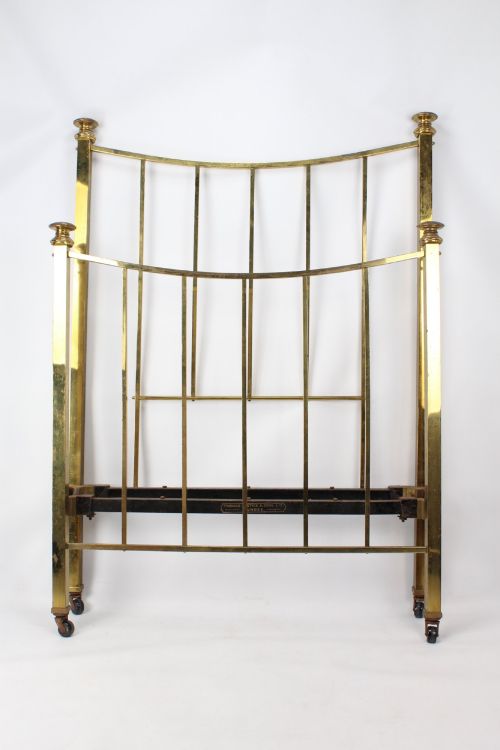
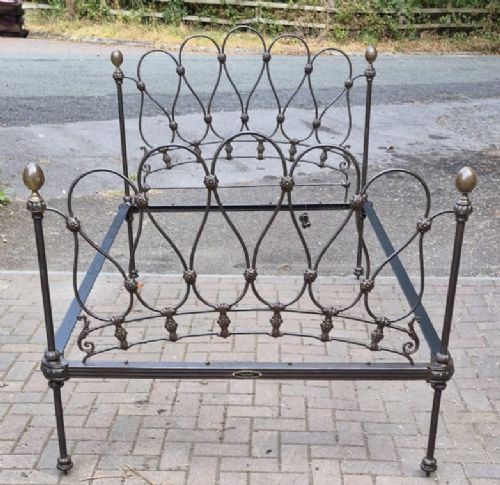
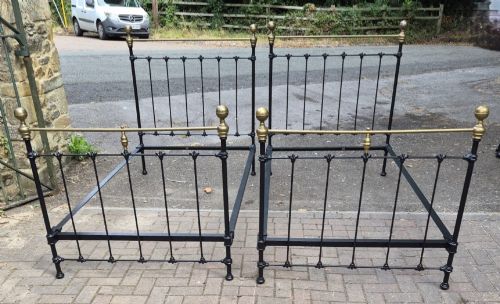


Large Metal Bed
A large metal bed brings substance and genuine architectural presence to a bedroom through robust Victorian and Edwardian engineering.
Large Metal Bed
A large metal bed is a substantial frame built to support full, single, or king proportions using durable materials. When searching for a large metal bed, buyers encounter robust examples dating from the nineteenth century through the Edwardian period.
The most common forms on this page include Victorian and Edwardian brass and iron bedsteads. These range from simple curly iron frames to ornate, polished brass constructions with distinctive maker signatures.
Makers such as Hoskins & Sewell, R W Winfield, and Maple & Co. produced these pieces in single and king sizes. Alongside traditional bedsteads, occasional decorative metal objects like table lamps also appear in the listings.
How they were made
These frames combine cast iron and wrought iron for structural strength, often paired with polished brass components. Metal elements are shaped, joined, and finished with paint to create durable sleeping structures.
Victorian and Edwardian workshops utilised specialised casting and brass foundry techniques to produce decorative finials, scrolls, and structural tubing. Skilled artisans assembled these components using heavy bolts and sockets designed for simple dismantling.
The inventory combines nineteenth-century bedroom furniture with occasional Art Deco metal table lamps.
What varies in quality
Quality in a large metal bed rests on the weight of the metal and the crispness of the castings. Heavier ironwork and substantial brass tubing indicate superior structural integrity.
The sophistication of the design also distinguishes finer pieces, such as those by known makers featuring elaborate brass ornamentation and Aesthetic Movement detailing. Plain utilitarian frames sit at the simpler end of the scale, while ornate king size brass bedsteads represent the top of the range.
Hoskins & Sewell·R W Winfield·Maple & Co.
The Large Metal Bed Glossary
- Bedstead
- The framework of a bed, comprising the headboard, footboard, and side rails. In antique pieces, these are typically constructed from iron or brass.
- Cast Iron
- Molten iron poured into a mould to create rigid structural or decorative components. It provides the heavy base for many nineteenth-century frames.
- Wrought Iron
- Iron that has been heated and worked with tools rather than cast. It offers fibrous strength and flexibility for scrolled details.
- Aesthetic Movement
- A late nineteenth-century design style emphasising visual beauty over narrative content. Pieces from this movement often feature refined geometric or stylized floral motifs.
Large Metal Bed: Frequently Asked Questions
What sizes are available?
Listings feature large single and large king size dimensions suited to modern mattresses.
Buyers should check exact internal measurements to ensure standard mattress compatibility.
How do I assemble the frame?
Most antique iron and brass frames use a wedge-and-socket corner fastening system.
Side rails slot directly into the headboard and footboard posts and lock firmly under gravity.
Are these beds structurally sturdy?
Nineteenth-century metal beds utilise heavy cast iron and brass components designed for lasting utility.
They offer exceptional rigidity compared to modern lightweight tubular steel alternatives.
How do I date a metal bed?
Stylistic cues such as Aesthetic Movement motifs or simple Edwardian lines indicate the era.
Maker stamps on the iron frame or brass plates also help confirm the manufacturing decade.