

Large Log Basket
A large log basket brings substantial weight and texture to a hearth, holding fuel while anchoring the room's proportions.
Large Log Basket
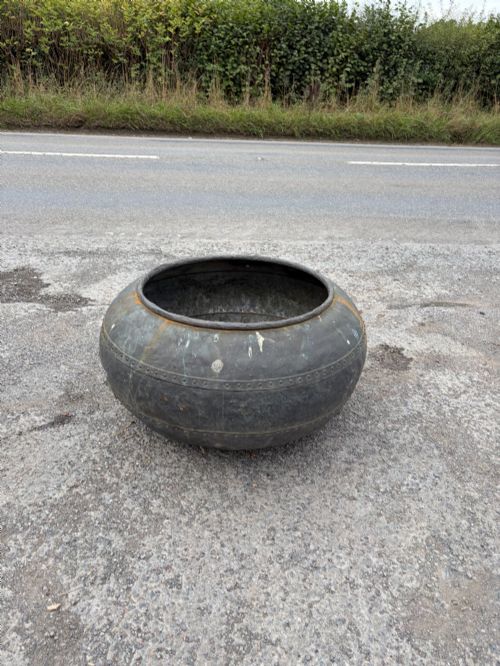
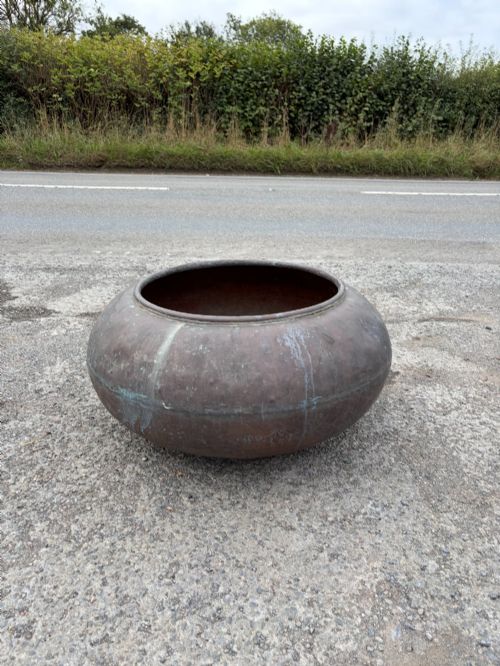
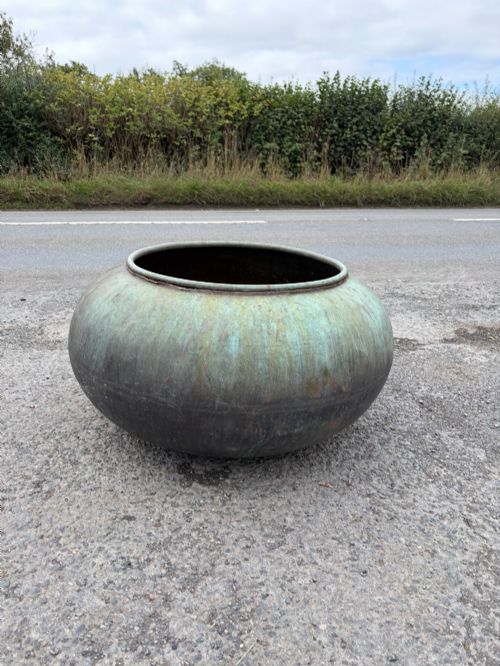
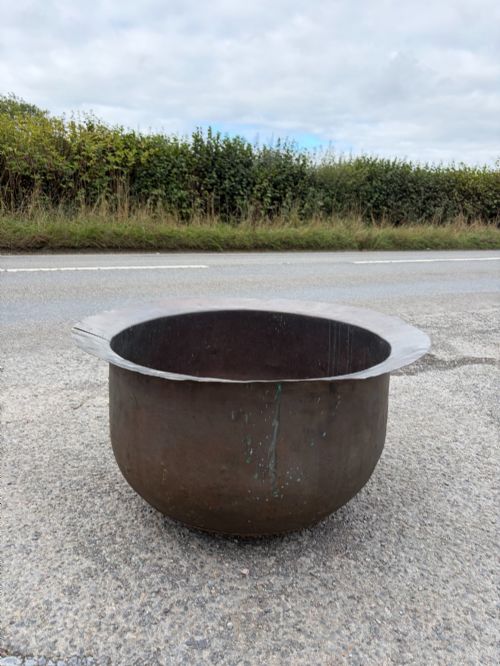
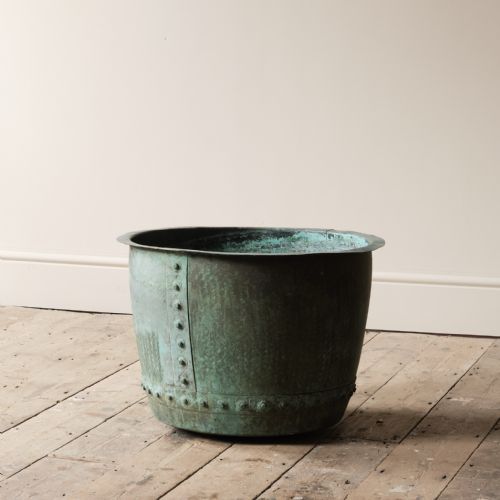
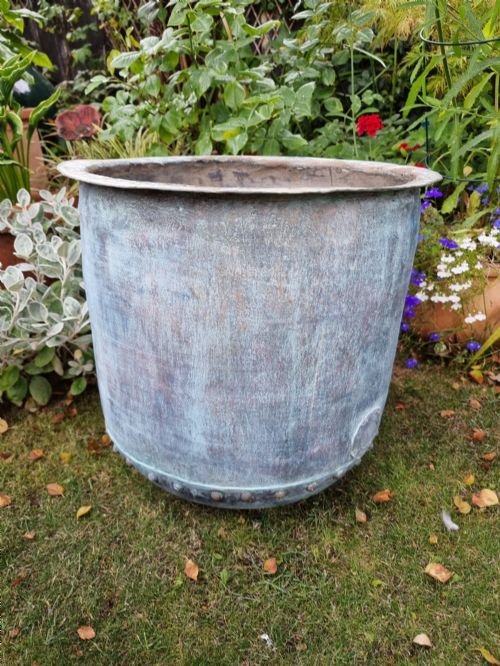
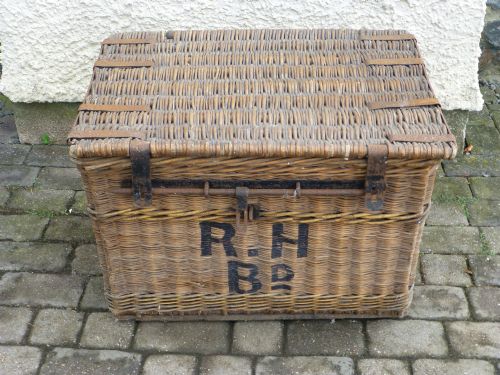
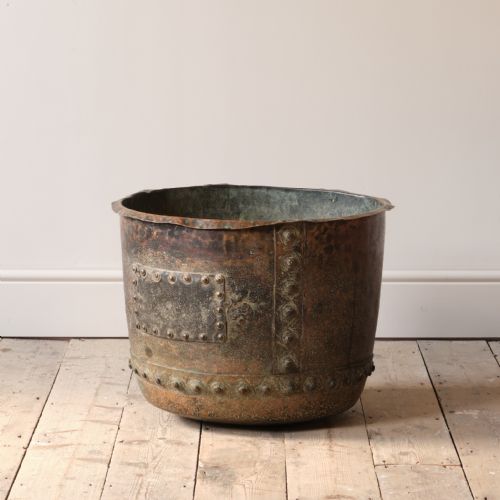
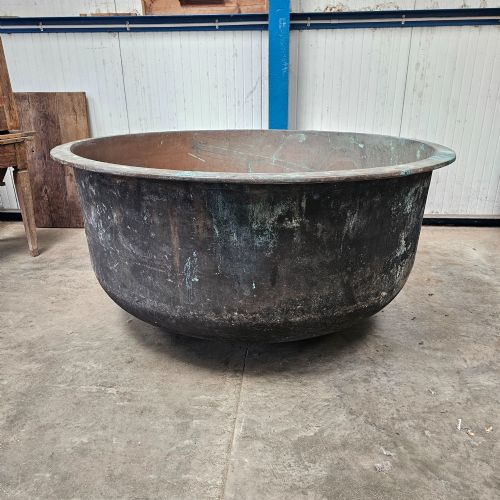
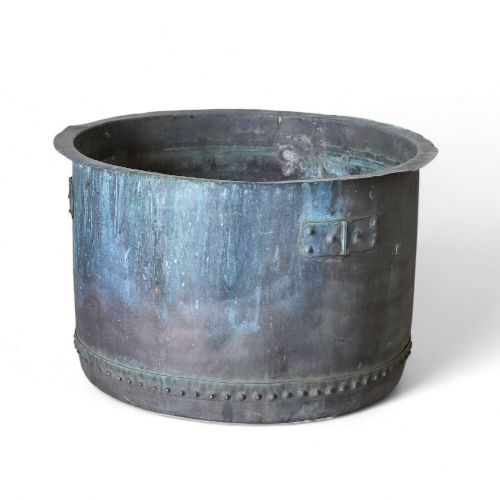
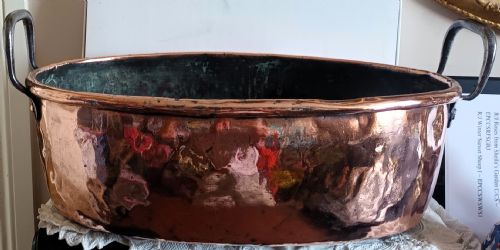
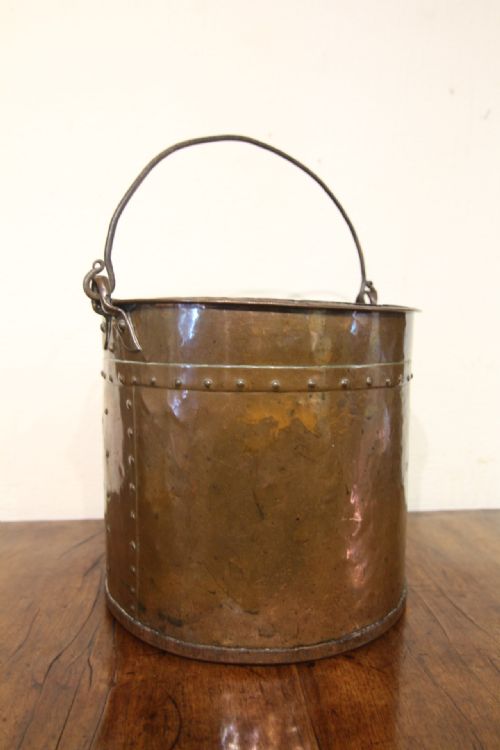
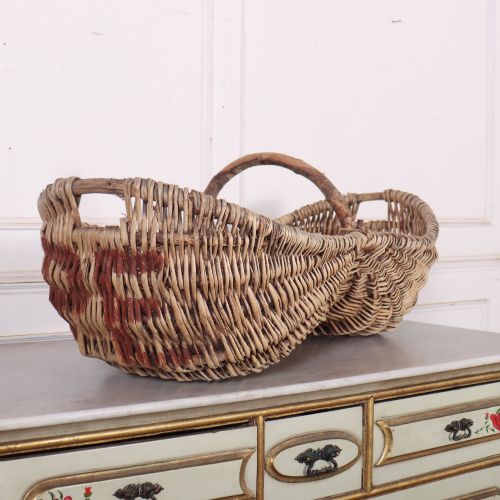
A large log basket encompasses robust vessels built for hearthside storage, appearing across the inventory in woven organic materials and heavy metals alike. Buyers seeking a large log basket will encounter substantial copper cauldrons, riveted metal bins, and deeply woven wicker or willow receptacles.
The selection ranges from nineteenth-century English and French copper vessels originally shaped for dairy or industrial work to country-house wicker hampers and pine storage barrels. These utilitarian containers transition naturally from agricultural or domestic service to holding heavy fireplace fuel.
How they were made
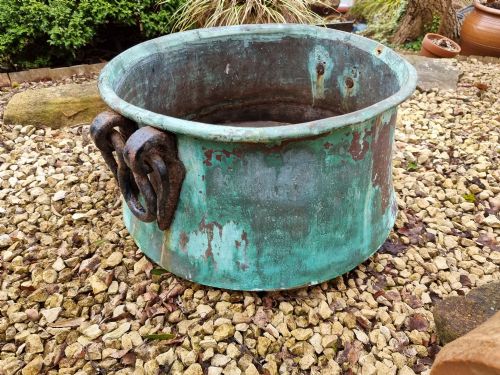
Metal versions rely on durable construction methods such as hand-riveting thick copper sheets and attaching sturdy wrought iron swing handles or iron frames. Copper surfaces often develop a natural patina or verdigris finish through age and exposure.
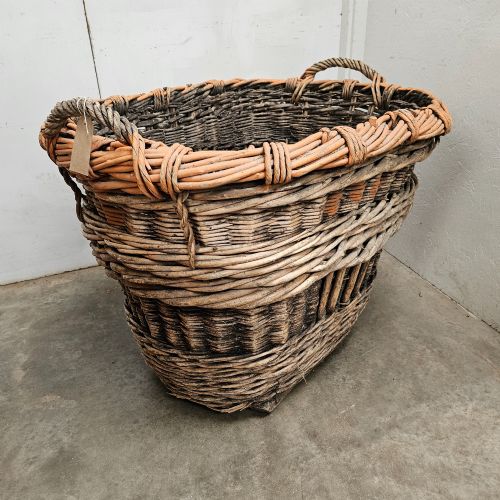
Woven examples utilise natural materials like willow, cane, and hand-woven linen or pine, employing tight structural weaves to support heavy contents. Iron components in fire grates and andirons are forged for stability and weight around the hearth.
French grape pickers and champagne makers inadvertently supplied half the rustic copper and wicker vessels now warming English hearths.
What varies in quality
Quality rests in the integrity of construction, seen in heavy gauge metal walls, secure hand-riveting, and original iron fittings that remain solid under stress. Thicker copper and robustly preserved wicker frames demonstrate superior durability and enduring structural strength.
Depth of character also distinguishes pieces, marked by an authentic, undisturbed patina on copper surfaces and the tight, uniform tension of hand-woven plant fibres. Originality of handles, frames, and associated hardware elevates the historical weight of the object.
The Large Log Basket Glossary
- Verdigris
- A green patina that forms naturally on copper and brass through long exposure to atmospheric elements. This surface coloration is valued for recording the genuine age of metal vessels.
- Andirons
- Horizontal iron bars or fire dogs that support logs in an open fireplace. They frequently accompany large metal containers and grates in hearth settings.
- Cauldron
- A large metal pot with a wide opening and a swing handle, traditionally used for heating liquids or bulk storage. These heavy vessels adapt well to holding hearth logs.
- Wicker
- A technique of weaving pliable plant materials like willow or cane into rigid baskets and trunks. This method provides the flexibility and strength needed for large laundry and log hampers.
- Patina
- The surface sheen and colour acquired by materials like copper, wood, and iron through years of handling and ageing. A rich patina indicates long-term use and minimal artificial disturbance.
Large Log Basket: Frequently Asked Questions
What materials were used for these baskets?
The inventory records two main traditions for these large vessels. Metal pieces are constructed primarily from heavy copper, iron, wrought iron, and brass.
Organic pieces rely on natural plant fibres, featuring willow, wicker, cane, pine, and hand-woven linen.
How do I date a copper log bin?
Dating relies heavily on construction techniques such as hand-riveting and the presence of original wrought iron handles or frames. Nineteenth-century examples often exhibit distinct patination, verdigris finishes, and specific maker forms like cheese vats or cream setting pans.
Earlier Georgian pieces from around 1800 display specific stylistic proportions and heavier metal gauges. Comparing the joinery and surface wear against documented period pieces clarifies the age.
Can wicker log baskets hold heavy logs?
Wicker and willow hampers documented in the archive were built for heavy domestic duties such as agricultural harvesting and laundry storage. Their tight weaves and sturdy construction handle substantial firewood loads safely.
Over time, natural organic fibres maintain structural integrity if kept dry and away from excessive moisture.
Were these copper vessels originally meant for logs?
Many copper vessels began life as agricultural, dairy, or industrial containers including cream setting pans, cheese vats, and grape-picking hods. Their generous proportions and robust metal walls made them ideal for secondary use as fireside log bins.
Industrial cane trunks and pine barrels similarly transitioned from transport and storage to domestic hearth accessories.